


The anti-dystopia: Why solarpunk is the future of science fiction
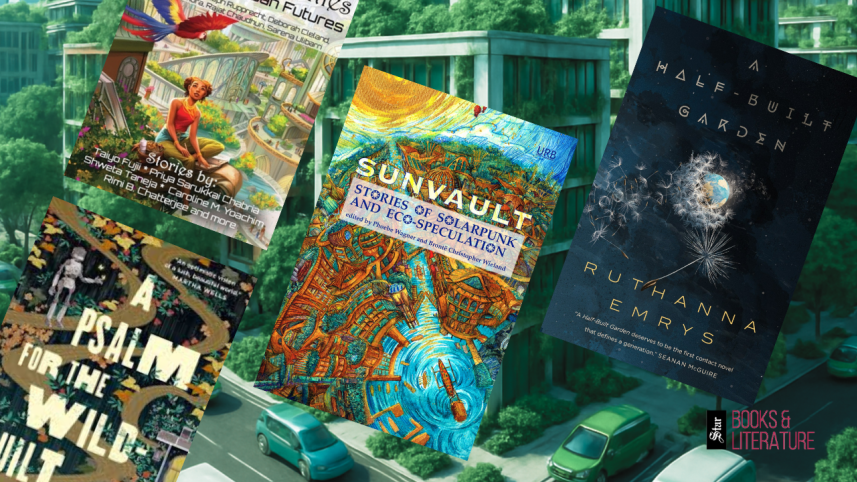
For years, speculative dystopian fiction has trained readers to expect the worst: scorched planets, collapsing governments, ruthless technologies, and futures where survival is the only victory left. Solarpunk pushes back against that narrative. Instead of asking how the world ends, it asks a far more radical question: what if we fix it? What if cities worked with nature instead of against it? What if technology served communities, not corporations? And what if hope wasn’t naive, but necessary?

At its core, solarpunk is both a genre and a cultural mindset rooted in what might be called “hope with teeth”. Its stories imagine futures powered by renewable energy, shaped by ecological care, and sustained through cooperation rather than domination. These worlds are not perfect. Climate damage has already occurred. Social systems remain flawed. But solarpunk characters consistently choose repair over resignation, community over isolation, and imagination over despair. If you’re curious where to begin, think of this as a guided tour through hopeful futures—stories that remind us tomorrow doesn’t have to be terrifying.
A strong entry point is Becky Chambers’s A Psalm for the Wild-Built (Tor Books, 2021). Short, comforting, and quietly radical, the novella follows a tea-serving monk and a robot wandering a world that has deliberately slowed down after industrial collapse. There are no epic battles here, only conversations about purpose, rest, and what it means to be content in a society that has stopped chasing endless growth. It’s a reminder that progress doesn’t always mean more—sometimes, it means enough.
Solarpunk may feel new, but its ideas are not. Sultana’s Dream, written in 1905 by Rokeya Sakhawat Hossain, imagines Ladyland: a society run by women, powered by solar energy, and organised around peace rather than violence. Long before climate change dominated headlines, Hossain was writing about renewable energy, sustainable cities, and social equality. More than a century later, the story feels uncannily modern: proof that hopeful futures have always been part of our imagination.
One of solarpunk’s greatest strengths is its diversity of voices, and anthologies showcase that breadth. Sunvault: Stories of Solarpunk and Eco-Speculation (Upper Rubber Boot Books, 2017), edited by Phoebe Wagner, brings together short fiction, poetry, and artwork that imagine communities adapting creatively to climate change. That sense of variety continues in Glass and Gardens: Solarpunk Summers (World Weaver Press, 2018), which ranges from Arctic seed vaults to sun-scorched farms and underground mines, offering vivid snapshots of people finding joy and resilience in a changing world.
However, solarpunk isn’t all sunshine and green rooftops. For example, Phoebe Wagner’s When We Hold Each Other Up (Android Press, 2023) is set in a world recovering from environmental collapse, where tightly controlled cities promise safety—but at a cost. As the story unfolds, it becomes clear that real sustainability isn’t about control or perfection. It’s about mutual aid, trust, and the courage to challenge systems that repeat old mistakes. Thus, hope itself becomes an act of resistance.
At its most expansive, solarpunk asks a deceptively simple question: What if cities weren’t built just for humans? Multispecies Cities: Solarpunk Urban Futures (2021) imagines urban spaces designed for people, animals, plants, and even artificial intelligence to thrive together. Set largely across the Asia-Pacific region, these stories re-envision the city as something alive—breathing, regenerative, and inclusive—a powerful alternative to the concrete jungles of conventional futuristic fiction.
Solarpunk is also a global conversation. Solarpunk: Short Stories from Many Futures (World Weaver Press, 2024) gathers writers from across Europe, the Americas, and Australia, tackling issues such as gentrification, cultural loss, and corporate greed. An earlier collection, Solarpunk: Ecological and Fantastical Stories in a Sustainable World (World Weaver Press, 2018), highlights the genre’s roots in Brazil and Portugal. Together, these books show that hopeful futures look different depending on where you are, and that diversity is the point.
Solarpunk doesn’t pretend everything is perfect. A.E. Marling’s Murder in the Tool Library (2023) proves that even cooperative, eco-friendly societies still face conflict. Set in a future built around shared resources, the novel introduces a murder that tests a community’s ideals. It’s a reminder that hope isn’t about avoiding problems, but about how we confront them together.
Perhaps the most powerful solarpunk idea is this: we don’t run away from a damaged Earth, we stay. Ruthanna Emrys’s A Half-Built Garden (Tor Books, 2022) imagines a future where grassroots communities are slowly healing the planet. When humanity is offered the chance to escape to the stars, the real question becomes whether leaving is the right choice at all. In Solarpunk, staying, repairing, and caring are revolutionary acts.
In a world overwhelmed by climate anxiety and bad news, solarpunk offers something rare: stories that refuse to give up. They don’t deny how serious our problems are—but they also refuse to believe collapse is inevitable. If dystopias tell us what we’re afraid of, solarpunk tells us what we could still become. And right now, that kind of future might be exactly what people need.
Sara Kabir is a dreamer, writer, and literature lover who’s constantly juggling academia and her many creative hobbies. She currently teaches English at North South University. Find her musings on Instagram @scarletfangirl.
 For all latest news, follow The Daily Star's Google News channel.
Comments