


essay
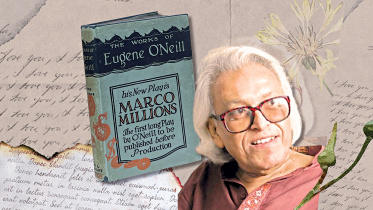
Poet Shamsur Rahman’s drama translation: Eugene O’Neill’s ‘Marco Millions’
John Dryden, an English poet, literary critic, and social reformist of the 17th century, believed that “it is only for poets to translate a poet”.
15 August 2026
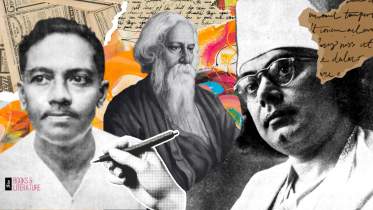
Rabindranath, Nazrul, Jibanananda: Predecessor and contemporary
So, unlike Rabindranath Tagore, who left documented comments on Jibanananda, Nazrul did not leave an authenticated body of criticism on him. What survives is essentially that famous humorous remark, whose authenticity cannot be verified beyond later recollections.
7 August 2026
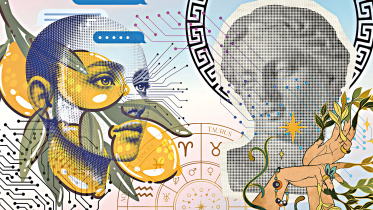
Let there be monsters: On AI mythology
Ask any room of people about their deepest fears regarding artificial intelligence, and eight out of 10 will likely invoke a takeover narrative—the “Frankenstein syndrome”, where the creation turns against the creator.
16 July 2026
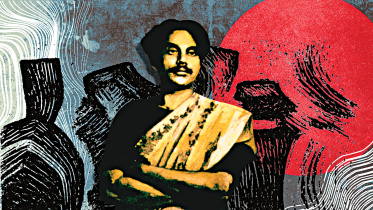
Anti-colonial resistance in Kazi Nazrul Islam’s essays
Famously known to Bengalis as the rebel poet, Kazi Nazrul Islam in most of his poems and verse-lyrics raised a strong voice against every form of oppression the British colonisers, representing the capitalist West, systematically unleashed on their subjects in India.
23 May 2026
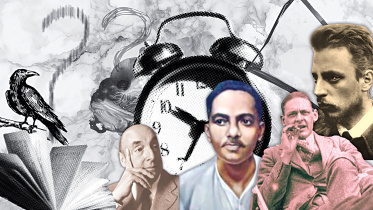
Diverse articulations in Jibanananda, Rilke, Eliot, and Neruda
At the beginning of “A Day Eight Years Ago” (originally published in 1954) by Jibananda Das, we learn that a man has been taken to the morgue.
16 May 2026

Ghosts in the secretariat: Mapping the Bangladeshi Gothic
It is a Tuesday afternoon in Dhaka. Cars are honking, fumes are rising. A banker named Anirban rear-ends another car—typical for the city. Until he steps out. He sees that the other driver has been dead for what seems like days but is still moving. And he wants to talk.
7 May 2026
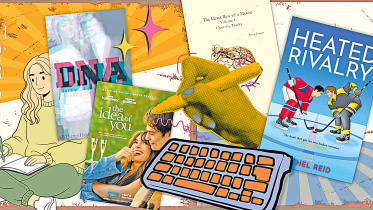
When fanfiction swapped out fans for publishing deals
It sounds flippant to put it that way but, the Aeneid, at its core, really is a continuation fic—picking up where Homer’s Trojan War ended and following Aeneas, a minor character in the canon, as he stumbles through an entirely new narrative along with original characters and incredibly expanded lore.
16 April 2026
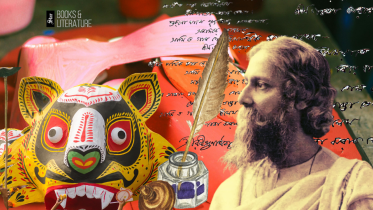
Rabindranath Tagore and the evolving spirit of Pohela Baishakh
But it goes without saying that Rabindranath, as the most famous member of the Tagore family and one of the cornerstones of Bengali culture, is thoroughly intertwined with the most significant day of the Bengali calendar. His thoughts on PohelaBaishakh are complex and evolved over the years, alongside his own development as an artist and the changing societal circumstances, as can be seen through his three essays on this day.
13 April 2026
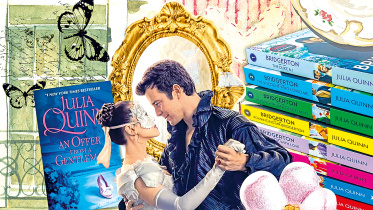
On ‘Bridgerton’: When romantic escapism clashes with the realities of class
Romance has never existed apart from inequality. The genre depends on distance—on obstacles that make love feel hard-won.
10 April 2026

A meaningless world: Sartre, Camus, Waliullah, and Badal Sircar
Existentialism is a philosophical theory and a literary perspective. Its central proposition is that the world has no a priori meaning or purpose.
14 March 2026
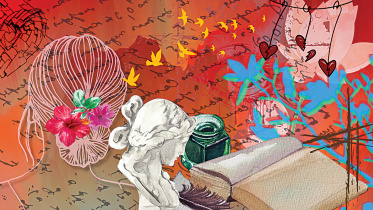
Hope, rage, and love-worlds: The many meanings of feminised tears
In classical studies of sensory experiences, philosophers such as Maurice Merleau-Ponty suggest that bodily sensations constitute our lived reality.
7 March 2026
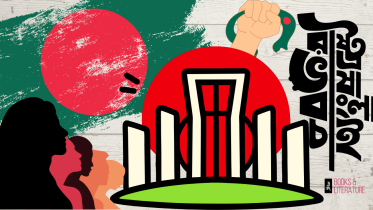
Two women, one language struggle
Just as Bengali women played an important role in the Liberation War, they also played a fearless role in the movement for the Bangla language before it, participating alongside men as fellow warriors.
21 February 2026
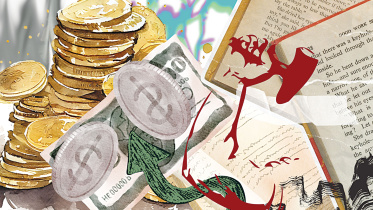
Money and language: Transaction and tension
In addition to today’s transnational corporations and the global explosion of their advertisements, the works of William Shakespeare and Karl Marx keep teaching us a great deal about the relationship between money and language.
19 February 2026
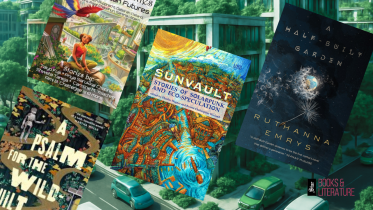
The anti-dystopia: Why solarpunk is the future of science fiction
For years, speculative dystopian fiction has trained readers to expect the worst: scorched planets, collapsing governments, ruthless technologies, and futures where survival is the only victory left. Solarpunk pushes back against that narrative. Instead of asking how the world ends, it asks a far more radical question: what if we fix it? What if cities worked with nature instead of against it? What if technology served communities, not corporations? And what if hope wasn’t naive, but necessary?
29 January 2026
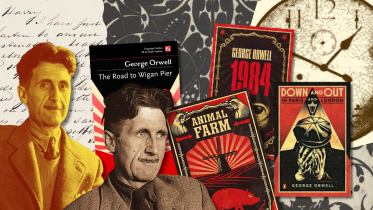
On his 76th death anniversary: The other side of George Orwell
It is undoubted that George Orwell is one of the most important political writers of the 20th century. Labelling him a political writer reflects how deeply his life and works were influenced by the events he lived through.
28 January 2026

On mothers, monsters and myths: A look at the Mary before the Mary
In a wilting summer swelter of 1797 in London, a name was born twice–mother Mary Wollstonecraft wound the clock of daughter Mary Wollstonecraft (Godwin)’s life, for the very first time.
5 December 2025

Lessons from our literary girls: Why freedom framed as favour is no freedom at all
Fiction has long chronicled that women have always worked more than what is counted, felt more than what is acknowledged, and lost more than what anyone will ever quantify.
3 December 2025

Lessons from our literary girls: Why freedom framed as favour is no freedom at all
If the girls we read about could speak today, their voices would be both sharp and unflinching.
26 November 2025

When old patriarchies wear new faces
To understand the deep-seated relevance of this modern debate, we must embark on a journey into the heart of Sarat Chandra’s literature, where these battles first found voice.
25 November 2025

Taylor Swift talks back to Shakespeare
I first heard Taylor Swift’s song “The Fate of Ophelia” on the radio during a road trip to New Hampshire the day after it was released on October 3.
19 November 2025