


Floods trigger cattle feed crisis in Sylhet haor region
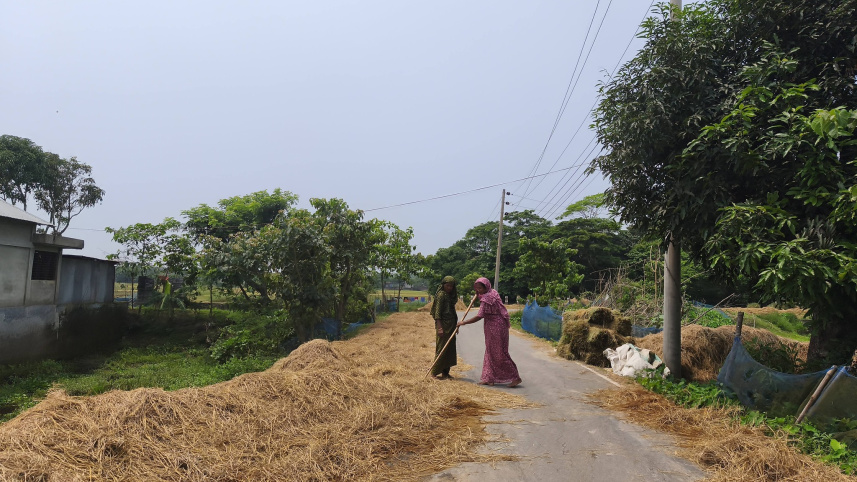
People living in the haor areas of the Sylhet region are facing a severe crisis in maintaining their cattle as floods have destroyed crops and washed away fodder (coarse, dried food like hay or straw given to livestock) sources, causing a sharp rise in the prices of cattle feed.
Residents said cattle rearing is the main source of livelihood for many families in the region. However, the recent floods submerged vast stretches of boro paddy fields, leaving farmers struggling to collect fodder for their livestock.

According to market sources, the price of hay -- the primary feed for cattle -- has more than doubled within three months. Hay that was previously sold at Tk 300 to Tk 350 per maund is now being sold at Tk 800 to Tk 850.
Prices of other cattle feed items have also surged. Granular cattle feed, which used to cost Tk 1,150 per sack, is now selling for Tk 1,500, while the price of mustard oil cake and other feed has increased from Tk 40 per kilogram to Tk 60.
Fajr Ali, a hay trader in Ikram Haor in Baniachong upazila of Habiganj, said the shortage was caused by severe damage seeds due to flooding in the haor region.
“Earlier, we could easily collect hay from local farmers, but now we have to bring it from distant districts at higher costs,” he said.
He added that rising transportation expenses were also contributing to the price hike.
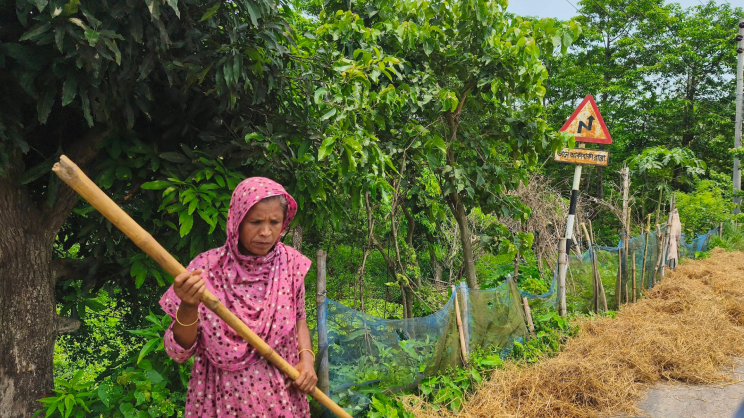
“Farmers are unable to buy the amount of hay they need because of the high prices. We are also compelled to sell at higher rates, making it difficult to sustain the business,” he added.
Nazrul Islam, a farmer from Baniachong upazila in Habiganj who owns 10 cows, said he was struggling to continue cattle farming due to soaring feed prices.
“The amount of hay that used to cost Tk 400 before now costs Tk 1,000. Besides hay, the prices of granular feed, oil cake, and other cattle feed have also increased significantly,” he said.
He feared that inadequate feeding would reduce milk production and affect the health of the cattle.
“If the situation continues, it will become difficult for us to continue raising cattle,” he added.
Another farmer, Abdus Shahid from Hakaluki Haor in Kulaura upazila of Moulvibazar, said he recently purchased 30 maunds of hay at Tk 1,000 per maund to keep his cattle alive.
“The cost of maintaining the farm has increased several times, while profits have declined sharply. I am already running the farm with borrowed money,” he said.
“If feed prices continue to rise, I may have no option but to leave this profession,” he added.
Habiganj District Livestock Officer Dr Md Nurul Islam said the authorities were working to address the crisis.
“Due to the floods, cattle feed has become scarce. We are encouraging farmers to cultivate grass and supplying them with grass seeds,” he said.
Dr Abu Zafar Md Ferdous, director of the Divisional Livestock Office in Sylhet, said there are around three million cattle in Sylhet division.
“I inspected different haors in Sunamganj. It is expected that natural disasters will affect cattle feed supplies. We have formed a monitoring cell to assess the extent of the damage, and the issue has been given top priority,” he said.
 For all latest news, follow The Daily Star's Google News channel.
Comments