


India's bank for rural poor is growing fast: top official
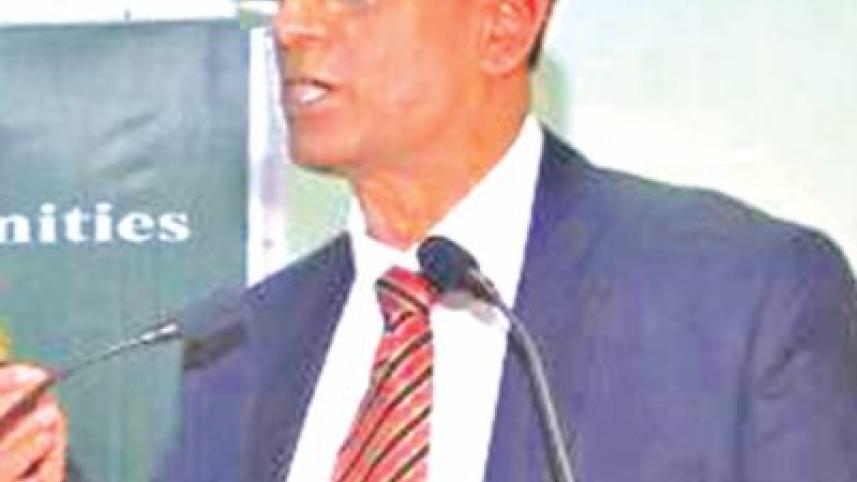
A bank targeting the rural poor has recently started its journey in India and has so far managed almost 100 percent loan recovery rate.
Known as Bandhan Bank, it started its journey in August 2015 as a commercial bank.

Chandra Shekhar Ghosh, Bandhan Bank's managing director, yesterday made a presentation on it and India's banking system at Bangladesh Institute of Bank Management in Dhaka.
As of now, Bandhan Bank has 598 branches in 27 states and about 80 lakh clients, among whom it disbursed Rs 11,390 crore.
The tendency to take loans and not repay is less among the poor people, he said.
"That is why Bandhan Bank has decided to gives loans to poor people only. It does not grant loans to corporate or big businessmen. So, its loan recovery rate is almost 100 percent."
The bank strictly monitors where and how borrowers use the loans, said Ghosh, a former student of Dhaka University.
About 70 percent of the Indian population lives in villages, but only 37.73 percent of bank branches are in rural areas, Ghosh said.
And in just four months, Bandhan has brought 25,156 villages under its banking activities.
Bangladesh Bank Governor Atiur Rahman said Bandhan Bank began its operation with the twin objectives: women's empowerment and poverty eradication.
"I feel quite happy to talk about a visionary man whose commitment for the poor is unparalleled. Starting from a tiny micro-finance institution, he made an incredible journey and now owns a private commercial bank."
"So far as my knowledge goes, Bandhan Bank is the first instance in India of a microfinance entity transforming into a universal bank".
The bank is committed to opening over 71 percent of the branches in rural India, with at least 35 percent of them being in unbanked rural pockets, Rahman said.
As per BASEL-III norms, by March 31, 2019 banks will have to maintain a minimum capital adequacy ratio of 11.50 percent. For that end, the Indian government plans to infuse Rs 70,000 crore equity into public lenders over four years to 2018-19, according to Ghosh's presentation.
In Bangladesh, the government has been providing Tk 5,000 crore to the state bank for meeting capital deficit, which has faced many criticisms, Rahman said.
On the other hand, India has been providing Rs 70,000 crore to state-run banks for capital purpose.
Providing capital is not always bad if it is used for development of the banks, he added.
Ghosh said, as in Bangladesh, political consideration is the decisive factor when it comes to appointing bank directors in India. The directors are appointed by the finance ministry.
 For all latest news, follow The Daily Star's Google News channel.
Comments