


The rise of a denim empire

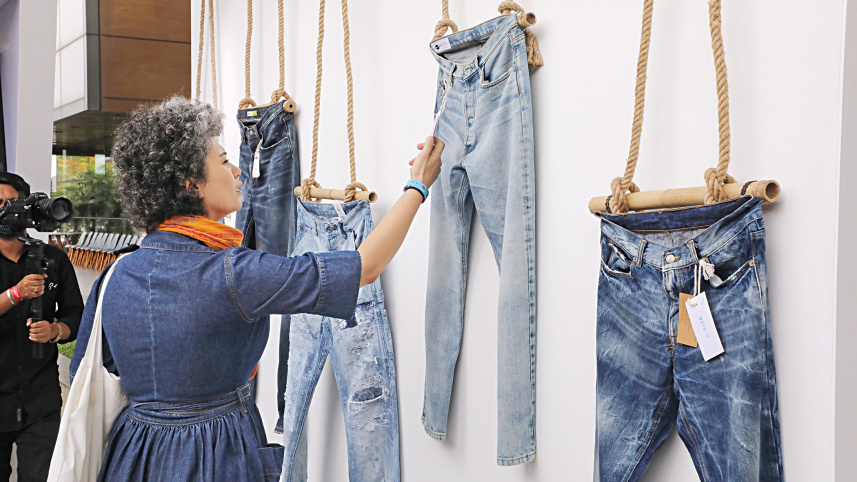
In 1984, a small two-line factory named NZN Fashion made history by shipping $12,000 worth of jeans to an Italian buyer. What began as a modest export has grown into a multi-billion-dollar industry, transforming Bangladesh into the world’s premier “Denim Destination.”
Today, denim plays a key role in reshaping the country’s ready-made garment (RMG) industry. While Bangladesh’s RMG sector has traditionally depended on five core products -- trousers, T-shirts, sweaters, shirts, and underwear -- the denim sector has broken that pattern. It now leads product diversification, pushing the country beyond basic apparel into high-end and value-added segments.
 For all latest news, follow The Daily Star's Google News channel.
 According to the latest 2025 data from the Office of Textiles and Apparel (OTEXA) and Eurostat, Bangladesh has strengthened its position as the top denim supplier to both the United States and the European Union, with annual exports exceeding $5 billion.
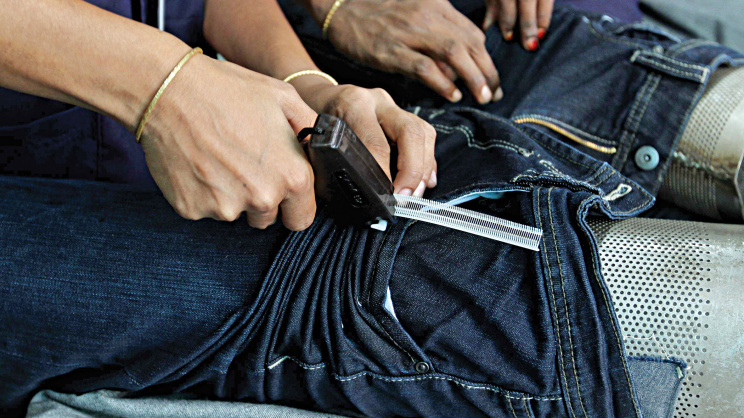
In the US, denim exports grew from $649.96 million in 2023 to $712.87 million in 2024 and further to $955.70 million in 2025 -- registering 34.06 percent growth in 2025. Bangladesh captured a 25.97 percent market share in 2025, becoming the leading supplier among all countries listed.
In the EU, where industry estimates suggest one in three consumers wears Bangladeshi-made denim, exports rose from $1,208.59 million in 2023 to $1,357.88 million in 2024 and to $1,643.50 million in 2025, reflecting 21.03 percent growth in 2025.
With a 29.88 percent market share in 2025, Bangladesh remains the undisputed leader in the EU market, having surpassed China in 2017.
Beyond these key markets, “Made in Bangladesh” denim is widely exported to Japan, India, Australia, Argentina, Brazil, South Korea, Central Asia, the Middle East, Canada and Chile, according to industry insiders.
INVESTMENT AND EXPANSION
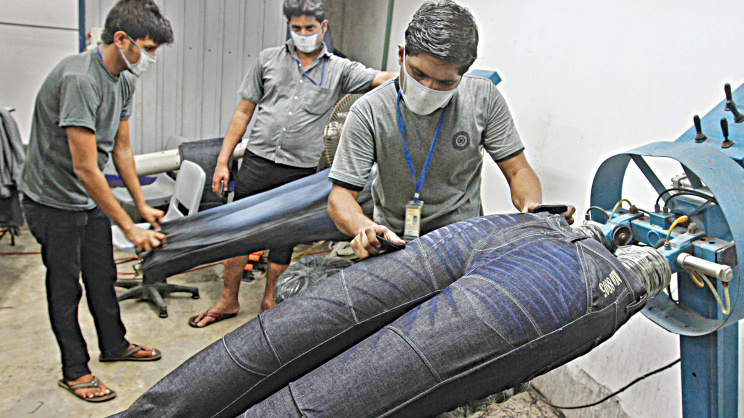
The rapid growth of the sector has been supported by strong local investment. Entrepreneurs have invested over $1 billion in expanding denim production and strengthening global market access.
Around a decade ago, investment in the sector stood at Tk 8,000 crore with about 12 operating mills. Today, nearly 50 mills are operational with an investment of around Tk 25,000 crore, producing about 40 million yards of fabric per month.
“The sector began expanding significantly after 2000,” said Md Shahid Ul Hasan, deputy managing director of Amber Group. His company, Amber Denims -- one of the country’s oldest mills -- produces about three million yards per month.
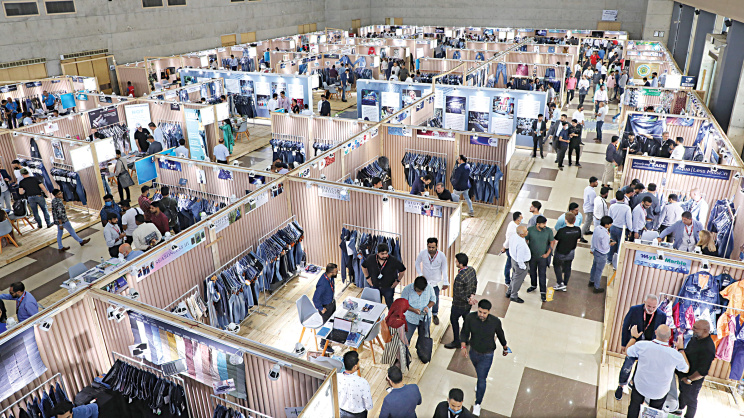
Mostafiz Uddin, managing director of Denim Expert Ltd, said when he launched the Bangladesh Denim Expo in 2014, there were about a dozen mills; now the number has grown to nearly 50.
He said international buyers favour Bangladesh because prices remain competitive compared to other sourcing destinations.
RISING GLOBAL DEMAND
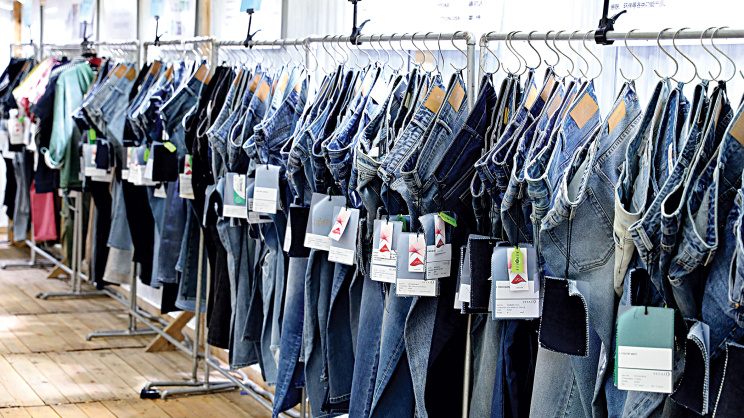
Global demand for denim trousers and garments continues to rise due to comfort, durability, affordability, climate change factors and the growth of casual fashion.
Major international retailers sourcing denim from Bangladesh include H&M, Inditex, Zara, Primark, Marks & Spencer, Uniqlo, Next, Hugo Boss, Ralph Lauren, G-Star RAW, Puma, C&A, Bestseller, Walmart, Gap and VF Corporation.
Local mills currently meet around 70 percent of domestic denim fabric demand, while the remaining 30 percent is imported from India, China and Pakistan, industry sources said.
Garment manufacturers and exporters prefer locally produced denim because it is easier to source and offers shorter lead times. Imported fabric increases processing time and costs, especially when garments are re-exported, industry insiders added.
Muna Nahid, a sustainable fashion designer and specialist who has worked with international brands, said demand for denim is rising globally for multiple reasons.
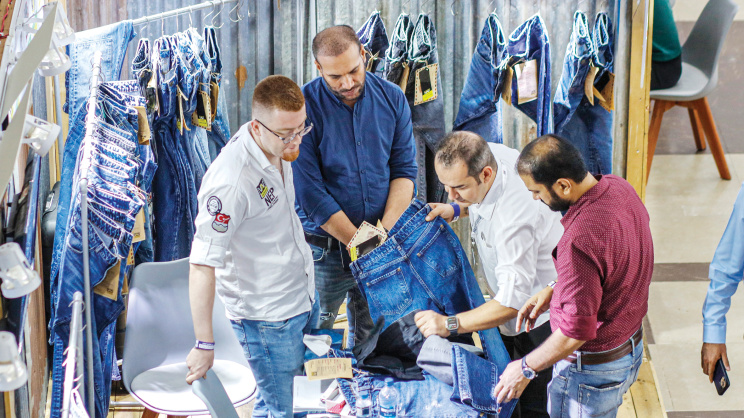
“Denim is popular because it is easy to wash, affordable and now more sustainable due to global recycling initiatives,” she said.
She added that office-goers prefer semi-formal outfits and often choose denim.
“Consumers also like denim because it does not need frequent washing, making it more convenient than other clothing,” she explained. “For example, many people wear denim bottoms three days a week without washing them and wear other clothes on the remaining days.”
She said denim is popular among young men and women and noted that Bangladesh has become a major sourcing destination for global brands.
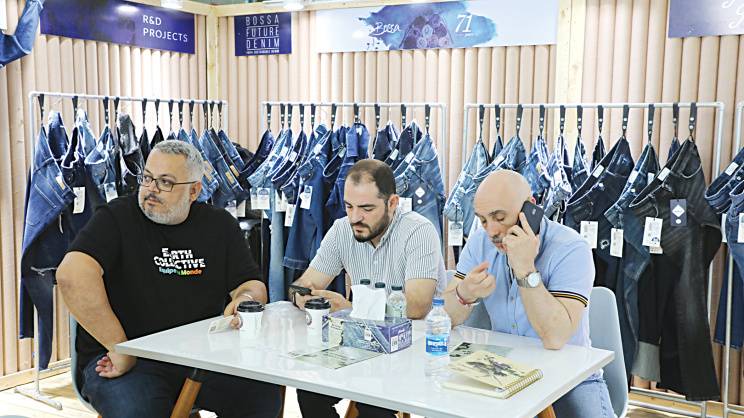
Mahmud Hasan Khan, president of the Bangladesh Garment Manufacturers and Exporters Association (BGMEA), said global demand for Bangladeshi denim products is rising and the country has strong growth potential. He described Bangladesh as an important sourcing destination for international retailers.
Shams Mahmud, managing director of Shasha Denims, said there is no reason for a slowdown in the sector.
“Well-known global retailers and brands are now placing orders in Bangladesh, as the country has the capacity to produce high-end denim for premium customers in Western markets,” he added.
Shasha Denims produces nearly four million yards per month, though output sometimes drops below three million yards due to changes in buyers’ fabric choices.
CHALLENGES: GAS, COSTS AND SUSTAINABILITY
Despite strong growth, industry leaders pointed to several challenges.
Shams Mahmud identified high production costs, limited access to funds, weak renewable energy performance and inadequate gas supply as key issues.
Most mills are currently operating at 60 to 70 percent capacity due to gas shortages, he said.
Showkat Aziz Russell, president of the Bangladesh Textile Mills Association (BTMA), said rising costs have hurt some mills.
“The cost of production has risen sharply as the government increased gas prices for industries by nearly 400 percent over the last four years, and bank interest rates are also high,” he said.
“Despite the gas price hike, energy supply remains inadequate, so mills cannot use their full production capacity. The new government should ensure an adequate gas supply to the industrial sector as soon as possible,” he added.
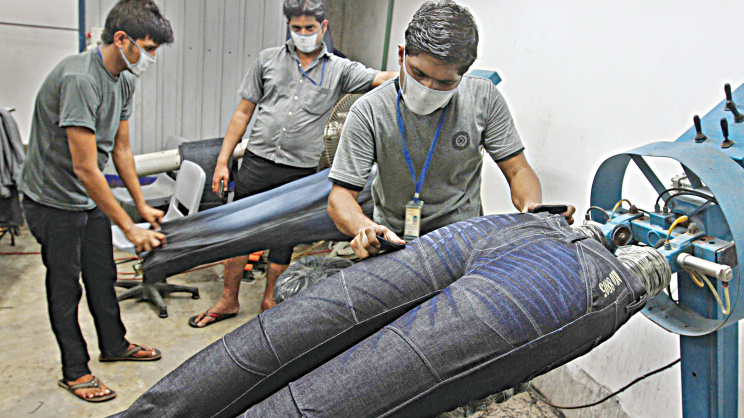
BGMEA President Khan echoed concerns over low gas pressure and the absence of new gas connections. He noted that washing -- a key process in denim production -- requires high gas pressure.
Environmental concerns have also come to the forefront. Khan acknowledged that denim washing consumes significant groundwater but said mills are increasingly using modern technologies to reduce water use due to pressure from environmental authorities and international buyers.
Mostafiz Uddin said earlier mills used 300 to 350 litres of water to wash one kilogramme of denim fabric.
“Now many mills use 30 to 60 litres, and with advanced technology it is possible to reduce it to just 15 litres, though only a few companies have adopted such systems,” he said.
Alamgir Kabir, general secretary of Bangladesh Poribesh Andolon (BAPA), said 70 percent of Bangladesh’s water demand is met by groundwater, including for industries such as denim.
He alleged that many mills discharge contaminated wastewater into nearby land, rivers and canals, damaging water resources and threatening the environment.
Kabir urged factories to use surface water and adopt water reuse practices to reduce dependence on groundwater, adding that nearly 80 percent of water can be reused through modern technologies.
He also said many mills collect rainwater during the monsoon season for washing and toilet use.
However, he criticised the fact that most factories do not properly operate their Effluent Treatment Plants (ETPs), even though they install them to meet compliance requirements. He said the government should ensure proper operation of ETPs so contaminated water is not discharged into water bodies or land.
MARKET OUTLOOK
Sayeed Ahmed Chowdhury, director of operations at Square Denim, said demand declined from September to December last year due to political uncertainty ahead of the national election held on February 12.
“Work orders are now returning as the election is over and a new government is in place,” he said.
He added that Cambodia and Indonesia are trying to strengthen their presence in the global denim market.
As the global denim industry moves toward a projected $76.1 billion market value, Bangladesh’s future growth will depend on balancing production expansion with sustainable practices and a stable energy supply. For now, its position as a leading global denim hub remains firmly established.
Comments