


Bangladesh one of lowest R&D spenders among peers - Khosru says
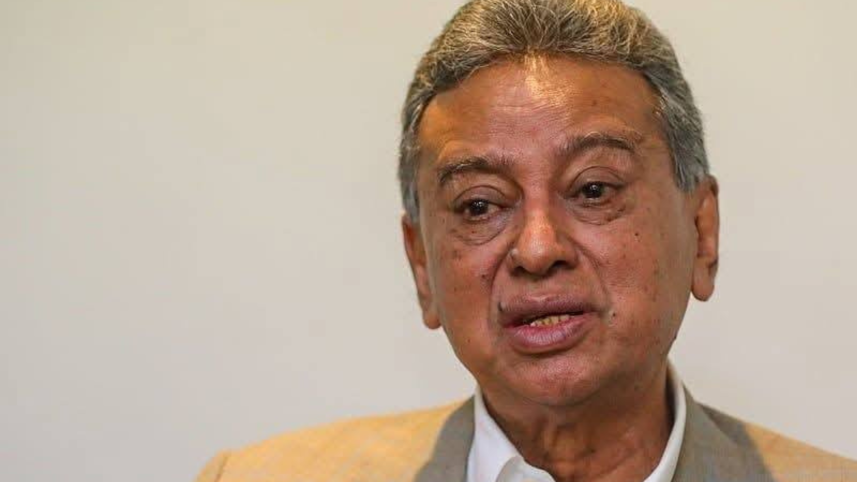
Bangladesh spends only about 0.3 percent of its gross domestic product on research and development (R&D), one of the lowest rates among peer middle-income countries, Finance and Planning Minister Amir Khosru Mahmud Chowdhury said yesterday.
Speaking at the Bangladesh Industry Research, Development and Innovation (BIRDI) Grants Awarding Ceremony in Dhaka, he highlighted countries such as South Korea, China, India and Vietnam, which invest significantly more in R&D, to underscore the gap Bangladesh needs to close.

The event, organised by the Skills for Industry Competitiveness and Innovation Program (SICIP) under the finance ministry at the InterContinental Dhaka, was attended by representatives from industry, academia and development partners.
Citing Bangladesh Bureau of Statistics data at the event, the minister said the picture is worse at the industrial level, with manufacturing enterprises spending, on average, less than Tk 500 per worker annually on research and innovation.
As a result, Bangladesh continues to struggle to compete for global market share, foreign direct investment and high-value employment, he said.
The minister said the country must shift decisively towards a research-driven, innovation-based economy, with greater investment in R&D, stronger industry-academia collaboration and a clear focus on practical solutions.
High-return research cannot flourish in isolation, and needs coordinated action among industry, academia and government, he added.
Universities have often produced theoretical research with limited commercial use, he said, while industrial enterprises have faced inefficiencies without sufficiently using domestic scientific talent.
Competing purely on low wages is no longer viable, Khosru added, urging Bangladesh to build a more sophisticated, innovation-driven production base.
Qingfeng Zhang, country director of the ADB Bangladesh Resident Mission, said the country’s next phase of growth depends on developing homegrown innovators and moving up the value chain through productivity, technology and quality jobs.
While technologies can be imported, local capability to identify problems, adapt tech, and bring solutions to market must be built within Bangladesh, he noted.
Zhang said the BIRDI grants align with ADB’s $300 million financing for SICIP, bridging industry, academia and finance to tackle real business challenges beyond traditional skills training.
During the event, twelve research projects spanning pharmaceuticals, textiles, agriculture, electric mobility, electronics and energy received grants totalling more than Tk 21 crore in the programme’s first round.
Each project pairs an industry partner with a research team to tackle challenges such as AI-driven fabric inspection, water-saving smart dyeing, vaccine-grade enzymes and solar-powered cold storage.
 For all latest news, follow The Daily Star's Google News channel.
Comments