Rohingya genocide: Will the ICJ verdict bring justice?
It was a historic moment when The Gambia, a small West African nation, submitted a petition to the International Court of Justice (ICJ) in November 2019, accusing Myanmar of perpetrating genocide against the Rohingya population in Rakhine State in 2017. This moment marked a significant development in international law and the global justice system because a country filed a case at the ICJ under the Genocide Convention to seek justice and accountability for genocide committed against the people of another nation. Furthermore, The Gambia’s case represents a form of legal recognition of the decades-long suffering and persecution of over 700,000 Rohingya who were displaced due to Myanmar’s military crackdown, known as the Clearance Operation, in northern Rakhine State in 2017 (Summary of the Judgment of 22 July 2022, 2022).
Now, the promise of justice may be nearing its conclusion, but much of the world appears to have moved on. In January 2026, the ICJ held hearings in The Hague for three weeks, during which it reviewed documentary evidence, expert testimony, and private witness statements concerning mass killings, systematic sexual violence, and the destruction of villages, referred to as domicide. The hearings concluded on January 29, 2026, and the Court began its deliberations.
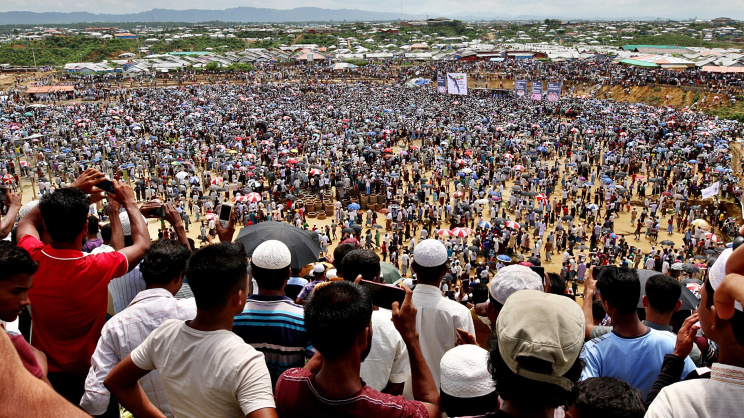
Legal experts do not anticipate a decision for several months, possibly not until later in 2026. While the case once attracted major headlines and public attention, this year’s hearings received much less coverage than the 2020 provisional measures order. It appears that interest in the Rohingya issue at the global level is diminishing and disappearing from the list of priorities on the global agenda. This media fade is also part of the politics of denial driven by global powerhouses and their geopolitical interests. Yet, the Rohingya crisis has not ended; it has simply faded from the news.
A tenuous beginning
The ICJ promptly intervened, issuing an order for provisional measures less than three months after The Gambia submitted its application in November 2019. The case argued that all states party to the 1948 Genocide Convention must prevent and punish genocide, even if they are not directly harmed by or connected to the genocidal attacks. In January 2020, the Court unanimously ordered provisional measures, directing Myanmar to take all necessary actions to prevent genocidal acts against the Rohingya people, preserve evidence related to allegations of genocide, ensure that its military and irregular armed groups refrained from such conduct, and report on compliance every six months (The Gambia v. Myanmar case, provisional measures order, 2020).

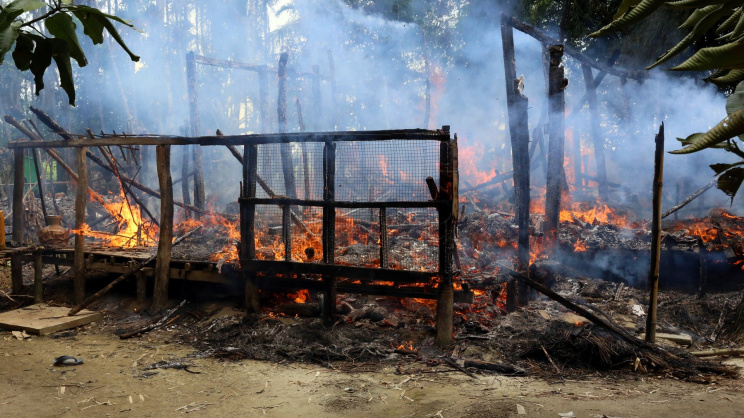
The order was highly significant for those Rohingya who had experienced decades of suffering, persecution and statelessness, faced displacement following the 2017 military operation, and now live in Bangladeshi refugee camps. It was the first time an international judicial body such as the ICJ had acknowledged their suffering and experiences of persecution within the scope of the Genocide Convention. Besides, the provisional order constituted a formal and official recognition that many survivors felt was long overdue. However, the momentum quickly collided with events on the ground in Myanmar, as the military coup in February 2021 plunged the country into a broader civil war. Rakhine State, already scarred by the violence of 2017, turned into one of the country’s most contested and violent regions.
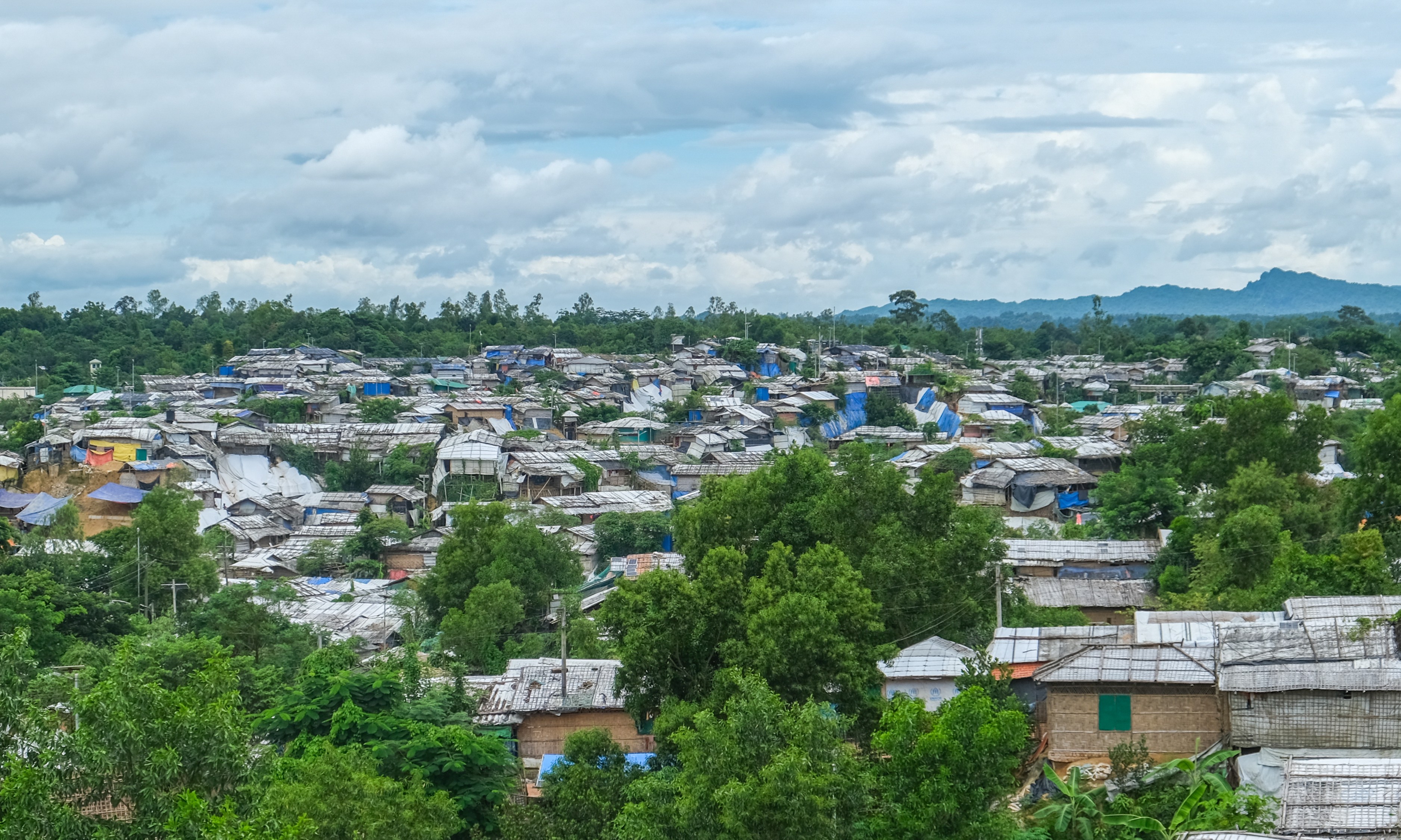
A 2026 UN investigation found that Myanmar’s military had escalated airstrikes against civilians on the ground, even as the case went on to become the ICJ’s first opportunity to decide the merits of a dispute brought by a non-injured state over mass human rights violations. Rights organisations have documented how abuses against the Rohingya who remained in Rakhine continued and, in some respects, worsened in the years following the coup, with accountability remaining elusive four years on. Meanwhile, over 1.2 million Rohingya living in the overcrowded camps of Cox’s Bazar continue to face little realistic prospect of safe, voluntary and dignified repatriation.
The gap between legal victory and lived reality has remained the case’s crucial tension. A provisional order, even though it was issued by the world’s highest court, cannot end a civil war, disarm a junta, restore democracy or guarantee citizenship to a stateless people
The gap between legal victory and lived reality has remained the case’s crucial tension. A provisional order, even though it was issued by the world’s highest court, cannot end a civil war, disarm a junta, restore democracy or guarantee citizenship to a stateless people. Myanmar’s junta government has shown hardly any respect for the ICJ’s legal order, as it does not meaningfully recognise the Court’s authority within its own borders. Rather, its compliance reports to the Court have been treated by observers largely as a formality rather than as evidence of genuine change.
In 2022, the ICJ rejected Myanmar’s preliminary objections to its jurisdiction, holding that the Genocide Convention’s fundamental commitments gave The Gambia the right to bring proceedings against a fellow signatory due to the common interest of all signatories in preventing and punishing genocide. After years of written submissions, replies and rejoinders, the Court finally opened public hearings on the merits of the case on 12 January 2026, with eleven states intervening in the proceedings. The Gambia presented evidence of mass killings, physical harm, an ‘intent to destroy’ a community, systematic sexual violence, and planned village burnings before the Court, including closed-door testimony from Rohingya genocide survivors. The Court’s hearings continued for over three weeks, after which it began its formal deliberations on 29 January 2026. Legal experts anticipate a decision on the merits later in 2026, which could provide some recognition and reparation for the Rohingya, yet enforcing any ruling within Myanmar will remain extremely challenging.
The case has become an example of how the ICJ addresses the collective enforcement of human rights obligations under international law and within the global justice system. Through its legal reasoning, it is also influencing other ongoing cases related to genocide, such as South Africa’s case against Israel and Ukraine’s case against Russia. In fact, The Gambia’s case against Myanmar serves as a reminder that, despite its deficiencies, the legal process can have substantial consequences that the applicants themselves may never fully understand or experience.
Justice determined by geopolitics
This case lucidly demonstrates that recognising genocide is not merely a matter of evidence. It largely depends, in fact, on whether such recognition aligns with the interests of powerful states in the world system. Admittedly, The Gambia’s petition has set an example of how genocide allegations can reach international courts, thereby developing the legal framework for holding perpetrators accountable under the Genocide Convention. Yet, this instance unveils some discrepancies: some genocide allegations receive substantial global attention, immediate diplomatic support and widespread media coverage, while others, like the Rohingya genocide, receive comparatively less attention. Such marginalised cases are kept alive in the public eye primarily by human rights organisations and diaspora activists, rather than through sustained pressure from the so-called democratic and welfare states. The reason is deeply rooted in global geopolitics, as countries with strategic, economic and military interests in Myanmar have invariably refrained from applying meaningful and impactful pressure on Myanmar’s military government, prioritising trade relationships and regional stability over accountability.
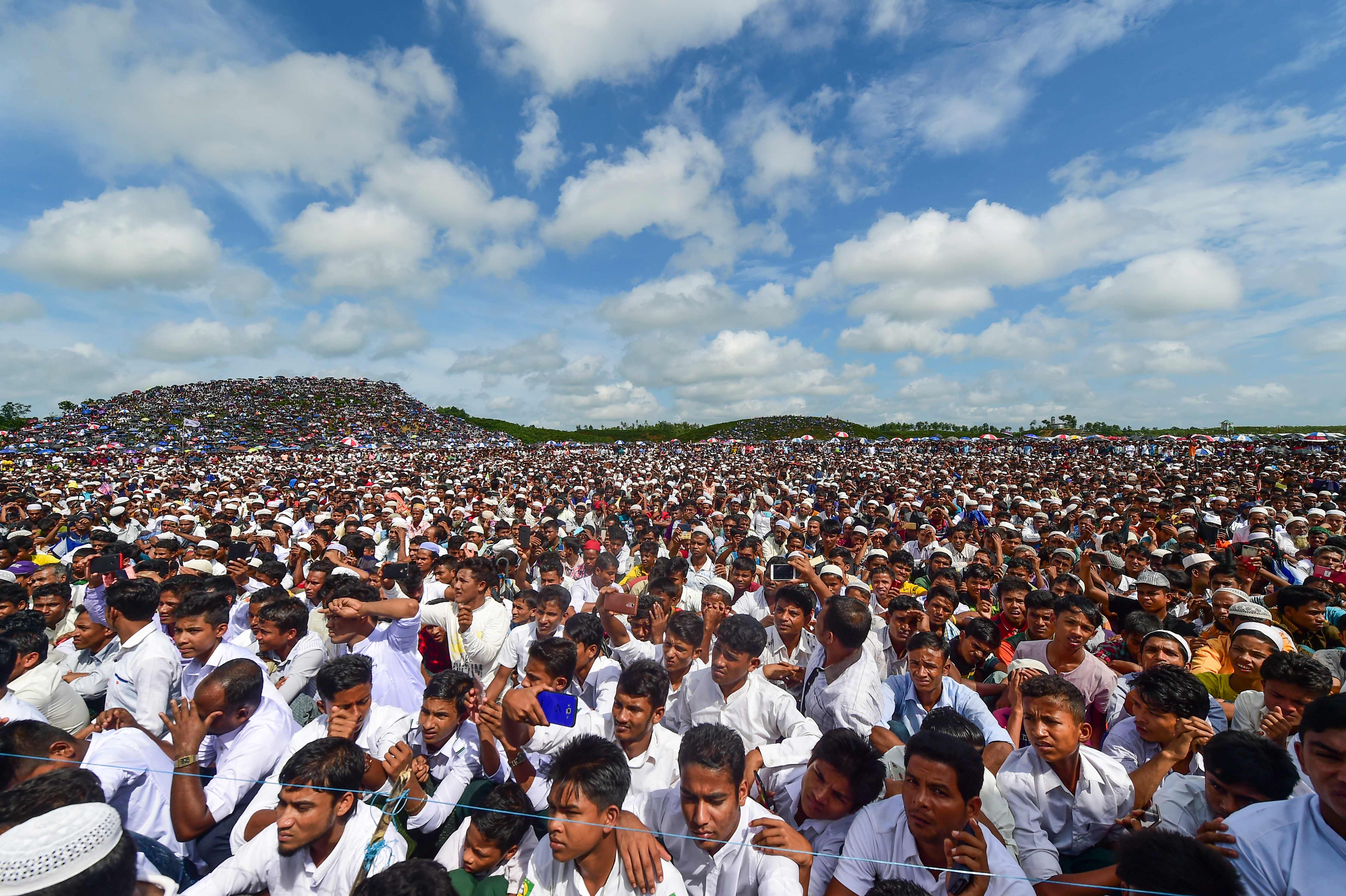
The politics of denial, evident in international discourse, manifests itself in disputes over intentions, disagreements over casualty figures and outright diplomatic silence. Such selective treatment is not limited to Myanmar; it also unmasks a broader, uncomfortable reality about the global justice system. The promise of “never again,” made in the aftermath of the Holocaust, has proved to be conditional rather than universal. In fact, the politics of denial and non-recognition of genocide depend on existing geopolitical narratives rather than on the genuine claims of victims, hard evidence of genocide and solid arguments under the Genocide Convention. For the Rohingya, this means that even a landmark legal victory offers no guarantee that the world’s attention, or its pressure, will follow. Therefore, the question remains unanswered as to whether the ICJ’s verdict will bring any change to the lives of the Rohingya on the ground.
Would a verdict actually change anything?
If the ICJ eventually decides, based on the merits submitted by The Gambia, that Myanmar committed genocide against the Rohingya, what would actually change in Rakhine State or in the refugee camps of Cox’s Bazar the next day? It is well known that the ICJ has no police power or authority to enforce its verdicts. It cannot arrest generals, punish perpetrators or remove a military government. Its decision would have substantial symbolic and legal importance, possibly leading to reparations, serving as a precedent in future criminal cases, and reinforcing the rule against ethnic cleansing. However, symbolic decisions do not rebuild destroyed villages, provide the legal recognition needed to restore Rohingya citizenship, or ensure that even a single Rohingya family can return safely to their “motherland”.
Myanmar today is not the same country it was in 2019, due to the change in power in 2021. It is now plunged into civil war, with several resistance groups fighting in Rakhine State, any of which could threaten the Rohingya, no matter what the Court decides. There is still a risk that the ICJ could reach an opposite conclusion or issue a mixed judgment that finds violations but does not use the word genocide. This could give those who deny the events a rhetorical advantage and make the world even less likely to remain engaged.
A verdict matters but is not an ending
None of this lessens the significance of pursuing the case to its conclusion. Of course, legal accountability matters, even though it moves slowly, proves difficult to enforce, or fails to alter conditions on the ground in any immediate way. Regardless of what the ICJ ultimately decides, its ruling will become a permanent part of the historical record. This official recognition will carry the weight of international law and the global justice system, making it more difficult to dismiss or distort than political rhetoric.
However, it would be unwise to see the ICJ’s ruling as the final resolution of the Rohingya crisis; it is merely one chapter in a much longer story. The true significance of this trial will not be determined within the marble halls of the Peace Palace in The Hague. Instead, its impact will be felt in the overcrowded and muddy camps of Cox’s Bazar, in the villages and at the military checkpoints of Rakhine State, and in the continued global commitment to advocate for the Rohingya long after media attention fades and headlines change. While a judgment can identify a wrong, only sustained political will can begin to address it.
Nasir Uddin is a cultural anthropologist and Professor of Anthropology at the University of Chittagong. He is the author of The Rohingya: An Ethnography of ‘Subhuman’ Life (Oxford University Press, 2020). X: @nasiruddincu
Send your articles for Slow Reads to slowreads@thedailystar.net. Check out our submission guidelines for details.
Should Bangladesh join the Mecca Pact?

Documenting Rohingya history / Rohingya repatriation needs more than diplomacy
Nine years on, Rohingya refugees need more than shelter
Myanmar’s partial Rohingya repatriation plan: Another attempt to mislead Bangladesh?
Is Trump’s Gaza peace plan falling apart?

What Japan’s changing Indo-Pacific strategy means for Bangladesh
Can India and Bangladesh build a more equal economic partnership?

Bangladesh First: Rethinking the relationship with India
A new political voice is emerging from the Rohingya diaspora. Why it matters