


Cement makers under strain as war drives up input costs
- Bangladesh’s cement sector faces import pressure and rising costs
- Freight and related costs have surged, squeezing profit margins
- The industry is under strain from weak demand and broader challenges
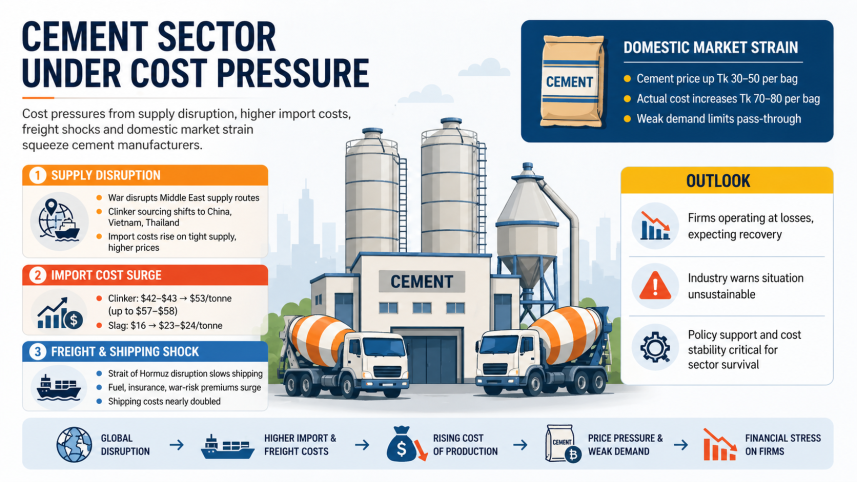
Cement manufacturers in the country are under growing pressure as the US-Israel war on Iran disrupts Middle Eastern supply routes, forcing them to import key raw materials -- especially clinker -- from Asian countries at higher prices.
The conflict has also increased freight costs, further raising overall import expenses. At the same time, weak domestic demand is preventing producers from passing on higher costs to consumers, leaving manufacturers squeezed between rising input costs and a fragile market.

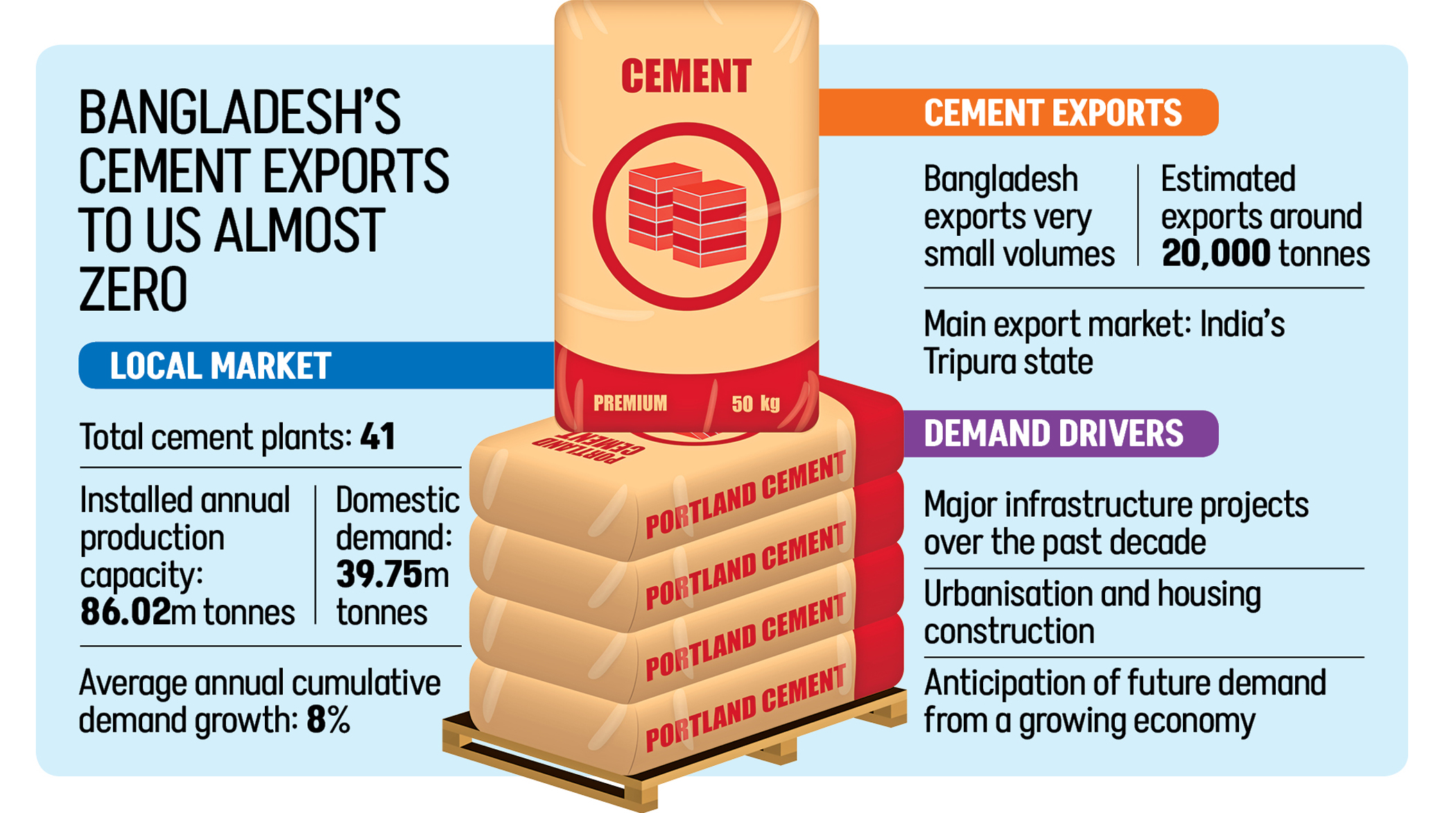
The situation also highlights the sector’s heavy dependence on imported raw materials. Key inputs such as clinker, limestone, granulated slag, fly ash and gypsum are largely imported. Nearly 90 percent of clinker is brought from abroad.
“Bangladesh’s cement sector is under new cost pressure as clinker imports shift away from the Middle East,” said Mohammad Iqbal Chowdhury, chief executive officer of LafargeHolcim Bangladesh PLC.
“Earlier, imports were largely sourced from Gulf countries at competitive prices, but that advantage has now disappeared. The country is now increasingly relying on China, Vietnam and Thailand, where clinker is being imported at higher prices,” he added.
Chowdhury said the shift is linked to a widening geopolitical crisis following joint US–Israel strikes on Iran and Iran’s closure of the Strait of Hormuz, a key global trade route.
“This has cut shipping traffic, pushed up freight and insurance costs, increased logistics risks and war-risk premiums, and forced rerouting of shipments,” he said.
“The impact on Bangladesh’s cement industry has been immediate, as it depends heavily on imported clinker and stone aggregates.”
He added that clinker import costs have risen from about $42 to $43 per tonne to nearly $53 due to tighter supply and higher freight charges.
“With demand already weak, companies are struggling to pass on these costs, putting pressure on profit margins and forcing them to cut spending,” he said.
Md Abul Mansur, general manager of Royal Cement Ltd, echoed these concerns. “Sourcing raw materials has become increasingly difficult due to global disruptions. Clinker is no longer coming from the Middle East, while gypsum and limestone from Oman now face sharply higher freight costs,” he said.
He added, “Clinker prices have risen from around $43 per tonne to about $57 to $58 per tonne, while slag prices have increased from $16 to around $23 to $24 per tonne, driven by war-related disruptions in global shipping.”
Mansur linked the surge in freight costs to higher oil prices, increased insurance premiums and greater risks on maritime routes, saying shipping costs have effectively doubled.
He said the impact is already visible in the domestic market. Cement prices have increased by Tk 30 to Tk 50 per bag, even though actual costs have gone up by Tk 70 to Tk 80. Weak demand has prevented companies from passing on the full increase.
“Costs are rising, but the market is unable to absorb the full impact,” he added.
He also noted that construction activity has slowed as developers delay projects in hopes of greater stability, further affecting the industry.
The country’s broader construction sector is also under strain due to weak public spending, subdued private investment, policy uncertainty and rising costs. These factors have already dampened project approvals, demand and growth across real estate and related industries, including cement.
Mohammed Amirul Haque, president of the Bangladesh Cement Manufacturers Association and managing director of Premier Cement Mills PLC, said the sector has faced multiple shocks over the past five years, making business difficult.
He added that many companies are still operating despite losses in the hope of recovery, but warned that this situation is not sustainable.
 For all latest news, follow The Daily Star's Google News channel.
 He stressed the need for a profit margin and cautioned that sharp price increases could harm the market.
“A quick recovery is unlikely,” he added.
Comments