


Energy efficiency saved $3.3b in FY24


- Efficiency saved Bangladesh $3.3 billion
- Fossil fuel imports cut seven million tonnes
- Industry upgrades boosted energy efficiency nationwide
- Stronger enforcement needed to sustain future gains
Bangladesh saved an estimated $3.3 billion in energy costs in a single year by using electricity and fuel more efficiently across homes, factories and the power system, according to a report.
Besides, the savings reflect reduced fossil fuel consumption and avoided energy imports equivalent to 7 million tonnes of oil in fiscal year 2023-24, said the report published by the Institute for Energy Economics and Financial Analysis (IEEFA) yesterday.
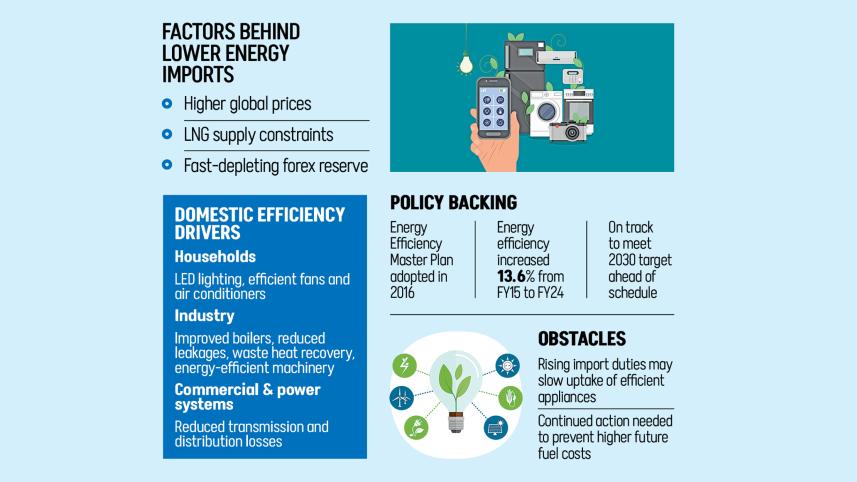
In that period, the country faced higher global fuel prices, spiked rates for liquefied natural gas (LNG) deliveries and a severe dollar crisis.
The report said the savings were achieved through efficiency improvements across major consuming sectors, allowing the economy to deliver the same level of output while using less fuel.
In the report, IEEFA, a United States-based nonprofit organisation that promotes the transition to cleaner energy, said that the country's effort to improve energy efficiency by adopting a national master plan in 2016 is now paying off.
The Energy Efficiency and Conservation Master Plan set a target to cut energy intensity by 15 percent by 2021 and 20 percent by 2030.
From fiscal year 2014-15 to 2023-24, energy efficiency rose by 13.64 percent, according to the report, titled "Bangladesh's Energy Efficiency Goals Within Reach".
Although the progress remained limited until FY2020-21, energy efficiency gained momentum thereafter as global fuel volatility and domestic supply disruptions made it a priority, according to the report.
"The regulatory framework and awareness created a favourable ecosystem to enhance energy efficiency amid supply disruptions and rising tariffs, with further gains possible," the report mentioned.
"Bangladesh's efficiency gains have put it on track to meet its targets under the masterplan and its updated climate commitments, potentially a year ahead of schedule," it added.
According to the report, widespread adoption of energy-efficient appliances in households, particularly LED lighting, fans and air conditioners, helped reduce electricity demand. This eventually reduced the need for fuel-based power generation.
Industry, the country's largest energy consumer, also contributed through improved boilers, reduced leakages, waste heat recovery from captive generators and adoption of technologies such as vertical roller mills and efficient furnaces, said the report.
"Yet, the industry still offers significant untapped energy-efficiency opportunities such as using more efficient motors, a gradual shift towards electric boilers from gas boilers, and upgrades in captive power machineries," it added.
The report mentioned a previous IEEFA study, saying almost half of the country's captive power generators do not operate efficient generators and fail to utilise waste heat in industrial processes, which could save Bangladesh up to 50.18 billion cubic feet of LNG imports a year.
The report recommended setting minimum energy performance standards and labelling for household appliances to guide consumers towards the most efficient options.
It also urged enforcement of the national building code, which promotes passive design and energy-efficiency features in new buildings to reduce cooling demand.
Additional savings came from the commercial sector and reductions in transmission and distribution losses across the power system.
 For all latest news, follow The Daily Star's Google News channel.
 While the commercial sector uses less energy than households or industry, its reliance on air conditioning makes efficiency gains critical as rising temperatures are expected to increase cooling demand.
The report noted that stronger enforcement of appliance standards and labelling is needed to secure real savings.
It also warned that recent rises in import duties could undermine efficiency gains by making efficient appliances more expensive.
Customs duties on key components of LED lights were raised sharply in FY2025-26, potentially pushing price-sensitive consumers towards cheaper, lower-quality products.
Similarly, higher minimum import duties on inverter-based compressors for energy-efficient air conditioners and refrigerators could also slow adoption of efficient cooling technologies, it said.
IEEFA clarified that the $3.3 billion figure represents avoided fuel import costs rather than direct budgetary savings and does not appear as a line item in government accounts.
The report concluded that without stronger enforcement of efficiency standards and faster modernisation of industry and buildings, the country risks locking itself into higher fuel costs despite recent gains.
"For Bangladesh, energy efficiency is a strategic necessity to curb unchecked energy consumption and strengthen the resilience of its energy system. Achieving these gains will require a coordinated effort among regulatory authorities, industries, financial institutions, and technology providers," it said.
Comments