


Fuel queues pushing up transport costs


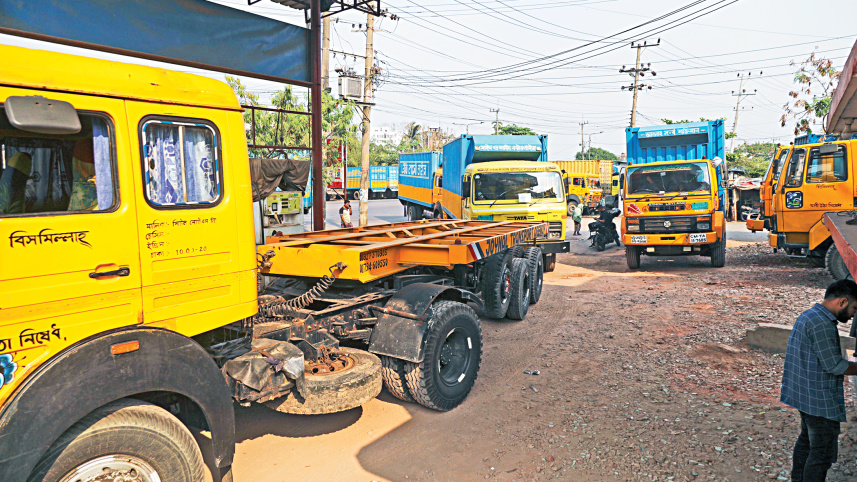
Amid long queues at refuelling stations, trucks carrying perishable vegetables, food items and factory raw materials are charging at least Tk 5,000 more than pre-war rates per trip to Dhaka from different parts of the country.
These higher transport costs risk pushing up production expenses and the price of kitchen staples, a ripple effect of the US-Israel war on Iran.

Despite reports of a fuel shortage, disrupted international supplies and panic buying nationwide, authorities said there was no serious shortfall. The government has also repeatedly said that it has no plan to raise fuel prices.
Officials say any upward adjustment of fuel prices would drive up the cost of essentials, adding to a years-long period of stubbornly high inflation.
But delays at pumps are already inflating transport costs, threatening the price relief the government is attempting to provide.
Md Islam, a vegetable supplier sending produce to wholesale markets in Dhaka from northern district Thakurgaon, said everything had become more expensive after the war.
Islam said that he used to pay around Tk 24,000 for a medium to large truck to Dhaka, but that has risen by Tk 5,000 to Tk 30,000-Tk 32,000 before Eid.
“Truck rentals have gone up as fuel is often not available,” he said.
He said diesel shortages at local filling stations have forced truck drivers to queue for hours. “You have to queue up at pumps for hours, and often there is no fuel left when your turn comes.”
Mobarak Ali, a vegetable wholesaler in southwestern district Jhenaidah, said fares have climbed to Tk 22,000 from Tk 18,000 per trip to Dhaka after the war began on February 28.
After factoring in additional unofficial costs, he estimated the final transport cost per trip to the capital now reaches nearly Tk 27,000.
He fears transport costs may rise further if the fuel situation does not improve.
OIL SHOCK REACHES FACTORY FLOOR
A covered van carrying imported raw materials from Chattogram to Dhaka used to cost Tk 16,000-Tk 17,000 per trip, according to businessmen. Before Eid, that rate surged to Tk 30,000- Tk 33,000.
Industry insiders said the pre-Eid rush, the biggest festival for Muslims in Bangladesh, also contributed to the spike. As factories prepared for a week-long closure, entrepreneurs raced to ship and receive cargo beforehand.
After Eid, demand for transport has eased somewhat.
For instance, Dhaka-based Far East Knitting and Dyeing Industry paid Tk 33,000 per vehicle for five covered vans transporting imported yarn from Chattogram port on March 18, said Kamruzzman Sagar, owner of the clearing and forwarding (C&F) firm handling the shipment.
In the past week, shipments from Chattogram fell by around 50 percent, said Chowdhury Jafor Ahmed, secretary general of the Bangladesh Covered Van-Truck Prime Goods Transport Owners Association.
“The market is currently off. Our main freight flow depends on Dhaka and Chattogram,” he said.
Ahmed added that freight rates have not risen significantly, though temporary fluctuations occur due to logistical bottlenecks.
 For all latest news, follow The Daily Star's Google News channel.
 “Before Eid, exporters sent advance shipments, creating congestion at depots where goods remained for seven to ten days,” he said. “These delays and limited truck availability pushed up fares by around Tk 10,000.”
Harunur Rashid, executive member of the Inter District Goods Transport Truck Covered Van Owners Association, said fares rose because vehicle shortages were caused by diesel scarcity at filling stations.
Drivers often waited hours in queues and had to collect fuel from multiple pumps along highways, leading to further delays.
Comments