


Furniture industry stabilising after two-year slump
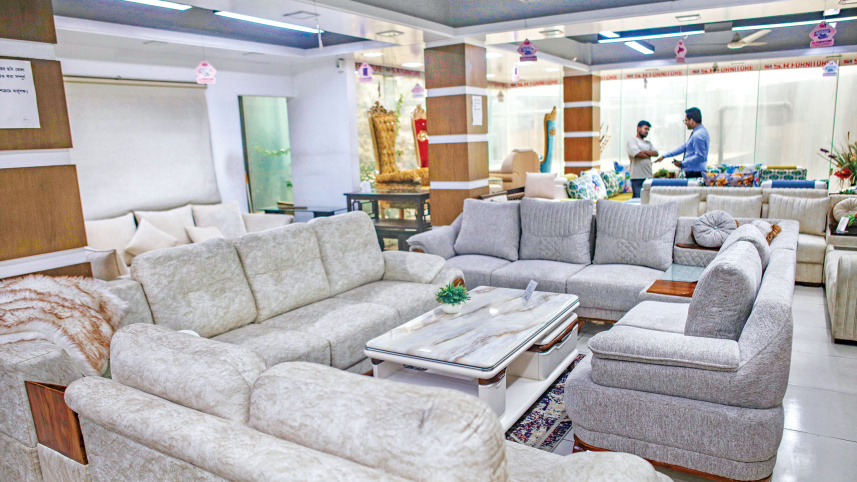
The country’s furniture industry is showing signs of stabilisation after nearly two years of decline, though recovery remains fragile and uneven across segments, according to leading manufacturers.
Industry insiders say the domestic furniture market was worth about $2.5 billion -- roughly Tk 30,000 crore -- in 2023, after expanding at an annual rate of 10 to 12 percent since 2010. However, due to political uncertainty, high inflation and a prolonged slowdown in the real estate sector, the market is believed to have fallen to around Tk 21,000 crore in 2025.

The downturn came after months of economic pressure and uncertainty, which weakened consumer confidence and slowed development activity.
Selim H Rahman, chairman and managing director of HATIL Furniture, said 2024 was one of the toughest years in the company’s history.
“For the past one-and-a-half years, the sector has suffered a lot,” he said. “Relief has just started. We may feel it gradually, but we are not there yet.”
He said the months after August 2024 were especially difficult. “It felt like a war-like situation in the market,” he said, pointing to the sharp fall in demand. Conditions have improved over the past five to six months, but the market has not yet recovered to its previous level.
Rahman said HATIL’s turnover crossed Tk 400 crore at its peak around 2023, but that level has not returned. The market first dropped by nearly 50 percent and later improved slightly, remaining about 30 percent below its previous highs.
He added that home furniture sales also declined as customers delayed purchases due to uncertainty and rising living costs.
Rahman said the formation of an elected government has boosted confidence somewhat, but real recovery will depend on stable economic conditions and stronger investment in housing and infrastructure.
PREMIUM AND IMPORT SEGMENTS UNDER PRESSURE
Premium manufacturers have faced extra pressure from rising imports. Athena’s Furniture and Home Décor, a sister concern of Anwar Group of Industries, saw sales drop by more than 30 percent during the interim government period.
Waeez R Hossain, deputy managing director of Anwar Group, said the high-end market has changed because of shifting customer demand and higher imports.
“We operate in the premium segment, and a lot of imported furniture -- especially from China -- has entered the market,” he said. “At the price customers used to pay us, they can now import similar products.”
Athena mainly serves affluent buyers, with individual orders ranging from Tk 20 lakh to Tk 1 crore. However, even this customer base has become more cautious.
Hossain said traditional premium buyers in areas such as Lalbagh in Old Dhaka and parts of Rajshahi, Chattogram and Sylhet have been affected by slower income growth and tighter liquidity.
He added that the slowdown in real estate -- estimated by some industry players at 40 to 60 percent in certain segments -- has increased pressure, as housing development and furniture demand are closely linked.
The imported luxury segment, however, saw even bigger fluctuations.
Shohan Akon Sunny, senior brand lead of Ashley Furniture Homestore Bangladesh under Partex Star Group, said import-based businesses were hit hardest during the downturn.
“As an import-based business, we bring products in containers and pay full duties. When sales slow, it becomes very difficult to manage costs,” he said.
In some months, sales in the luxury import category dropped to just 10 percent of normal levels. High import duties pushed prices up, limiting customers mainly to affluent buyers, expatriates and foreign residents.
 For all latest news, follow The Daily Star's Google News channel.
 Sunny added that recent Eid sales have improved, giving hope that demand could gradually recover if the overall economy stabilises.
Not all players faced the same level of decline.
Regal Furniture, part of the PRAN-RFL Group, recorded about 25 percent growth in the home furniture segment after a prolonged slowdown from August 2024 to September 2025.
RN Paul, managing director of PRAN-RFL Group, said the sector struggled over the past 15 months but saw a slight recovery in the last quarter of 2025.
“Strong remittance inflows and stable agriculture, without major disasters, helped the furniture sector rebound,” he said.
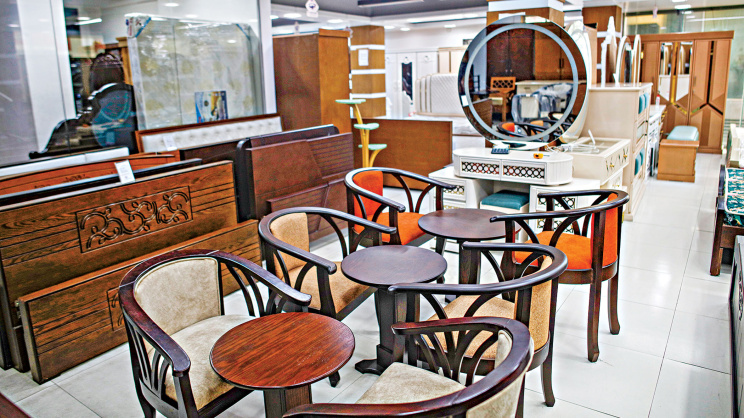
Paul noted a shift in consumer behaviour. “Urban buyers are moving from traditional furniture to factory-made, standardised products,” he said.
He added that office furniture was among the worst-hit segments as new public and private projects slowed. Without fresh development activity, demand for corporate and institutional furniture dropped sharply.
He also said inflation and political instability over the past 18 months reduced discretionary spending. “The lack of government procurement pushed office furniture sales close to zero during the slowdown, hurting overall performance,” he said.
Comments