


Pharma sector faces post-LDC challenges
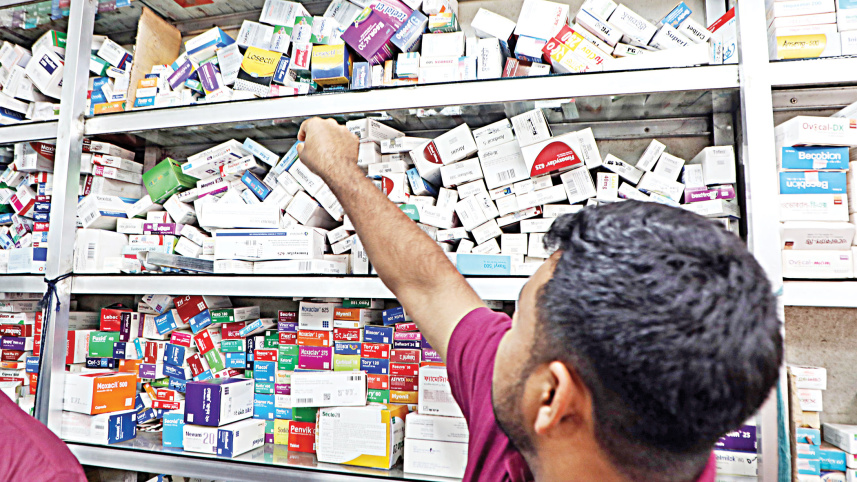
Bangladesh’s pharmaceutical industry could face major challenges after graduation from least developed country (LDC) status due to weak research capacity, reliance on imported raw materials, and the possible loss of patent waivers, which could raise medicine prices, according to experts.
“Recent studies have raised concerns about Bangladesh’s pharmaceutical sector ahead of the post-LDC graduation period, particularly its weak research and development capacity,” said Syed Abdul Hamid, professor at the Institute of Health Economics at the University of Dhaka.

He made the remarks yesterday while presenting the keynote at a workshop titled “Strengthening pharmaceutical industry competitiveness and innovation for sustainable growth in the context of LDC graduation”.
The workshop was jointly organised by the Institute of Health Economics, the health ministry and the Asian Development Bank (ADB) at the Pan Pacific Sonargaon Dhaka.
Citing a Centre for Policy Dialogue study, he said that “only 3.4 percent of total investment in the sector goes to research and development,” adding that many firms are more interested in buying patent rights after the TRIPS waiver expires than investing in innovation.
Hamid warned that “medicine prices, especially for patented drugs, could rise sharply once Bangladesh loses the waiver benefits,” as local manufacturers would no longer be able to reverse-engineer patented medicines without licences.
He also said that demand for advanced medicines for cancer, respiratory illnesses and other complex diseases would further intensify the challenge.
He further noted the sector’s heavy dependence on imported active pharmaceutical ingredients (APIs), stressing the need for stronger research and development, closer industry–academia collaboration, implementation of the API Industrial Park, and regulatory reforms.
Rashed Al Mahmud Titumir, finance and planning adviser to the prime minister, said the pharmaceutical industry is “at a critical stage” as the country prepares for LDC graduation and works towards becoming a $1 trillion economy by 2034.
He said the wider economy is facing pressure from high inflation, depreciation of the taka against the US dollar, and a worsening business environment that has slowed production and investment.
“The old model will not work anymore,” he warned, calling for an investment-led growth strategy focused on diversification, productivity and competitiveness.
He also criticised what he called years of “regulatory capture” in the pharmaceutical sector, alleging that powerful business interests have distorted competition and weakened institutions.
“The industry must be a price taker, not a price maker,” he said, stressing the need for an independent regulator and stronger oversight.
Titumir also questioned why global agencies such as the World Health Organization and Unicef still do not procure medicines from Bangladesh. He said the country must strengthen regulatory standards and the Directorate General of Drug Administration to expand access to global markets.
INVESTMENT, STANDARDS AND GROWTH PROSPECTS
Blaire Ng, investment specialist at the ADB, said Bangladesh’s pharmaceutical industry still faces “major challenges”, particularly in research and development, dependence on imported APIs, and compliance with international manufacturing standards.
She said the key question is how Bangladesh can use its existing strengths to ensure sustainable growth after LDC graduation, adding that the country is well-positioned to benefit from global efforts to diversify pharmaceutical supply chains.
She described the sector as one of Bangladesh’s strongest areas for export diversification and industrial upgrading.
“The lesson for Bangladesh is that a crisis can become a critical moment for domestic transformation and stronger research and development capacity,” she said.
 For all latest news, follow The Daily Star's Google News channel.
 She added that the ADB is ready to support Bangladesh through policy reforms, infrastructure development, regulatory support, technical assistance and financing for pharmaceutical projects and companies.
Akhira Matsunaga, officer-in-charge of the ADB, said Bangladesh’s pharmaceutical industry has strong potential to deepen its integration with regional and global markets.
He said continued investment will be crucial during and after LDC graduation, helping Bangladesh benefit from opportunities in industry upgrading, innovation, technology transfer, investment expansion, and production of higher-value pharmaceutical products.
“There is strong potential for Bangladesh’s pharmaceutical sector to develop further into a competitive regional and global industry, while also contributing to broader economic diversification and resilience,” he said.
Sheikh Momena Momi, additional secretary of the WH Wing at the Health Services Division, said she hoped the assessment would help identify needed reforms, improve investment readiness, and strengthen the pharmaceutical sector’s capacity for innovation.
“With coordinated efforts and continued collaboration, Bangladesh’s pharmaceutical industry can strengthen its position in regional and global markets,” she said.
Md Enamul Haque, director general of the Health Economics Unit at the ministry, said Bangladesh spent nearly Tk 39,000 crore on medicines in 2020, which accounted for almost half of total healthcare spending.
He said the highest expenditure was on medicines for musculoskeletal, cardiovascular, and gastrointestinal diseases, and noted that irrational drug use and self-medication remain major concerns.
He warned that medicine costs could rise further after Bangladesh graduates from LDC status, increasing pressure on households that already face high out-of-pocket healthcare expenses.
Comments