


Small entrepreneurs struggling to go big

Bangladesh’s small and medium enterprise (SME) sector accounts for 99 percent of the country’s industries, yet many businesses remain trapped by poor market linkages, limited modernisation, and inadequate industrial support.
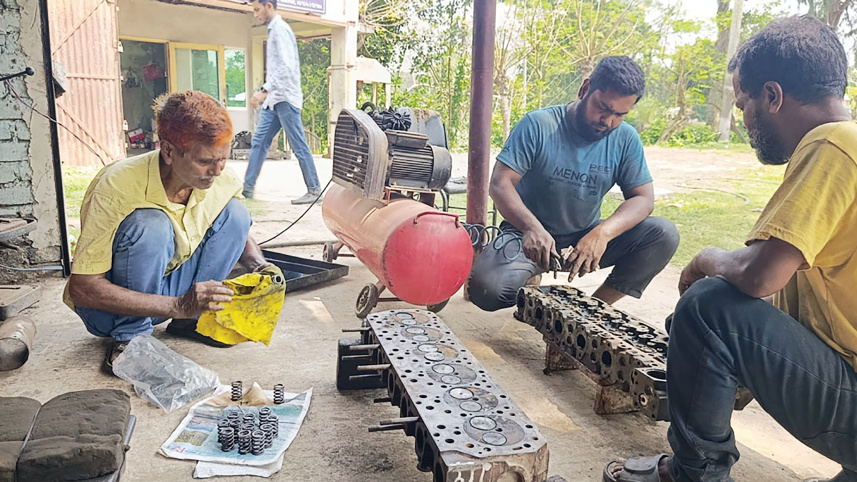
A recent visit to two major SME clusters -- the light engineering hub in Pabna and the handloom cluster in Kumarkhali, Kushtia -- found entrepreneurs struggling to expand despite receiving training and loans from the state-run SME Foundation.

LIGHT ENGINEERING STRUGGLING TO SCALE
For many in Pabna, light engineering has long offered a path out of poverty.
Rabiul Islam Farhad, owner of Baba Engineering, spent decades rising from labourer to entrepreneur.
“I bought a machine with my savings ten years ago. Now, I employ ten workers,” he said.
Despite producing intricate vehicle parts and industrial components, the sector still lacks formal recognition and technical support.
“With even minimum technical support, our handmade products could be recognised in the national automobile sector,” Rabiul added.
Gias Uddin Shiplu, a third-generation entrepreneur at Kafil Uddin Engineering, manages 27 machines but says growth remains constrained by shortages of raw materials, processing facilities, and automated machinery.
“As Pabna is already one of the leading hubs for light engineering in Bangladesh, establishing moulding facilities would help the sector flourish,” he suggested.
Shiplu noted that training is less of a concern, as many workers have already received instruction from the SME Foundation, which has also organised workshops to build business networks.
HANDLOOM SECTOR LOSING GROUND
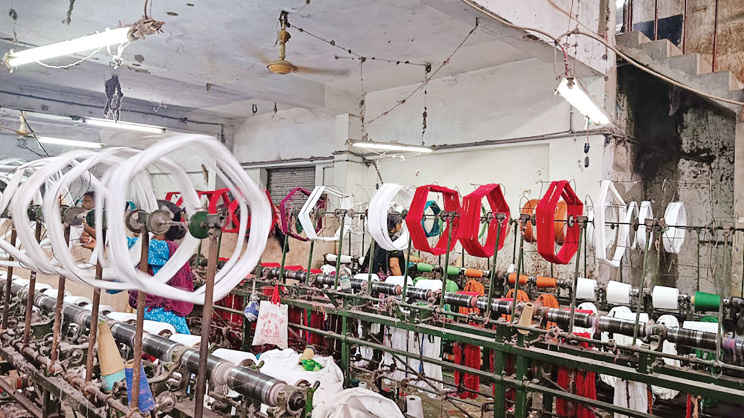
In Kumarkhali’s handloom cluster, entrepreneurs say the industry is shrinking rapidly.
Md Abdur Rafik, owner of Bulbul Textile, said the number of operational looms has fallen from 5,000 two decades ago to just 1,500 today.
“Our production costs are too high to compete due to the lack of automated machinery,” he said.
Md Masud Rana, owner of Rana Textile and a fourth-generation entrepreneur, said Kumarkhali bedsheets received Geographical Indication (GI) recognition but producers still lack export facilities.
“We are dependent on a local market that is too small to support expansion,” he said.
Rana suggested supplying thread at mill rates to help improve profit margins and sustain the sector.
SECTOR-WIDE CHALLENGES
According to SME Foundation data, around 70,000 factories operate across 177 SME clusters nationwide, generating an annual turnover of Tk 30,000 crore.
 For all latest news, follow The Daily Star's Google News channel.
 A 2024 report by the Bangladesh Bureau of Statistics said there are 1.18 crore industries in the country, 99 percent of which are SMEs. The sector contributes 30 percent to the economy and provides 85 percent of industrial employment, involving more than 3 crore people.
Nazim Hasan Sattar, general manager of the SME Foundation, said most entrepreneurs inherit their trades but lack sufficient technical knowledge and advanced skills.
Since its establishment in 2007, the foundation has surveyed enterprises nationwide and focused on developing entrepreneurial and technical skills, he said.
Farzana Khan, a deputy managing director, said the foundation has disbursed Tk 295 crore in loans through 15 scheduled banks and financial institutions and plans to provide another Tk 440 crore.
Entrepreneurs can access loans ranging from Tk 1 lakh to Tk 25 lakh at single-digit interest rates.
Beyond financing, the foundation regularly organises training programmes in Dhaka and across industrial clusters with support from the Bangladesh Industrial Technical Assistance Center (BITAC), chambers of commerce, and district administrations.
Around 20 lakh people have received training over the past two decades. The foundation also organises fairs in Dhaka and other major cities to improve market linkages for SMEs.
According to foundation data, both loans and training support have been extended to the Pabna Light Engineering Cluster and Kumarkhali Textile Cluster.
Comments