


Taka weakening against dollar amid war tensions
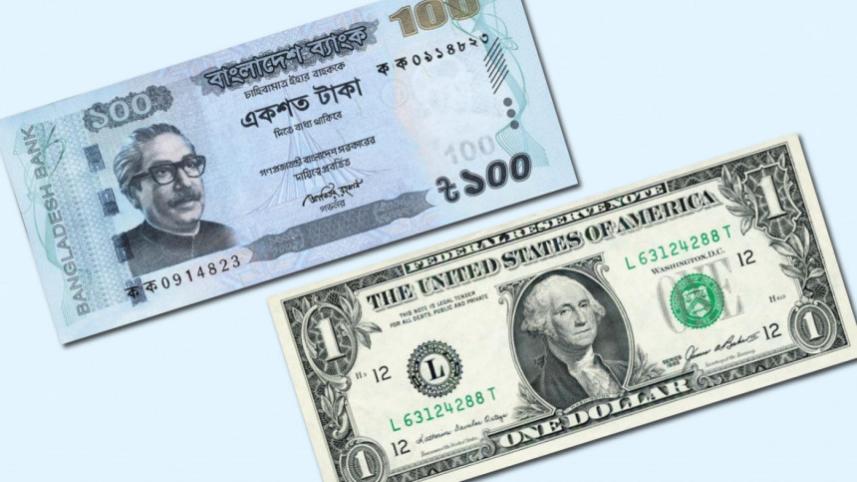
After months of stability, Bangladesh’s currency has started to lose value against the US dollar as Bangladesh Bank stopped intervening in the market due to the possible impact of the US-Israel war against Iran.
Yesterday, the greenback was traded at a maximum of Tk 122.55 each, up from Tk 122.37 on the previous day.
 For all latest news, follow The Daily Star's Google News channel.
 The weighted average interbank exchange rate stood at Tk 122.49 per US dollar, up from Tk 122.43 a day earlier, according to the latest data from Bangladesh Bank.
The interbank exchange rate was Tk 122.36 last Thursday and Tk 122.33 on Wednesday, the data showed.
Central bank data shows that the weighted average interbank exchange rate against the greenback has continued to weaken since March 2 this year.
Officials of the central bank said the regulator has now stopped intervening in the market due to the possible impact, which is why the value of the taka has started to weaken against the US dollar.
They also noted that fuel prices in the international market have increased sharply, which is likely to raise import costs and lead to volatility in the forex market in the coming days.
Considering that potential impact, Bangladesh Bank halted purchasing US dollars from the market, they added.
Bangladesh Bank purchased more than $5 billion from the foreign exchange market since the beginning of this fiscal year until March 2.
However, between FY21 and FY25, Bangladesh Bank sold more than $25 billion from its foreign exchange reserves to meet import payments for fuel, fertiliser and food.
The new governor of Bangladesh Bank recently hinted that the regulator will provide US dollar support from forex reserves to import fuel if needed, officials said.
Due to Bangladesh Bank’s dollar purchase spree, the country’s foreign exchange reserves have continued to rise.
Forex reserves stood at $34 billion as of March 8 this year, according to Bangladesh Bank data. However, the reserves stood at $29.38 billion as per the IMF calculation.
On Saturday, eight leading economists of the country met the new governor of the central bank to discuss ways to address the possible impact of the Middle East crisis on the economy.
The economists suggested that Bangladesh Bank remain cautious about spending from the country’s foreign exchange reserves as tensions in the Middle East threaten to create fresh economic shocks.
They also warned that rising global fuel prices due to the Middle East crisis could increase the country’s import bills and eventually put pressure on the foreign exchange reserves.
The economists advised the central bank to explore alternative funding sources to settle fuel import payments instead of using the reserves.


Comments