


Japan trade deficit narrows 92pc on jump in exports
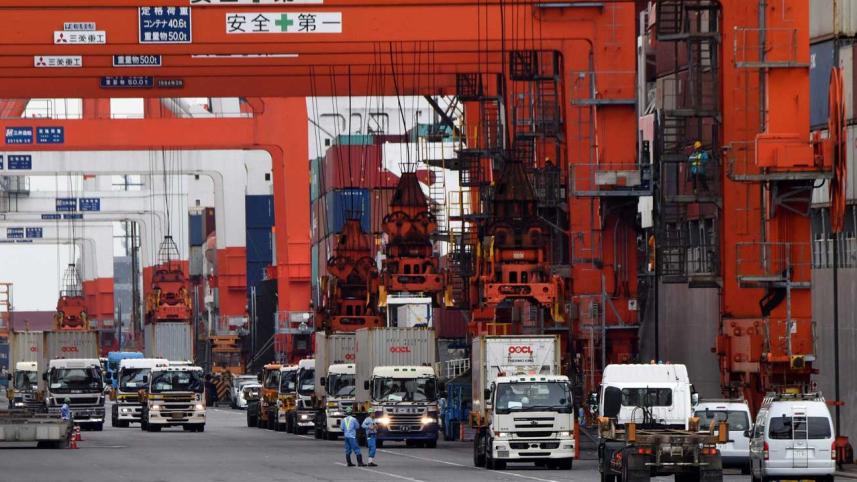
Japan's trade deficit narrowed sharply last month as exports of automobiles and electronic parts picked up while a sky-high energy import bill continued to fall, finance ministry data showed Thursday.
The country's trade deficit came in at 69.0 billion yen ($556 million), plunging 91.7 percent from a 834.0 billion yen deficit a year ago, and offering some good news for an economy struggling to gain traction.
 For all latest news, follow The Daily Star's Google News channel.
 In June, the value of imports jumped 9.5 percent while imports were down 2.9 percent.
Over the six months through June the deficit shrank 77.4 percent as weak commodity prices helped bring down Japan's energy bill, which soared after it had to replace nuclear power in the aftermath of the Fukushima nuclear crisis.
Oil prices fell Wednesday after US government data showed higher crude stockpiles -- cheaper energy is generally good news for resource-poor Japan. "Exports will gradually regain strength toward the second half of this year," said Akiyoshi Takumori, an economist at Sumitomo Mitsui Asset Management. "External demand will support the economy."
The relatively upbeat data lent support to Tokyo stocks with the benchmark Nikkei 225 index finishing 0.44 percent higher.
Japan's exports to the key North American market were up 16.9 percent over the first half of the year, 5.1 percent to European Union countries while exports to China rose a less robust 2.2 percent since January, the data showed.
But export volumes barely budged and there are fears about a slowdown in China, a major trading partner with Japan. "China will continue to pose a risk to Japan's economy," said Atsushi Takeda, an economist at Itochu Corp.
Japan's central bank this month cut its annual growth and inflation forecasts for the world's third-largest economy, with analysts warning weaknesses remained and the downgrade hinted at a disappointing second quarter.
The economy expanded 1.0 percent in January-March after limping out of recession in the last three months of 2014, and business confidence remains strong.
But consumer spending has struggled after a sales tax rise last year and economists widely expect the Bank of Japan to ramp up its monetary easing programme, likely later this year, to bring Japan closer to its inflation target.
Comments