


India growth beats forecasts, defying Mideast turmoil
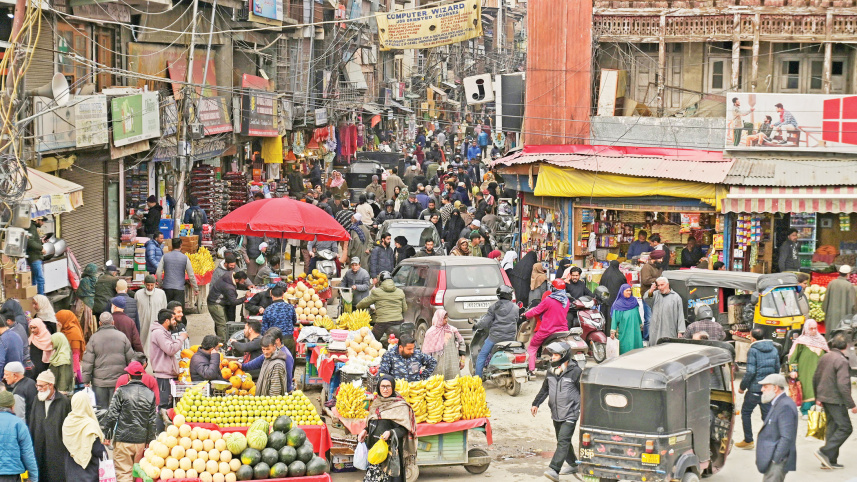
India’s economy grew at a faster pace than expected in the April to June quarter, official data showed on Monday, quelling fears that the Iran war would derail growth in Asia’s third-largest economy.
Gross domestic product rose 7.8 percent in the three months through June from the same period a year earlier, helped by a robust services sector, according to data from the statistics ministry. While this was down from a revised 8.6 percent recorded in the previous quarter, it was still above market expectations of 7.3 percent growth.

“Growth was led by services, but a key upside surprise came from manufacturing, which grew 9.2 percent,” Teresa John of Nirmal Bang Institutional Equities told AFP.
Prime Minister Narendra Modi called the figures a “herculean feat”, noting that it came despite “oil price shocks and supply chain issues”.
“Doomsayers were doomed and India bloomed... yet again!” the premier said in a post on X.
Monday’s reading cements India as the world’s fastest growing major economy, and is a shot in the arm for Modi’s government, which has been grappling with political setbacks and a series of delicate policy challenges.
The year kicked off on a strong note for India, with robust economic growth and progress on a much-delayed interim trade deal with the United States. That momentum, however, quickly stalled with a stalemate in talks with Washington. The Iran war has also raised energy costs as well as India’s import bill, stoking inflation.
New Delhi depends heavily on imports for its oil and gas needs, making it particularly vulnerable to the global energy shock caused by the conflict. Initial assessments of the Mideast turmoil prompted India’s central bank to cut growth projections for the current fiscal year. The projections were later revised slightly upwards.
The Indian government has so far shielded citizens from the worst of the war’s economic impact with limited and staggered fuel price hikes.
But analysts warn that this may not hold given renewed tensions in the Mideast and consistently elevated global crude prices. Modi has had to face rising anger in recent months over government accountability, education and a lack of well-paying jobs for the millions of graduates that join the workforce every year.
Weeks of massive student protests forced the resignation of education minister Dharmendra Pradhan in July over a national exam scandal and have placed Modi on weaker political footing ahead of key state elections next year.
Policymakers have also struggled to prop up the Indian rupee, which has been under pressure due to a range of factors including fears of a higher current account deficit and foreign investors dumping Indian shares.
India’s central bank and finance ministry have launched a flurry of steps to woo dollar inflows -- including a deposit scheme for non-resident Indians that has brought in over $65 billion as of late-August.
But this has done little to salvage the sinking rupee, which after recovering has continued to see sustained pressure.
 For all latest news, follow The Daily Star's Google News channel.
Comments