


Building Brand Bangladesh: Capturing more value from global markets

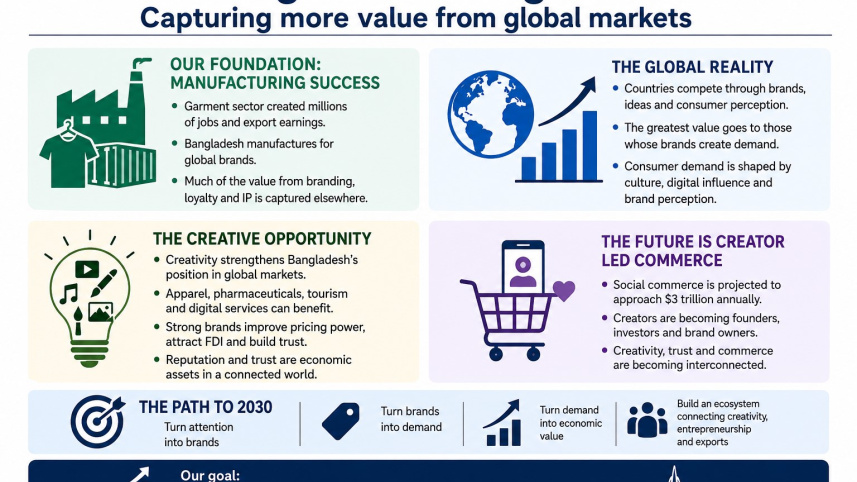
For decades, manufacturing-led exports have been a central driver of Bangladesh’s economic success. The garment sector transformed the economy, created millions of jobs and established the country as one of the world’s leading apparel exporters.
Yet as Bangladesh looks towards the next stage of development, an important question emerges: how can the country capture a greater share of the value associated with the products, services and ideas it helps create?

The answer may lie in building Brand Bangladesh.
Around the world, countries increasingly compete not only through manufacturing capacity and production costs, but through brands, intellectual property, cultural influence and consumer perception.
The countries that retain the greatest value are often not those that manufacture the most products, but those whose brands create demand for them.
Bangladesh already manufactures products for some of the world’s most recognised companies. Consumers around the world know Zara, H&M and Uniqlo. Few know the Bangladeshi businesses behind many of the products they purchase.
While manufacturing creates jobs and export earnings, much of the value associated with branding, customer loyalty and intellectual property is captured by those who own them. This is not unusual.
Many countries initially develop through manufacturing before moving up the value chain.
The next stage often involves creating products, services and brands that consumers actively seek out because of where they originate rather than simply where they are produced.
This is where the creative economy becomes strategically important. The most successful creative economies have not simply produced content -- they have helped build globally recognised national brands.
Bangladesh’s opportunity extends beyond developing a successful creative sector; it lies in using creativity to strengthen the country's position in global markets.
Historically, exports have been driven by manufacturing competitiveness, trade agreements and industrial investment. However, consumer demand is also being shaped by culture, digital influence and brand perception.
The countries that succeed in this environment are often those that can convert cultural relevance into commercial value.
Apparel, pharmaceuticals, tourism and digital services could all benefit from stronger international visibility and consumer confidence.
Greater brand recognition can help elevate Bangladeshi companies, attract customers, strengthen exports and improve international trust. The objective is not merely to create new industries but to capture more value from those that already exist.
The benefits extend beyond direct export revenues. Strong brands can improve pricing power, attract foreign direct investment and create opportunities across the wider economy.
In a connected world, reputation and trust are becoming economic assets in their own right.
Looking towards 2030, Bangladesh can build a creative economy that strengthens brands, exports and entrepreneurship.
Globally, the creator economy is evolving towards commerce, ownership and business creation.
Social commerce is projected to approach $3 trillion annually, reflecting how consumers increasingly discover products through trusted creators and digital communities.
 For all latest news, follow The Daily Star's Google News channel.
 Many creators are becoming founders, investors and brand owners, demonstrating how attention can be converted into economic value.
For Bangladesh, the lesson is clear: creativity, trust and commerce are becoming interconnected.
In the next phase of the digital economy, the greatest beneficiaries may not be those that generate the most content, but those that successfully connect creativity, trust, commerce, entrepreneurship and exports within a common ecosystem.
The goal is not simply to create more content, but to transform attention into brands, brands into demand and demand into economic value.
Countries that successfully connect these elements are capturing value that extends far beyond the creative industries themselves.
Content generates attention. Trust influences decisions. Commerce creates demand. Brands capture value. The most successful economies understand this progression. They recognise that content is not the destination. It is often the starting point.
Building Brand Bangladesh will require more than creators alone.
Government, businesses, investors, media organisations, technology platforms and exporters all have a role to play. Successful national brands are rarely created by a single industry. They emerge when creative, commercial and policy ecosystems operate in a mutually reinforcing manner.
Made in Bangladesh created a globally competitive manufacturing economy. Brand Bangladesh can help capture more of the value it creates and define the next stage of export growth.
The author is a strategic consultant across technology, media and infrastructure industries.
Comments