


Govt eyes AI-powered analytics to safeguard essential commodity supply: minister
The government is planning to introduce an artificial intelligence (AI)-based data analytics system to help keep the supply of essential and sensitive commodities stable by forecasting potential shortages well before they occur.
Commerce Minister Khandakar Abdul Muktadir said the proposed platform would analyse a decade's worth of data on production, imports, exports and global market trends, enabling policymakers to make faster and better-informed decisions on commodity management.

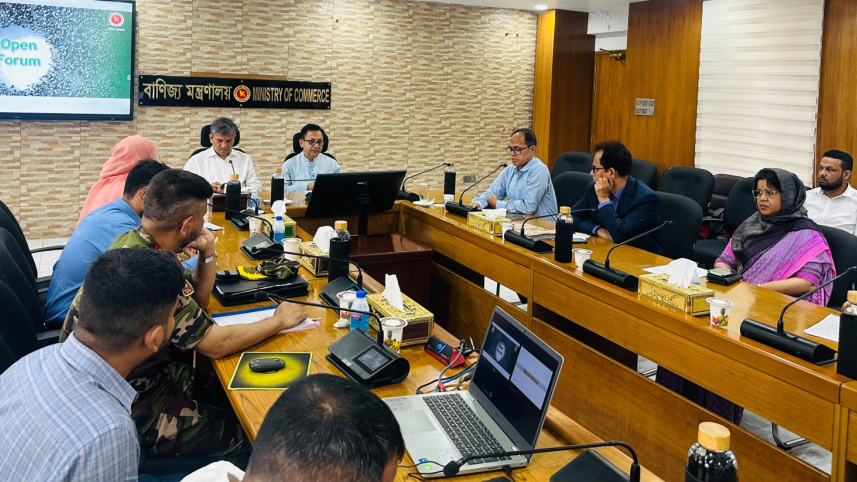
He made the remarks today while addressing a meeting on e-commerce implementation at the Commerce Ministry, chaired by Commerce Secretary Md Ataur Rahman Khan.
The commerce minister said different ministries and government agencies currently work with data on agricultural, food and industrial commodities, but these datasets remain scattered across institutions.
Bringing them together into a unified analytical system would improve planning for products that are locally produced, import-dependent or supplied through a combination of domestic production and imports.
He said supply disruptions, rather than price alone, often trigger market instability.
"If production declines or imports face disruptions, we need to be prepared in advance so that consumers do not experience sudden shortages," he said.
Whether the government intervenes through subsidies to contain prices is a separate issue, he added, stressing that ensuring uninterrupted supply remains the primary objective.
To achieve that, the minister said authorities need continuous analysis of domestic production, seasonal supply gaps, international market conditions and the production capacity of exporting countries for key commodities such as lentils and onions.
He said that if a lower domestic harvest is anticipated, preparations for imports should begin even before the crop reaches the market. At the same time, policymakers should assess production and export prospects in supplying countries to determine the most suitable sourcing options.
"We need to know when shortages are likely to emerge, which countries will be the best sources of imports at different times and where prices will be the most competitive," he said.
The proposed AI platform is expected to address these questions by processing historical and real-time information, allowing officials to identify potential risks within minutes instead of relying on lengthy inter-ministerial consultations.
The minister said government agencies currently spend considerable time collecting information from different ministries before decisions can be made. Once operational, however, the AI system would be able to analyse 10 years' worth of market data and quickly present likely scenarios and policy options.
He added that the platform would also indicate when shortages are likely to occur, which countries have sufficient export capacity and the most advantageous timing for procurement.
According to the minister, the initiative aims to maintain stable supplies of essential commodities throughout the year.
He said the Ministry of Commerce would implement the system in coordination with the ministries of agriculture, food and other relevant agencies, all of which would have access to the information required for their respective responsibilities.
To improve the effectiveness of the platform, he said, the government would build a comprehensive database using both official data and information collected from international open-source and subscription-based databases.
Although developing the system will take time, the minister said its analytical capability will improve as more data are incorporated.
"The objective is to strengthen decision-making through timely and accurate information," he said. "This will enhance market management and better protect consumers' interests."
The meeting also discussed the development of the e-commerce sector, technology-driven market management and future policy priorities.
 For all latest news, follow The Daily Star's Google News channel.
Comments