


The hidden tax on Bangladesh's diaspora

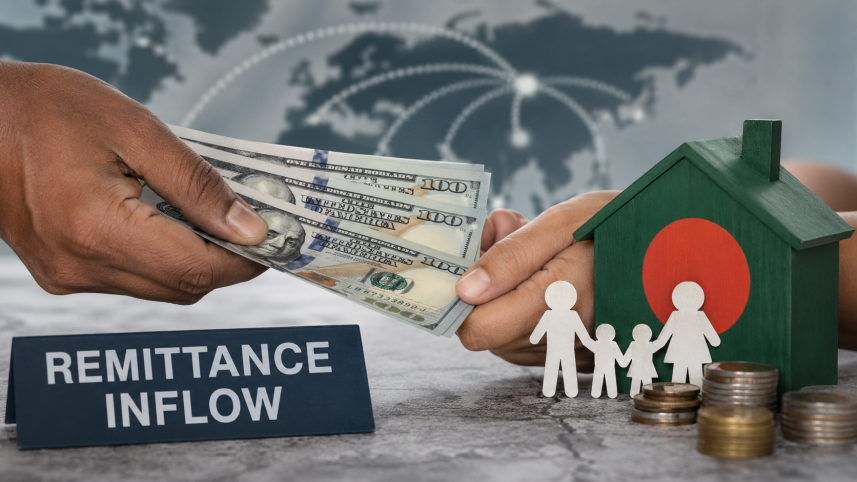
Bangladesh receives around $24-27 billion in remittances each year, placing the country firmly among the global top ten, ahead of Nigeria, Vietnam, and Indonesia. It is the headline figure that every government in Dhaka has, with reason, taken credit for over the past two decades. It is also, on closer inspection, a figure that quietly indicts us.
The comparator that makes the case sharpest is the Philippines. The Philippines receives roughly $36-38 billion in remittances a year, ranking fourth globally. Its diaspora abroad numbers around 10 million people. The Bangladeshi diaspora, by most working estimates, is closer to 13 million.

We have roughly a third more people working overseas than the Philippines, yet they remit close to 40 percent less than Filipinos do. The average Filipino migrant remits home nearly twice as much as the average Bangladeshi migrant.
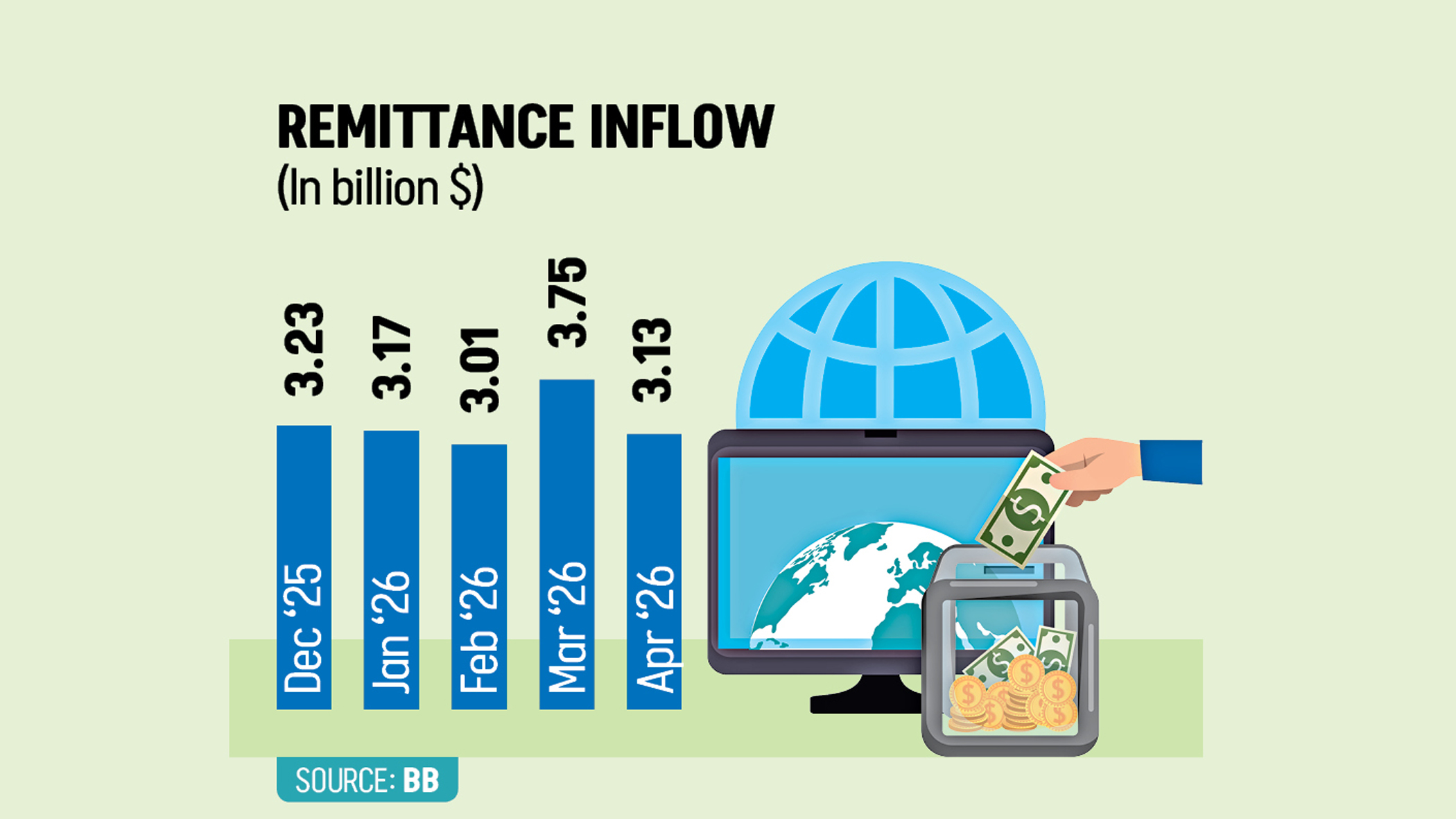
Several factors explain the per-migrant gap, and not all of them are within our policy reach. One factor, however, sits squarely within our control: reducing the cost of leaving Bangladesh, which is among the highest in the region.
For an unskilled or semi-skilled worker bound for the GCC, the all-in cost frequently runs into several thousand dollars, and most of this is borrowed, often at usurious rates, against the security of land, livestock and anything else the household can put up.
The worker spends the first six to 12 months of the contract servicing that debt rather than remitting money home. This is the hidden tax. Multiply this across roughly one million Bangladeshis departing for work each year, and the amount runs into the low single-digit billions of dollars. And it accrues to no one useful.
There is a deeper structural feature here: the recruitment tax falls hardest on those least able to bear it. We are, on the current trajectory, paying for it twice: once at the worker level and once at the national level, in remittance flows we never see.
The international context has shifted sharply on this question. In April 2026, the French Presidency of the G7 convened the 2nd Employment Working Group of the G7 Social in Paris. One of the working group's flagship deliverables was a G7 operational and replicable toolkit on the responsible recruitment of migrant workers.
The toolkit will, when published, codify a working definition of responsible recruitment that destination governments and ESG-screened employers will increasingly be expected to enforce throughout their supply chains.
Sending countries that can demonstrate compliant migration corridors at scale, supported by documented case studies, will become the preferred origin partners for leading international employers. Those that cannot will be relegated to less attractive job opportunities and lower wages—a discount applied purely on the basis of nationality.
Bangladesh has a comparative advantage on this front that is rarely articulated. Between 2017 and 2021, in the buildup to the FIFA World Cup, at least one Bangladeshi recruitment operator deployed a substantial cohort of unskilled and semi-skilled workers to Qatar in the construction and hospitality sectors under arrangements in which every recruitment-related cost was borne by the principal employer at the destination, not by the worker.
The corridor was witnessed and documented by the ILO and the IOM. It stands today as one of the most thoroughly documented zero-cost recruitment cohorts established by any South Asian sending country over the past decade.
The feasibility question—can a zero-cost recruitment corridor be run from Bangladesh at scale?—has already been answered, and the answer is yes. The remaining question is whether destination employers will insist on it as the standard or continue to accept the worker-paid model as a tolerable default.
Here, the private sector is structurally better placed to lead than the government. Government policy can help, and the public infrastructure for managing labour migration urgently requires the reforms it has been promised for many years. But the corridor work, the operational architecture and the day-to-day relationships with destination employers are private-sector functions, conducted on private-sector timelines and with private-sector accountability.
The Qatar cohort was built without formal government facilitation, and it would not have happened on the timeline it did had such facilitation been required. This model can be replicated and, hopefully, become the norm. The policy environment that supports the willing and disciplines the unwilling is the one that matters.
The economics, finally, are catching up with the ethics. The international employers that increasingly drive this market will, within this decade, source workers through corridors where recruitment costs for workers have been demonstrably eliminated. Bangladesh can either become one of those corridors at scale or watch the volume migrate, slowly and quietly, to other shores. The case is no longer moral alone, although it remains so.
Bangladesh enters the next decade with one of the largest working-age cohorts in its history. We will need every lever at our disposal to ensure this generation has access to gainful employment and the opportunity to prosper. The demographic dividend with which we have been blessed deserves our continued commitment.
The author served as an invited expert panellist on Deliverable 6 (Responsible Recruitment of Migrant Workers) at the 2nd Employment Working Group of the G7 Social under the French Presidency, held in Paris on April 16-17, 2026.
 For all latest news, follow The Daily Star's Google News channel.
Comments