


Uninterrupted power for telecom and why it matters now

For millions across Bangladesh, connectivity is how life moves forward. Today, more than 180 million people rely on mobile internet services for everything from e-commerce and digital payments to healthcare and education. Yet, with every extended power outage, that digital lifeline is increasingly disrupted.
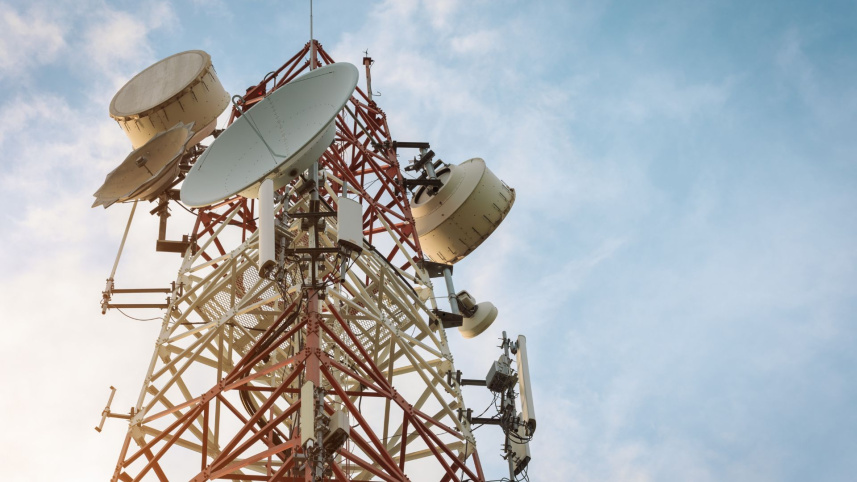
Telecom networks depend on thousands of antennae operating nationwide. These antennae require continuous power to function seamlessly. When outages extend beyond backup capacity, networks and customers face disruptions lasting hours. For people relying on mobile connectivity for payments, work, and access to information, even short interruptions create major challenges.

The economics reinforce the case for action. Grid electricity remains the most efficient source of power, costing around Tk 11 to Tk 12 per unit. In contrast, diesel-based backup generation is typically three to four times higher, ranging between Tk 45 and Tk 60 per unit. Reliance on backup generators drives significant fuel consumption, placing pressure on both operational costs and national resources. Reducing this dependence presents a clear opportunity to improve efficiency and redirect resources toward strengthening infrastructure.
During periods of intense power outages, Bangladesh’s telecom networks require over 80,000 litres of diesel and 20,000 litres of octane each day to remain operational. At prevailing prices, this translates into roughly USD 100,000 in daily expenditure — assuming the fuel is even available.
These are resources that could otherwise be directed toward expanding network capacity, strengthening resilience, or improving access. Reducing reliance on backup power offers a clear opportunity to improve efficiency while easing pressure on both operators and national resources.
The broader economic context makes this even more compelling. With a GDP approaching $450 billion, Bangladesh is steadily building a digital-led economy. Reliable connectivity enables smoother transactions, uninterrupted business operations, and stronger productivity. Even incremental improvements in network reliability can generate major gains at scale, reinforcing growth across sectors.
An uninterrupted power supply from the national grid can directly strengthen investor confidence by reducing operational uncertainty and long-term costs, encouraging higher investment. For energy-intensive sectors like telecom, consistent grid power lowers reliance on costly diesel, improves efficiency, and allows operators to redirect resources toward network expansion and innovation, making the market more attractive for new capital and long-term growth.
Global and regional experience offers useful direction. In India, telecom infrastructure is increasingly treated as critical, with priority power supply to key sites and growing policy support for renewable energy adoption. In Pakistan, operators have strengthened resilience through hybrid energy systems and improved energy management. These approaches show how coordinated policy support can help telecom networks operate reliably, even under energy constraints.
For Bangladesh, government support can play a catalytic role in strengthening this resilience. While telecom is recognised as an essential service, it is necessary to ensure uninterrupted power supply to critical network sites if services are to remain undisrupted. Stronger coordination between power utilities and telecom operators is equally important. Identifying critical sites, improving outage planning, sharing information, and ensuring faster restoration can significantly enhance network continuity.
Encouraging infrastructure and energy sharing across operators can also reduce duplication, optimise energy use, and improve overall system efficiency. In parallel, scaling investments in green energy such as solarisation, advanced battery systems, and AI-enabled energy management can help optimise power consumption while reducing environmental footprint. Supporting smart energy management within networks will further optimise performance during periods of high demand.
Looking ahead, emerging technologies can complement these efforts. Satellite-based connectivity provides an additional layer of resilience. Direct-to-device solutions, expected to be introduced through collaborations such as Starlink and Banglalink, can help maintain connectivity and extend coverage even when mains power is temporarily unavailable.
At a human level, the impact of power outages is clear. Connectivity is a gateway to opportunity. A student accessing online education, an entrepreneur reaching new markets, or a patient connecting to healthcare services all depend on stable networks. Strengthening this foundation enhances inclusion and expands access for millions.
Bangladesh has already built a strong base for a digital future. The next phase is about making that connectivity more reliable. By aligning energy stability with digital ambition, the country can unlock greater efficiency, accelerate economic growth, and build a more inclusive future.
The foundation is already in place. With the right focus, this next phase can be even more transformative.
The writer is the CEO of Banglalink.
 For all latest news, follow The Daily Star's Google News channel.
Comments