


US 30-year yields hit highest level since 2007 as war, oil worries fester
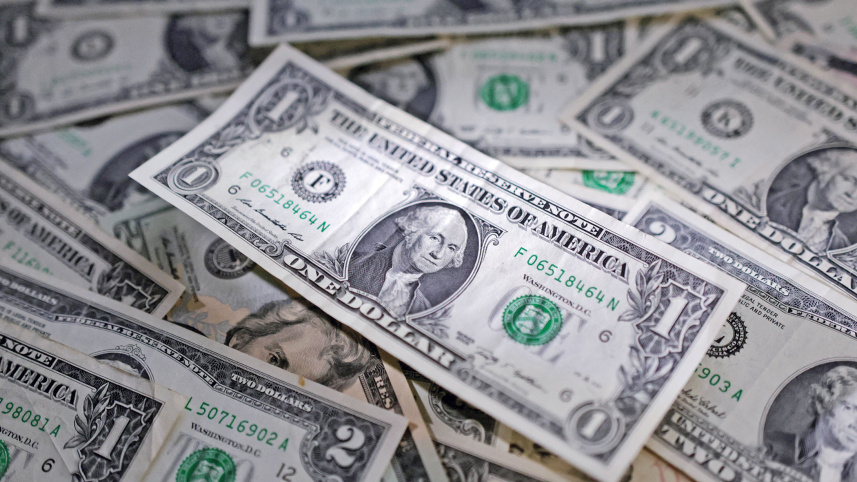
US 30-year Treasury yields rose to their highest level since 2007 on Tuesday as stalled talks to end the US-Iran war and worries of an imminent escalation sent oil prices above $90 a barrel, fanning fears of inflation and jolting markets.
Rising concerns over fiscal spending amid increasing debt issuance are also weighing on the bond markets even as investors digest a recent run of soft US economic data that has led to traders scaling back rate hike expectations.

The yield on the benchmark US 10-year Treasury note rose 1.7 basis points to 4.739 percent.
The yield on the 30-year bond rose to 5.327 percent, hitting its highest level in 19 years.
The bond selloff also spread to Japan and Europe with Japan's benchmark 10-year government bond yield rising to a 30-year peak.
Germany's bund futures and French OAT futures dipped 0.2 percent.
Germany's 10-year Bund yield touched its highest level since May 2011 on Monday, while France's 10-year yields hit a 17-year high.
Vasu Menon, managing director of investment strategy at OCBC, said competition for capital from AI hyperscalers, a rising US budget deficit and Fed Chairman Kevin Warsh’s departure from transparency to an opaque policy stance, were all contributing to higher Treasury yields.
"Rising long US bond yields is a risk that investors must bear in mind going forward... bond investors are best placed to manage this risk by focusing more on shorter duration bonds," Menon said.
The hyperscalers' surge in borrowing, at a time when governments are still spending heavily, has been a leading factor pushing up yields, investors said, as buyers demand higher returns to keep purchasing the flood of bonds hitting markets.
CONCERNS ABOUT GROWING US DEBT
Investors are also worried about inflation risks, especially with the critical Strait of Hormuz remaining effectively shut and the talks to end the US-Iran conflict at an impasse.
Iran said it would shift to a "fully offensive" military posture because efforts to negotiate a permanent end to the war have stalled, a senior Iranian official told Reuters as Washington ruled out extending their June ceasefire agreement.
US stocks fell on Monday, with the Dow and S&P 500 each shedding roughly half a percent, and the Nasdaq dropping about a third of a percent.
Thierry Wizman, global FX & rates strategist at Macquarie Group, said the prospect that the two sides' competing claims over the Strait would continue to prevent crude from flowing remained a best case scenario in the short-and medium term.
"The worst-case scenario is a trigger-happy resumption of kinetic fighting," he said.
Two recent Treasury auctions also drew attention for their yields as the sale of 10-year notes cleared at a high yield of 4.683 percent, the highest in 19 years, while the 30-year bond auction stopped at 5.216 percent, a 25-year peak.
Anthony Saglimbene, chief market strategist at Ameriprise Financial, said for much of the last 15 years, investors operated in a market where stable-to-falling interest rates consistently supported higher stock prices.
"However, last week's Treasury auctions were a reminder that the landscape is shifting," he said.
"When it comes to longer-dated Treasury issuance, investors are increasingly focused and concerned about the growing amount of US debt and America’s lack of fiscal discipline."
 For all latest news, follow The Daily Star's Google News channel.
Comments