


What Bangladesh Bank’s NBFI liquidation plan means for depositors
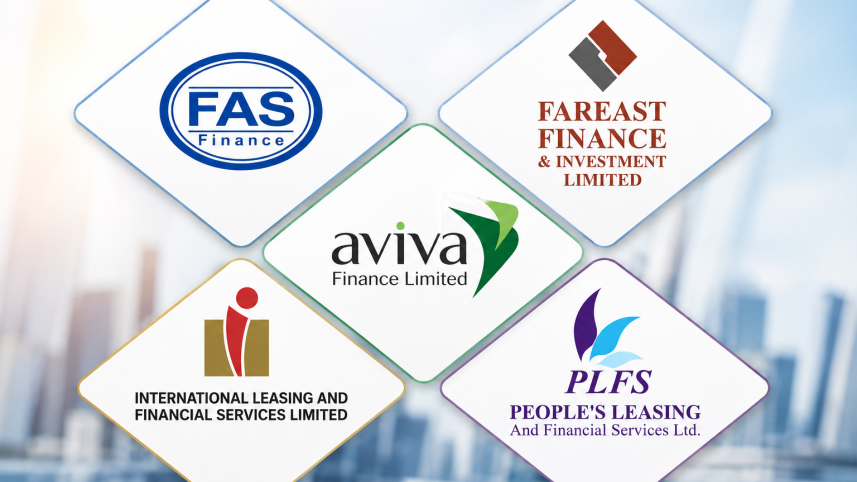
Bangladesh Bank has decided in principle to liquidate five troubled non-bank financial institutions from July, marking one of the biggest regulatory actions in the sector’s history. The move comes amid mounting depositor protests, rising bad loans, and years of governance failures. Here are the key questions and answers surrounding the decision.
Which institutions are being liquidated?
The board of Bangladesh Bank has decided in principle to liquidate five non-bank financial institutions (NBFIs) from July this year.

The institutions are:
- FAS Finance
- Fareast Finance
- Aviva Finance
- People’s Leasing
- International Leasing
Why are these institutions being liquidated?
According to central bank officials, the institutions collapsed due to:
- widespread mismanagement,
- weak governance,
- heavy exposure to non-performing loans,
- poor regulatory intervention, and
- oversight failures.
Who will get refunds and what is the limit?
Bangladesh Bank plans to announce a repayment scheme before the liquidation process begins.
Under the proposed scheme:
- Individual depositors with savings of up to Tk 10 lakh will receive a full refund of their principal amounts.
- No interest payments will be made.
- For depositors with savings above Tk 10 lakh, repayments will be made proportionally depending on the availability of funds and the size of deposits.
- The central bank is also planning a separate repayment mechanism for larger depositors.
How will the repayment process be managed?
Officials familiar with the matter said Bangladesh Bank will seek funds from the Ministry of Finance to meet repayment obligations.
The liquidation process is expected to begin under a structured framework supervised by the regulator.
Why are depositors protesting?
The latest liquidation decision came amid protests by depositors of distressed NBFIs.
On May 7, an alliance representing more than 12,000 depositors of six troubled NBFIs urged Bangladesh Bank to take urgent steps to return their long-frozen funds.
The six institutions named by the alliance are:
- FAS Finance,
- Premier Leasing,
- Fareast Finance,
- Aviva Finance,
- People’s Leasing, and
- International Leasing.
Depositors submitted multiple memorandums to the Bangladesh Bank governor, saying their savings had remained locked for nearly seven years.
According to the memorandums, many depositors have suffered severe financial hardship, mental distress and humanitarian crises. One memorandum said many depositors could not afford treatment for serious illnesses such as cancer, kidney disease and heart conditions, while several had already died without receiving necessary medical care.
What role will the regulator play?
Earlier, the Bangladesh Bank board under the interim government approved the liquidation of six non-banks, including Premier Leasing.
In November last year, the regulator approved liquidation proceedings under the Bank Resolution Ordinance 2025, the country’s first comprehensive framework for resolving failed banks and non-banks.
Under the interim government, Bangladesh Bank initially proposed liquidating nine NBFIs:
- FAS Finance
- Bangladesh Industrial Finance Company (BIFC)
- Premier Leasing
- Fareast Finance
- GSP Finance
- Prime Finance
- Aviva Finance
- People’s Leasing
- International Leasing.
After hearings in January this year, Prime Finance, GSP Finance and BIFC were given three to six months to improve their financial condition and were not included in the latest liquidation decision.
How severe is the NBFI sector crisis?
According to Bangladesh Bank data, the nine institutions together hold deposits worth Tk 15,370 crore.
Of that amount:
- Tk 3,525 crore belongs to individual depositors, and
- Tk 11,845 crore belongs to banks and corporate clients.
As of September 2025, the country’s 35 NBFIs had non-performing loans of Tk 29,408.66 crore, accounting for 37.11% of total outstanding loans of Tk 79,251.11 crore.
 For all latest news, follow The Daily Star's Google News channel.
 A year earlier, in September 2024, the sector’s non-performing loan ratio stood at 35.52%, indicating a further deterioration in the sector’s financial health.
Comments