


Popular Pharma to get $30.7m loan from IFC
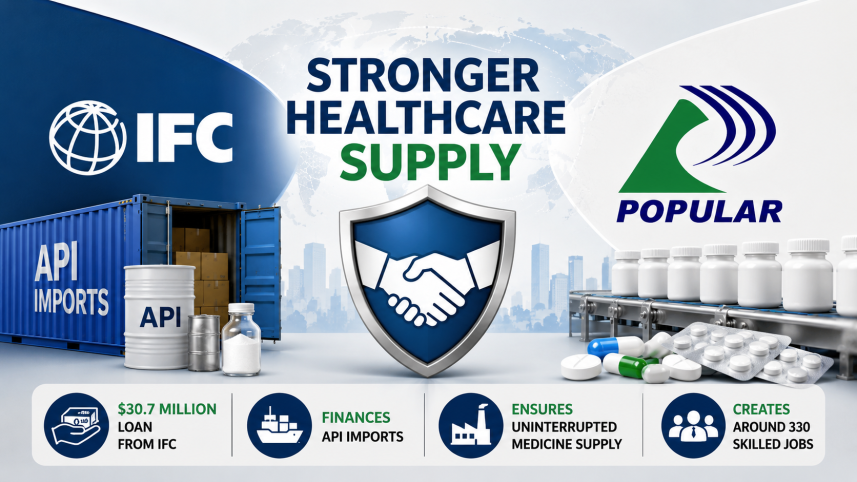
The International Finance Corporation (IFC) has committed a $30.7 million senior secured loan to Popular Pharmaceuticals PLC to help the Bangladeshi company finance imports of active pharmaceutical ingredients (APIs) and ensure uninterrupted production of essential medicines.
Senior secured loans are essentially loans secured with collateral and hold a senior position in the capital structure. The financing will meet Popular’s US dollar working capital needs, mainly for importing APIs, which are critical raw materials for pharmaceutical production, according to a press release.

Bangladesh’s pharmaceutical industry supplies most of the medicines consumed in the country but remains heavily dependent on imported raw materials. Around 90 per cent of the sector’s key inputs, including APIs, are sourced from abroad.
The long-term dollar financing from IFC, a member of the World Bank Group, is expected to help Popular secure foreign currency for timely imports and maintain production for a market of about 170 million people.
Popular, one of Bangladesh’s top 10 pharmaceutical companies, manufactures more than 815 products and supplies around 155,600 pharmacies and clinics. It employs more than 10,000 people across the country.
“This partnership with IFC marks an important step in our journey to become one of Bangladesh’s top pharmaceutical companies by 2030,” said Mostafizur Rahman, managing director and CEO of Popular Pharmaceuticals.
“Beyond financing, IFC brings global healthcare expertise that will help us strengthen our operations, expand into new therapeutic areas, and reinforce our leadership in hormones and specialised medicines,” he said.
“Reliable access to critical raw materials is key to ensuring uninterrupted production of medicines that millions of people in Bangladesh rely on every day,” said Carsten Mueller, regional industry director for manufacturing, agribusiness and services, Asia Pacific at IFC.
The project will also support the expansion of Popular’s hormone division, creating around 330 skilled jobs.
It will include training in advanced pharmaceutical manufacturing and seek to increase the share of women employed in the division by at least 60 per cent.
 For all latest news, follow The Daily Star's Google News channel.
Comments