


Trade deficit narrows 40pc as imports drop

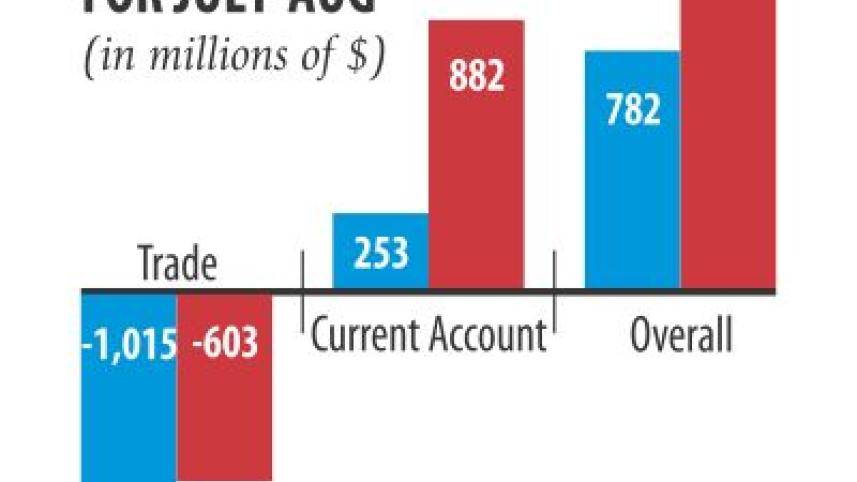
Trade deficit decreased 40 percent in the first two months of fiscal 2015-16 from a year earlier thanks to lower imports and higher exports.
At the end of August, the trade deficit stood at $603 million, according to central bank statistics.

Imports dropped 2.99 percent in the first two months of the fiscal year, while exports grew 4.53 percent from a year earlier.
The drop in petroleum prices in the international market also lessened the import bills, said a Bangladesh Bank official.
Food grain imports declined 18.86 percent and petroleum products 14.77 percent, according to the central bank's settlement data.
However, a positive sign is that capital machinery import increased, by 30.53 percent, in the first two months, which indicates an uptick in future investment.
Raw materials import saw a minor growth, only 0.75 percent, which matches with the export data.
In the first two months, exports increased 4.53 percent.
The government is hoping for 12 percent growth for the whole year, but in September, exports did not grow; rather it declined about 6.98 percent.
The balance of payments surplus soared 62 percent during the period, meaning the amount of money coming into Bangladesh in the first two months were more than the sum going out.
At the end of August, the overall surplus stood at $1.27 billion in contrast to $782 million a year earlier, according to central bank statistics.
There was a turnaround in errors and omissions: it was $82 million in inflows this year in contrast to $167 million in outflows last year.
In recent times, the BB has strictly monitored import-export activities, which cut the siphoning of money abroad through over-invoicing and under-invoicing, the central bank official said.
Thanks to a healthy balance of payments, foreign currency reserves have also been increasing slightly every month.
On October 14, foreign currency reserves stood at $26.75 billion, which was $25.02 billion at the end of June.
Since the reserves are at a satisfactory level now, the BB is in a comfortable position regarding exchange rate management.
The average exchange rate in the inter-bank foreign exchange market in the last five months was Tk 77.8 against a dollar.
In recent times, a crisis of dollars has emerged, and one of the reasons is that a huge number of people bought dollars for Hajj. The banks are now selling the dollar for Tk 81-82.
 For all latest news, follow The Daily Star's Google News channel.
Comments