


A Bangladeshi photojournalist's Chevening journey
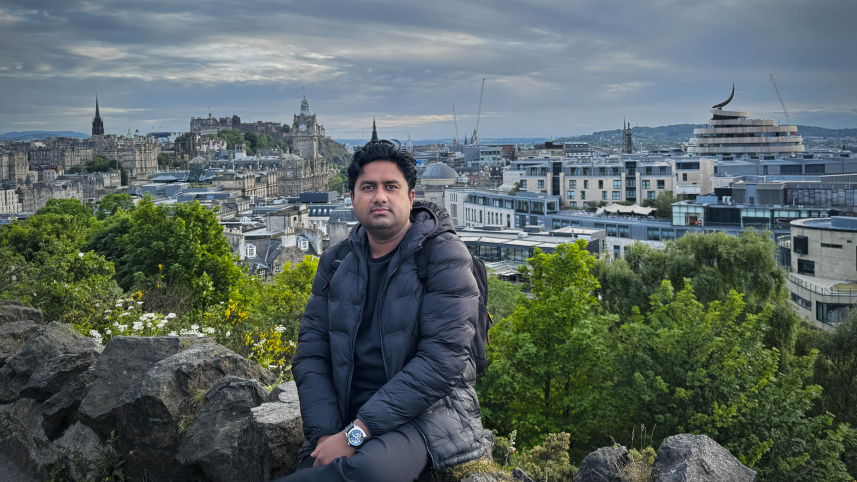
For years, I wanted to become part of the Chevening community. I knew about Chevening and admired its reputation for developing leaders, but there was always one question in my mind: would a photojournalist fit into a journalism fellowship that seemed to attract mostly reporters, editors, and broadcasters?
That question stayed with me for a long time.

My career has been built around documentary photography and photojournalism. For more than a decade, I have documented some of Bangladesh's defining moments, from political unrest and humanitarian crises to climate change, migration, and the Rohingya refugee emergency. Through my work with the Associated Press, Al Jazeera, and other international publications, I learnt that photographs can often communicate what thousands of words often cannot.
Yet, I also understood that journalism is constantly evolving. To remain relevant, journalists must continue learning.
That realisation led me to apply for the Chevening South Asia Journalism Fellowship (SAJP) at the University of Westminster.
A last-minute decision that changed everything
Ironically, I almost missed the opportunity.
In September 2025, while planning my upcoming political assignments and thinking about Bangladesh's rapidly changing political landscape, I came across the SAJP on LinkedIn. I was busy preparing for what I believed would be one of the most important periods of my career as a photojournalist. My focus was entirely on the next assignment, the next story, and the next photograph.
The application form itself surprised me.
Instead of feeling like an ordinary online form, it felt like a professional assessment of my entire journalism career. Every question encouraged me to reflect on my experiences, leadership, achievements, and the impact of my work. Since the fellowship requires several years of professional journalism experience, I realised that every assignment I had covered over the years mattered.
I submitted my application on the final day. One of the most valuable lessons I learnt during the application process is that you should never underestimate your own experience. Sometimes the work you consider routine becomes the strongest evidence of your professional growth.
The email I will never forget
On December 29, 2025, I received an email informing me that I had been shortlisted for the interview.
I still remember exactly where I was.
At that moment, I was covering the funeral of former Prime Minister Begum Khaleda Zia while simultaneously working on political assignments for the Associated Press. Like many photojournalists, I was balancing multiple deadlines with very little time to celebrate.
But reading that email gave me a new sense of confidence. It reminded me that years of consistent work do not go unnoticed.
Preparing for the interview was different from preparing for any job interview I had experienced before. It wasn't about giving perfect answers; it was about honestly explaining my professional journey, why journalism matters to me, and how I wanted to contribute to the future of the profession.
When the award letter arrived
Receiving the final Chevening award letter was one of the most emotional moments of my career. I was genuinely stunned. Although I had worked hard on my application, I never allowed myself to assume I would be selected.
Looking back, another international opportunity had already transformed my perspective. In 2024, I studied documentary practice and visual journalism at the International Center of Photography (ICP) in New York. That experience introduced me to photographers and journalists from around the world and showed me the importance of global collaboration, cultural exchange, and lifelong learning.
 For all latest news, follow The Daily Star's Google News channel.
 Chevening became the next chapter of that journey.
Learning beyond the classroom
Arriving in London and beginning classes at the University of Westminster was inspiring from the very first day. Our fellowship brought together journalists from Bangladesh, India, Pakistan, and Sri Lanka. Although we came from different countries, our professional challenges were remarkably similar.
We debated media ethics, press freedom, conflict reporting, misinformation, digital journalism, and the future of news in an era increasingly shaped by artificial intelligence.
The fellowship itself extended far beyond lectures. We visited some of Britain's most respected media and cultural institutions, including the BBC, The Guardian, the British Library, and several museums that preserve centuries of history and knowledge. These visits allowed us to observe how globally respected news organisations operate and how journalism continues to evolve while maintaining public trust.
One moment remains especially personal. As someone who has spent years documenting humanity through a camera lens, seeing the works of Renaissance master Raphael (Raffaello Sanzio da Urbino) in London for the first time was unforgettable. Standing before paintings I had previously known only from books reminded me that visual storytelling has always shaped the way societies understand the world. Whether through Renaissance art or modern photojournalism, powerful images continue to influence history.
Learning from extraordinary mentors
One of the greatest privileges of the fellowship was learning from distinguished scholars and journalists. Prof. Jean Seaton, an internationally respected media historian and the Official Historian of the BBC, challenged us to think beyond daily headlines and understand journalism within its broader historical, political, and democratic context. Her discussions reminded us that journalism is not only about reporting events; it is about protecting public memory and accountability.
Prof. David Loyn, an acclaimed foreign correspondent with decades of international reporting experience, shared invaluable lessons from covering conflicts, diplomacy, and global affairs. His practical insights into international reporting, editorial judgement, and ethical decision-making demonstrated that great journalism depends not only on courage, but also on accuracy, context, and empathy.
Learning from professionals of their calibre was both humbling and inspiring.
Every experience counts
People often ask me what made my application successful. There is no single answer. I believe it was the accumulation of experiences over many years: covering humanitarian disasters, photographing elections, documenting the lives of refugees, reporting on climate change, working with international news organisations, and receiving opportunities such as the US Department of State's International Visitor Leadership Program (IVLP) in 2021–2022, which introduced me to American institutions and strengthened my understanding of international journalism and leadership.
None of these experiences existed in isolation. Together, they told a story about who I am as a journalist.
My advice to future applicants
If you are considering applying for the Chevening South Asia Journalism Fellowship, my advice is simple: don't wait until you think your career is perfect. Apply when your work genuinely reflects your passion, leadership, and commitment to journalism.
Write honestly and reflect deeply. Don't try to become the person you think the selection committee wants to meet. Instead, help them understand the journalist you have already become.
Most importantly, remember that every assignment, every challenge, and every lesson you have experienced may become part of your story.
Why this fellowship matters
The world is becoming increasingly connected, yet journalism faces unprecedented challenges.
Artificial intelligence is reshaping newsrooms. Disinformation spreads faster than facts. Public trust in the media continues to be tested.
This is precisely why international fellowships like Chevening matter.
They allow journalists to step outside their daily routines, exchange ideas across borders, learn from global experts, and return home with new perspectives that strengthen their reporting and leadership.
For me, Chevening was less about studying in London and more about joining a global community of journalists committed to improving our profession. Because journalism doesn't stop at national borders. Neither should learning.
About the author Mahmud Hossain Opu is a Bangladeshi photojournalist and documentary photographer. He works as a stringer for the Associated Press and contributes to international media outlets including Al Jazeera. Opu is an alumnus of the US Department of State's International Visitor Leadership Program (IVLP) and the 2026 Chevening South Asia Journalism Fellowship at the University of Westminster. |
Comments