


One Ancestor's Story
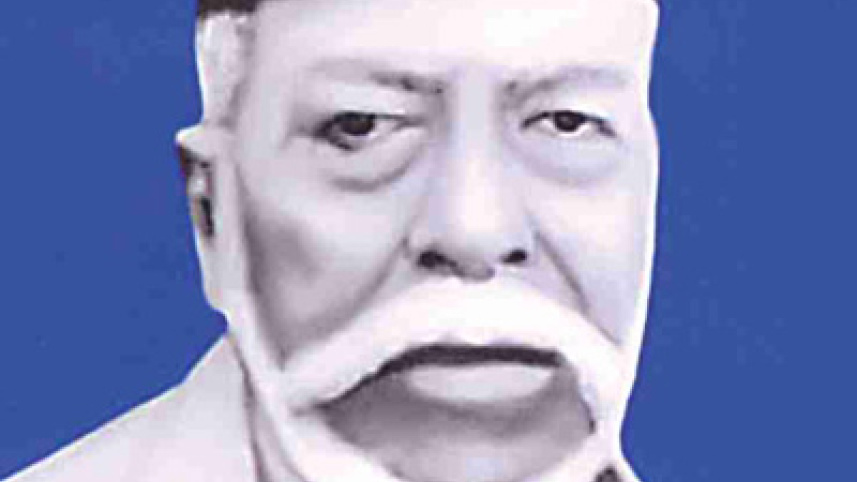
When I was about ten, my paternal grandmother asked me to read a book. It was a thin, well-worn book with a white cover. The book was called Amar Goto Jibon (My Past Life) and it was written by her father (and my great-grandfather) Khan Bahadur Moulvi Sharafat Ali Choudhury. At first I ignored it, but one day, having nothing better to do, I opened it and found myself entranced. Its story has stayed with me through the years. The book, however, disappeared and in recent years I have searched for it in vain.
I was delighted to learn that Amar Goto Jibon was recently re-printed by Pandulipi Prokashon of Sylhet. My cousin Dr. Zakir sent me a copy and soon I was immersed again in the story of my ancestor.
 For all latest news, follow The Daily Star's Google News channel.
 The story is set in 1887. Young, up-and-coming police officer Sharafat, having travelled all over the subcontinent on training and duty, is posted as a Police Detective in Naogaon. One day he receives an urgent, secret message from the Police Inspector General of Assam state. Sharafat travels to Assam to discreetly meet the senior officer. He is told about a major unsolved arson case. The largest jail in Assam, Tejpur Central Jail, had burned down several months ago. The jail held the most dangerous criminals of the area. Although arson was suspected, the investigation had not made much progress.
Would he, Sharafat, take charge of the unsolved mystery?
Sharafat rises to the challenge. Of course he would. But he would need to work in disguise. And so he is granted a six-month leave from his Naogaon police job, where everyone is told that he is going home for an urgent matter.
In the following months Sharafat dons a variety of disguises to pursue the investigation. He is a Hindi-speaking Hindustani sanyasi for a few weeks. Then he becomes the servant in a Brahmin household. Following this he is a shepherd looking after a herd of cows and buffaloes of a rich Gujarati man in Tejpur. All this time he is conducting an external investigation. Was the fire set by someone from outside the prison? He eventually concludes that the fire was not set externally and that it was an inside job.
Sharafat now meets his superiors and proposes a daring plan. Since the arsonist was inside the prison, he would disguise himself as a prisoner and go in. His seniors, knowing full well how ruthless the jail's inmates can be, are aghast at the idea. But Sharafat convinces them and, after working out a protocol for the transfer of information, enters the jail as Abdul Majid, a hardened career criminal.
As always, he develops a plan to identify the culprit. It involves winning the confidence and respect of the prisoners. After some serious risk-taking and daring he obtains a confession. The case is solved and the arsonist and his accomplices tried, found guilty and punished. A corrupt jailer is also punished.
The story relayed in the book is one of the many cases of Sharafat's career. What an adventure his life must have been!
www.facebook.com/tangents.ikabir.
Comments