


Why Bangladesh-India relations keep resetting without settling

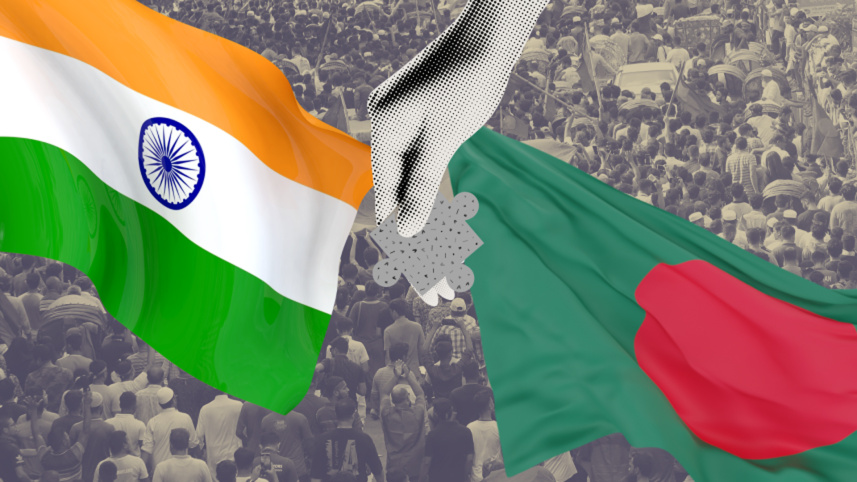
In a repeat of past experiences, India’s ties with Bangladesh, its immediate neighbour and strategic partner, are now entering another phase of recalibration. Since political uncertainty in Dhaka began nearly two years ago, hopes now exist for a restart following a new political order early this year. Diplomatic moves, such as reopening dialogue between officials in Dhaka and New Delhi, renewed military cooperation, and discussions on economic connectivity, indicate that things are looking up after the turbulent period. However, beneath all this lies another, more troubling story of mutual mistrust, unresolved disputes, and strategic concerns.
This new phase in Bangladesh-India relations is marked by a contradiction. On the one hand, Dhaka and New Delhi understand that their confrontation cannot continue; on the other, both parties still lack solutions to the problems arising from the previous disputes. As recent analysis shows, while official and intelligence ties have been restored to some degree, they remain fragile and transactional rather than deep, reflecting the very nature of the relations between the two neighbours.

The first driving force behind the latest development is the internal change in Bangladesh’s politics. Following the transition after the uprising and later the change in power through the electoral route, the country’s present leadership appears to have adopted a more pragmatic approach to its relations with India, especially in trade and energy. It is well-received by the Indian government as New Delhi always seeks stability in Bangladesh, seeing it as part of its strategic eastern frontier.
However, this does not mean everything is fine between the neighbours now. At least three aspects continue to define their interaction: political distrust, border issues, and questions related to river sharing.
First, problems with political trust caused by past confrontations still persist. The fear of the other country’s influence is the main concern for both. In particular, the fact that the Awami League leaders are still in exile in India causes irritation that cannot be easily resolved. The problem surfaces whenever tensions in Bangladesh increase.
Second, border management and security cooperation remain unpredictable and sometimes contradictory. Despite the existence of specific institutions, friction persists over migration issues, smuggling networks, and enforcement practices. When the official narrative speaks of cooperation on security issues, there is more friction, as evidenced by public discourse.
Third, water distribution problems remain one of the greatest structural issues of Bangladesh-India relations. From signing the Ganges agreement to discussing possible solutions to the Teesta dispute, both sides have failed to overcome problems in this sphere. Given the growing climate stress in South Asia, water distribution problems can soon be a bigger pressure on the relationship.
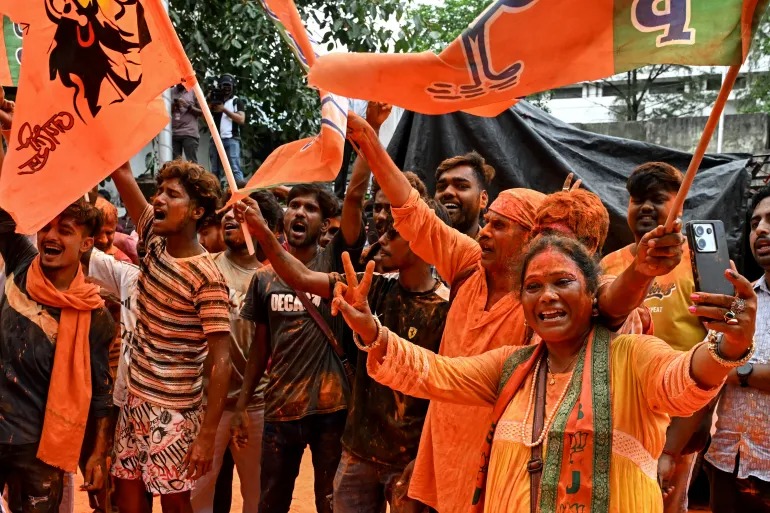
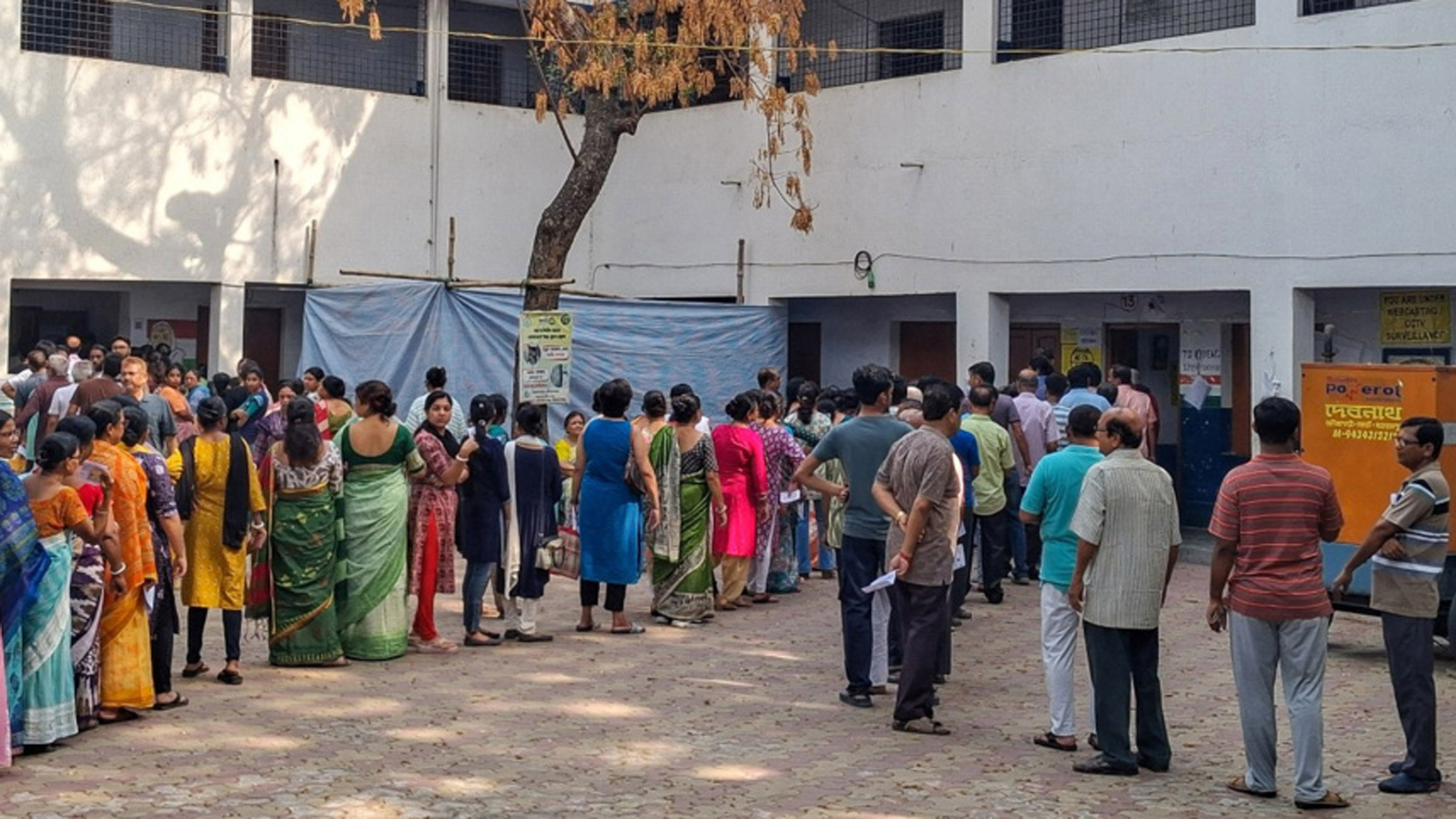
The outcome of the recently held West Bengal legislative assembly election introduces a new variable to this equation. With political power in West Bengal now aligning with the centre, there may now be greater room—in principle, at least—for movement on long-pending issues such as the Teesta River water-sharing agreement, which has historically been constrained by state-level resistance. However, at the same time, the electoral outcome reflects a sharpening of political contestation in border regions, particularly in North Bengal, where identity and security narratives are increasingly prominent. This could heighten sensitivities along the Bangladesh-India frontier and, in turn, risk amplifying communal undertones in politics on both sides.
However, the strongest stabilising force in the bilateral relations of the two countries remains economic interdependence. Bangladesh depends to a large extent on India’s supply chains and markets for its export economy, and its clothing industry plays an important role in India’s economy. As for India, Bangladesh’s transit potential for its northeastern states cannot be overstated. Moreover, the growth of trade relations and private sector cooperation serves as a buffer during every confrontation between the two neighbours.
Nevertheless, economic interdependence alone is not sufficient to consolidate relations between the two countries in the long term. The perception of Bangladesh-India relations is shaped by the wider regional context, namely, the growing Chinese presence in South Asia. For India, it raises fears of strategic encirclement, while for Bangladesh, it brings some benefits alongside dependency problems. All this makes negotiations even more complicated.
The domestic politics of the two neighbours also affect the process. For instance, India’s relations with Bangladesh cannot help but be affected by the subnational political considerations in its eastern states. As for Bangladesh, its position towards India is shaped not only by external pressure but also by domestic issues related to the country’s identity and its relations with its neighbour.
Yet, despite all these obstacles, there are reasons to believe that the new period of cooperation will continue. The interdependence of communication and renewed military cooperation, alongside economic interdependence, indicate that neither side wants a confrontation. The latest developments demonstrate the readiness to avoid an escalation. In general, Bangladesh-India relations should be described as a phase of “managed normalisation” in which the two countries begin engaging across different spheres without resolving the existing contradictions.
Thus, the question here is not about improvement, but about whether improvement can be sustainable without overcoming the existing contradictions. Historical experience shows that tactical resets in Bangladesh-India relations occur regularly, but strategic consolidation is rare. Every cycle is usually replaced by the next confrontation as political circumstances change.
It appears that Bangladesh’s strategic autonomy should coincide with a stable stance towards its largest neighbour. Meanwhile, for India, the solution lies in balancing security with its strategic goal of regional integration. In both cases, the shift should take place from episodic diplomacy to more institutionalised cooperation.
In conclusion, the Bangladesh-India relations do not hinge upon any single agreement or crisis. They depend on accumulated history, overlapping interests, and recurrent worries. The current phase provides opportunities to go beyond reactive diplomacy. Whether the advantage is used will determine if the thaw turns into long-term improvement or just another interruption of the process.
Zillur Rahman is a political analyst and president at the Centre for Governance Studies (CGS). He hosts ‘Tritiyo Matra’ on Channel i. His X handle is @zillur.
Views expressed in this article are the author's own.
Follow The Daily Star Opinion on Facebook for the latest opinions, commentaries, and analyses by experts and professionals. To contribute your article or letter to The Daily Star Opinion, see our guidelines for submission.
 For all latest news, follow The Daily Star's Google News channel.
Comments