


What he called love
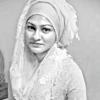
A photograph slipped from an envelope while Alia rummaged through an old metal trunk.
For a moment, she did not recognise the girl smiling back at her. The uniform helped: white salwar kameez, school badge above the pocket, hair falling nearly to her waist. 14 years-old, give or take.

She turned the photograph over. A date in blue ink—three weeks before she first met Faisal.
Outside her apartment window, the afternoon traffic moved through the haze. Somewhere below, a vendor called out the price of mangoes. Alia set the photograph on the table and sat down.
There were years she could not remember clearly. And then there were days she remembered too well.
*
At 14, Alia believed television was another country.
Every evening she sat cross-legged on the floor and watched actresses move beneath impossible lights. Their smiles were effortless. Their lives appeared untouched by dust, by traffic, by the stress of examinations, by the specific quiet of a two-room flat where her father slept before his early shift and her mother sat grading students’ notebooks at the kitchen table. Those women lived in bright apartments. People knew their names.
Sometimes, after the house had gone quiet, Alia stood before the bathroom mirror and practised. She practised introducing herself. She practised her smile. She practised becoming someone the mirror might one day agree to recognise.
Her parents called it a childish obsession. Acting was not a respectable profession, they said. Focus on your studies. Face reality.
But reality was precisely what she wanted to escape.
*
The singing competition was held in a community hall that smelled of perfume and old curtains. Contestants waited backstage with numbered cards. Parents filled the rows of plastic chairs.
Alia had been rehearsing her song for three weeks—a film number she practised in front of the bathroom mirror with the tap running to cover the sound. The judges placed her third. Afterward, several people told her she had a beautiful voice, and she thanked each of them. But their praise felt different from the recognition she actually wanted: a name in the credits, a face on a billboard, the warmth of a studio light against her skin.
A man approached as the hall began to empty.
“I liked your voice,” he said. “There’s something to it.”
He was short, round-faced, thick-set, dressed in a pressed shirt despite the heat. A younger man stood just behind him carrying a folder.
Faisal, he said his name was. He worked in television. The younger man—his assistant, Rahim—smiled at nothing in particular.
They talked for nearly an hour. People greeted Faisal as they walked past. He spoke easily about auditions, commercials, projects on the horizon. When he learned she was interested in modelling, something shifted in his expression.
“You have real potential,” he said.
 For all latest news, follow The Daily Star's Google News channel.
 The words settled in her like sunlight.
Before leaving, he handed her a card.
“Come see me next week.”
That night she placed the card beneath her pillow.
*
The office was above a row of shops she had walked past a hundred times without noticing the building.
Years later, Alia would find many moments difficult to recall. But that room she remembered perfectly.
The sofa was split along one arm, yellow foam showing through the tear. A dusty ceiling fan turned overhead, pushing hot air in slow circles. A computer sat on an old desk. Nothing about it looked successful. Nothing looked glamorous. Nothing looked anything like television.
She nearly left.
But 14-year-olds are capable of ignoring almost anything when what they want most is standing just behind it.
She had come in her school uniform—a Wednesday afternoon, and nowhere else she could claim to be going.
Faisal barely looked up when she walked in. No tea. No small talk. No mention of auditions. He studied her in silence, and the silence stretched until it had weight.
Then came questions about her appearance. Questions that seemed unconnected to acting. Questions that made her wish, in a way she couldn’t name, that she had brought someone with her. Whenever she faltered, Rahim laughed softly from his corner.
Everyone is nervous at first.
At first. The phrase carried the suggestion of a future, a career, a world she didn’t yet know how to read.
When Faisal spoke of a favour—a small thing she could do for him—the word arrived like fog. Love, as she had understood it from films, meant music and longing and a hand reached out across a doorway. She could not locate herself in whatever he was describing.
She nodded. It was all she knew to do.
*
The memory that came back most often was not his face.
It was the fan.
She could still see it: blades filmed with dust, its rotation uneven, its rhythm slightly off. She had fixed her gaze on a hairline crack in the plaster above—thin as a thread, running from the window frame toward the centre of the ceiling—and stayed there, somewhere above herself, counting the rotations because there was nothing else she wanted to look at.
One.
Two.
Three.
Outside, a motorbike started on the road below. A crow called once from a wire and went quiet. Life continued as though nothing in particular was happening.
When it was over, Faisal talked about future opportunities. Commercials. Contacts. The same words as before.
Alia listened from somewhere far off.
Inside her, something had retreated to a distant room and was not ready to come back.
*
She walked home through streets she had walked a thousand times. Rickshaws clattered past. Vendors called out. Schoolchildren moved in laughing clusters. The city looked exactly as it had that morning.
Only she felt different.
Not older. Not wiser.
Different—as though a language had been spoken all around her that everyone else understood and she alone had missed.
*
The word reached her years later.
Not from a teacher. Not from her parents. Not from anyone who had been there.
From a newspaper article.
She was in university by then. The piece described several young women who had come forward to accuse a media producer of exploiting aspiring models. The details gathered like evidence: a small office, a torn sofa, an assistant who laughed softly, promises about auditions that never materialised.
Alia read it once. Then again. Then a third time.
With each paragraph, a door she had kept shut for years swung quietly open: the office, the sofa, the fan, Rahim's smile, Faisal's words.
For years she had carried those days without the language for them. Now there was language. There was a word for what Faisal had been. There was anger—and a realisation that struck with far greater force than the event itself, because she had been too young then to understand what was being taken from her.
She had not been foolish. She had not wanted the wrong things. She had not invited what happened.
She had been a child standing before adults who understood power far better than she did.
She had never stood a chance.
*
The afternoon light was fading at the window.
Alia picked up the photograph again.
The girl in it smiled at the camera, unaware of what waited three weeks ahead. For years Alia had looked at that smile with something close to shame. Today she felt something else—compassion—and beneath that, quieter still: the understanding that what had happened was a kind of translation. Her wanting rendered into someone else's language. Her hope converted into someone else's use. She had spent too long believing the translation was her own fault.
She slipped the photograph back into its envelope.
The girl in the picture would always be 14.
But she finally had a name for what had been done to her.
And that name, after all this time, was enough.
Namia Akhtar is an anthropologist and has previously worked at the Embassy of the Netherlands in Dhaka, the United Nations Development Programme (UNDP), and the European External Action Service (EEAS). She can be reached at namiaakhtar11@gmail.com.
Comments