


5 books published in this year’s Boi Mela that you should read
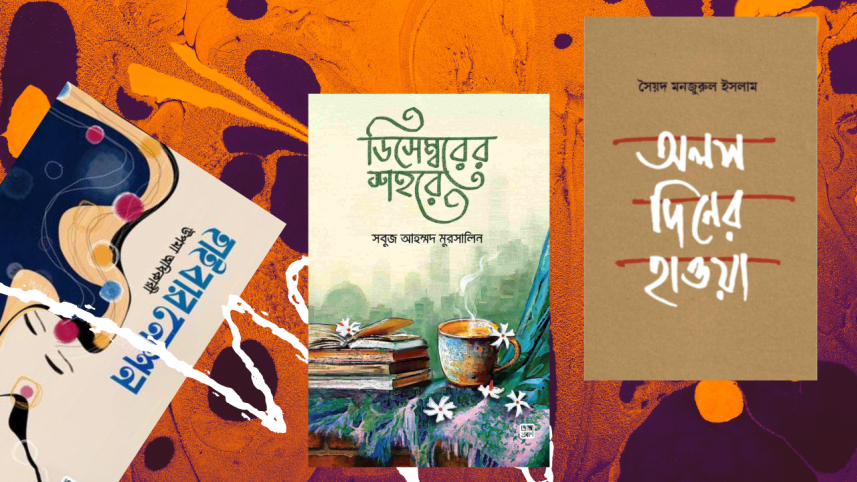
Olosh Diner Hawa
Syed Manzoorul Islam
Onnoprokash, 2026
Leading the list is a beautiful essay collection, distinctive in both its title and tone. In this selected volume, Onnoprokash revisits his widely read literature-page column in Shongbad, Olosh Diner Hawa, which ran regularly and irregularly for nearly two decades from the mid-1980s. An estimated 250 to 300 instalments were originally published, though many have since been lost. This book is curated from the pieces that remain, arranged to preserve the column’s original character. Written before the internet made international reading more accessible, these essays introduced many readers to foreign literature through the main sources available at the time: books, journals, and magazines. The collection is not limited to literature alone; it also includes reflections on painting and, occasionally, film, and it sometimes turns to Bangla writing as well. These are not academic articles, so the narration avoids heavy footnotes and scholarly apparatus, but offers clear, perceptive commentary suited to readers who value accessible criticism grounded in insight and strong prose.

Decemborer Shohore
Shobuj Ahammad Mursalin
Bhumiprokash, 2026
Set against the quiet stillness of winter, Decemborer Shohore follows a small circle of characters whose relationships are shaped by memory, family pressure, and emotions left largely unspoken. At the centre are Akash and Neela, bound together by everyday sacrifices and a love that deepens as much through silence as through closeness. The narrative broadens through Abir, whose unrequited love intersects with grief after his father’s death and the steady effort of carrying on when he would rather retreat. Ria adds another layer to the story, living with an unexplained illness and an uncanny ability to foresee the future, introducing a restrained touch of magical realism without shifting the novel away from its human core. Family tensions, scheming, and a thread of revenge keep the plot moving while giving the emotional conflicts real consequences. Written in simple, fluid language, this is a relationship-driven novel for readers drawn to love stories that also engage with family dynamics and the cost of placing another person’s happiness before one’s own.
Maroon Shondhya
Imran Kayes
Gyankosh Prokashoni, 2026
In this introspective piece, we accompany Asad as he walks alone through Dhaka in the city’s dim evening light. As he moves through the city, the familiar surroundings begin to feel strangely unclear, as if a thick, unfamiliar fog has settled over everything. The mood of the streets mirrors his thoughts, and the walk becomes less about reaching a place and more about stepping away from people for a while. Asad begins to reconsider how he has understood life and the way he has defined friendship for years. He realises he may have been naïve, too quick to trust, too ready to embrace others, and too willing to pour out his feelings in relationships without pausing to measure what he was giving away. That reflection is not comforting; even within Dhaka’s anonymous crowd, it produces a sharp sense of embarrassment and unease. The passage stays focused on this quiet shift in perspective, when being alone feels necessary, and looking at familiar ideas in a new way becomes possible.
Midnight Monologue
Zaied Bin Mizan
Darikoma Prokashoni, 2026
If your best thoughts arrive after midnight, Midnight Monologue will feel familiar. This poetry collection reads like a diary, pages where emotions are not polished into perfect lines, but kept honest, immediate, and recognisable. Instead of following strict poetic rules, the book moves in free-verse and lyric-like fragments that sound like the quiet, one-sided conversations we all have in our heads when the day finally goes silent. Across the collection, the poems trace intimate emotional transitions, from rupture and longing to solitude, restlessness, and the subdued clarity that can follow a sleepless night. Framed as a shared “confession box”, Midnight Monologue offers a clear, accessible entry point into contemporary, feeling-forward poetry for anyone who prefers sincerity over ornament, and reflection over resolution.
Hibernation
Upama Adhikary
Bhumiprokash, 2026
For readers who like short fiction with range, Upoma Odhikari’s Hibernation is an easy recommendation. The book brings together seven stories across different genres, written in a soft, distinctly Bangladeshi voice that feels increasingly confident as you go. Beneath the variety, the collection keeps returning to what people carry in private: unrequited love, grief, family pressure, and the quiet ways trauma shapes everyday life. Some stories look closely at women’s mental scars in a controlling, male-dominated world, but the pain here is not limited to one gender, and the social anxieties expand into a more modern unease, including a tech-driven, hollowing society (especially in the sci-fi-leaning “Coffee Date”). Clear, image-rich, and emotionally honest, the collection suits anyone looking for modern Bangla fiction that is both sensitive and unsparing.
Nur-E-Jannat Alif is a gender studies major and part-time writer who dreams of authoring a book someday. Find her at @literatureinsolitude on Instagram or send her your book/movie/television recommendations at nurejannatalif@gmail.com.
 For all latest news, follow The Daily Star's Google News channel.
Comments