


More than a fight night: Inside Khar’s bid to build Bangladesh’s MMA movement
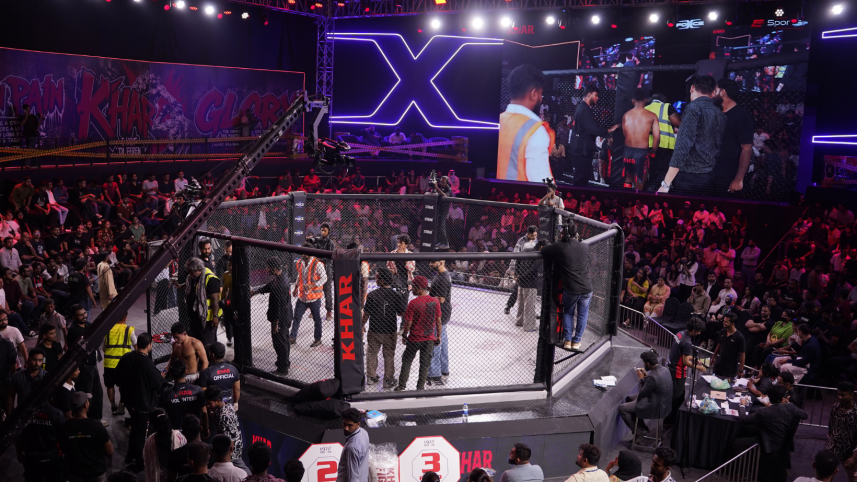
For decades, the Bangladesh Film Development Corporation (BFDC) was where the country came to watch its screen heroes throw punches that seldom landed. Last Friday (July 31), every punch inside the compound was very real. The ceiling's exposed steel trusses and patchwork tiles made the room look like a reworked film studio, but red light and a floor-to-ceiling neon "X" made it feel like nowhere in particular; the kind of room that could be Dhaka or could be anywhere else.
On July 31, KHAR X transformed Jashim Hall at FDC into a live combat sports arena, where more than 500 spectators watched 20 fighters from 14 gyms across the country compete in a night full of sport, music, performance, and identity.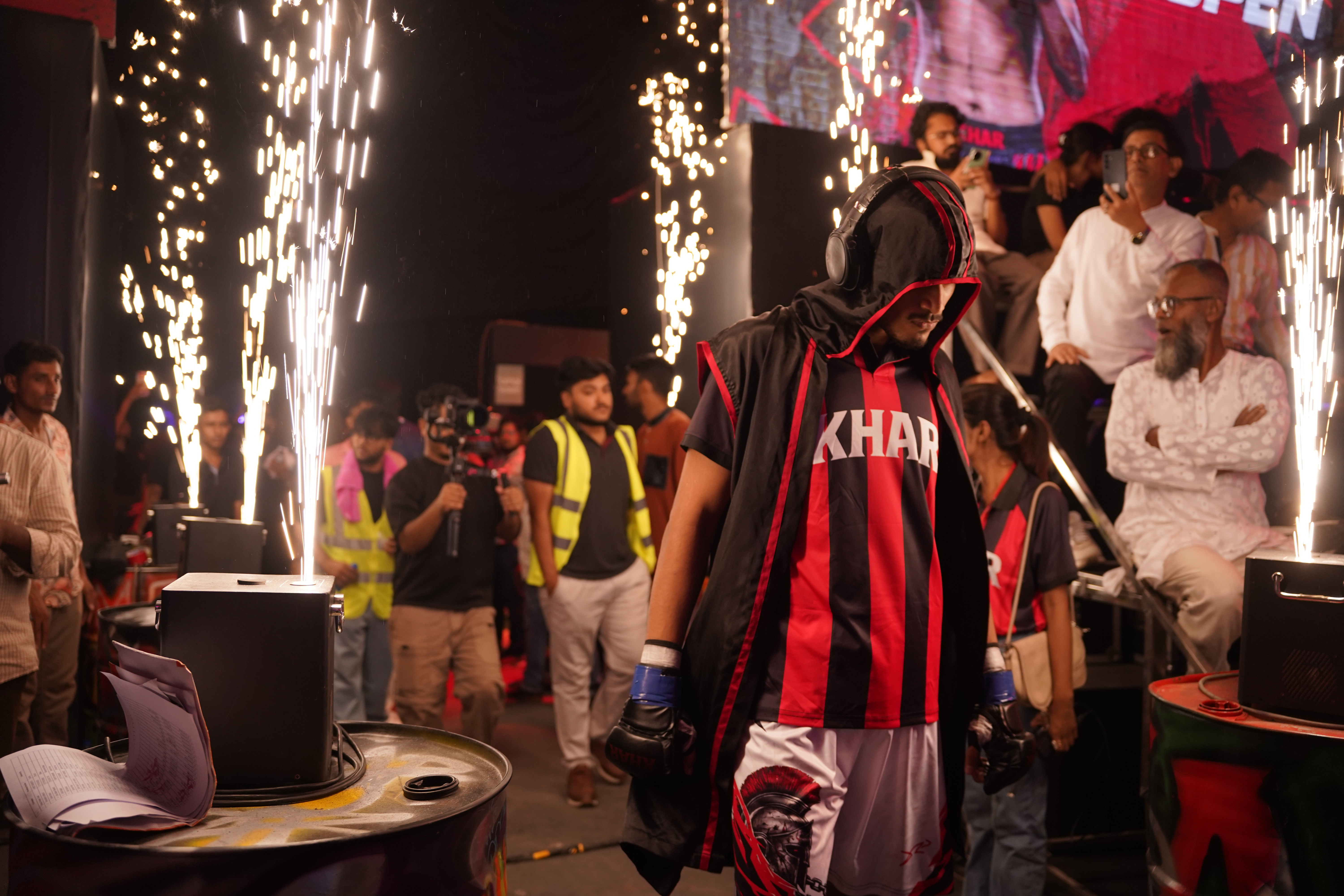 The venue chosen for the programme was a tribute itself to action star Jashim, whose films shaped a generation of Bangladeshi audiences around the image and sound of action cinema. His youngest son, A K Rahul, took the stage to speak about his father’s legacy before the night’s fights began.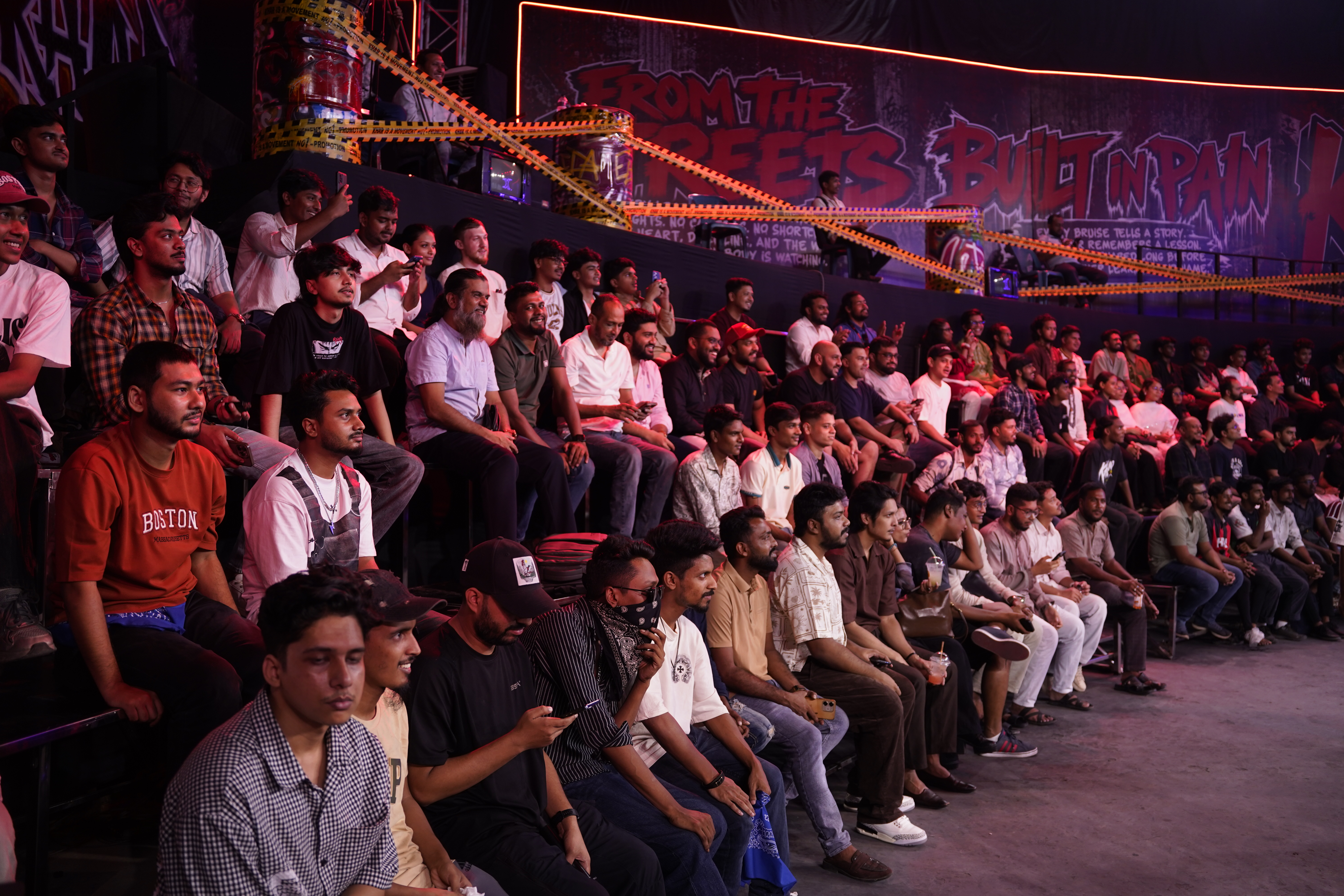
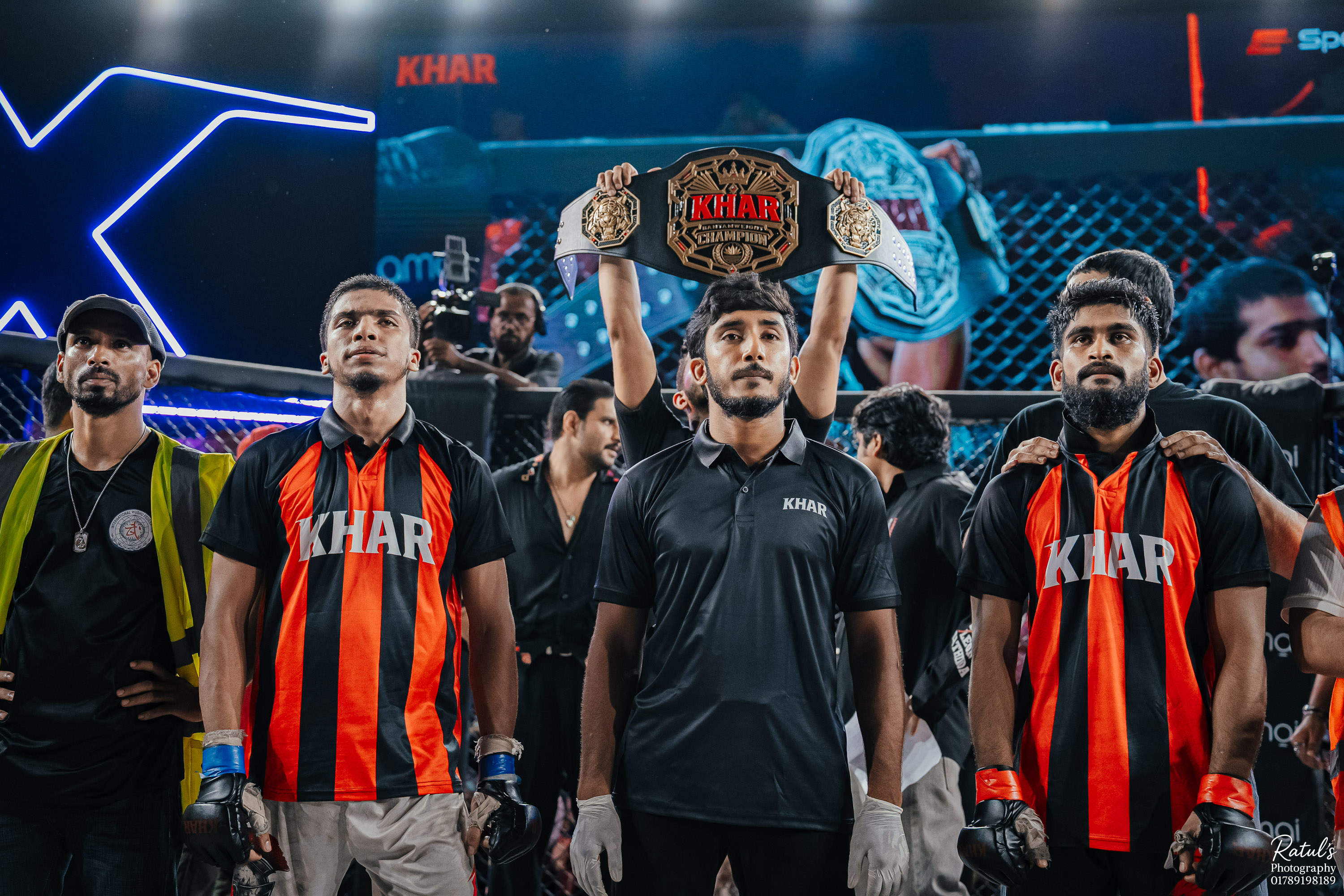
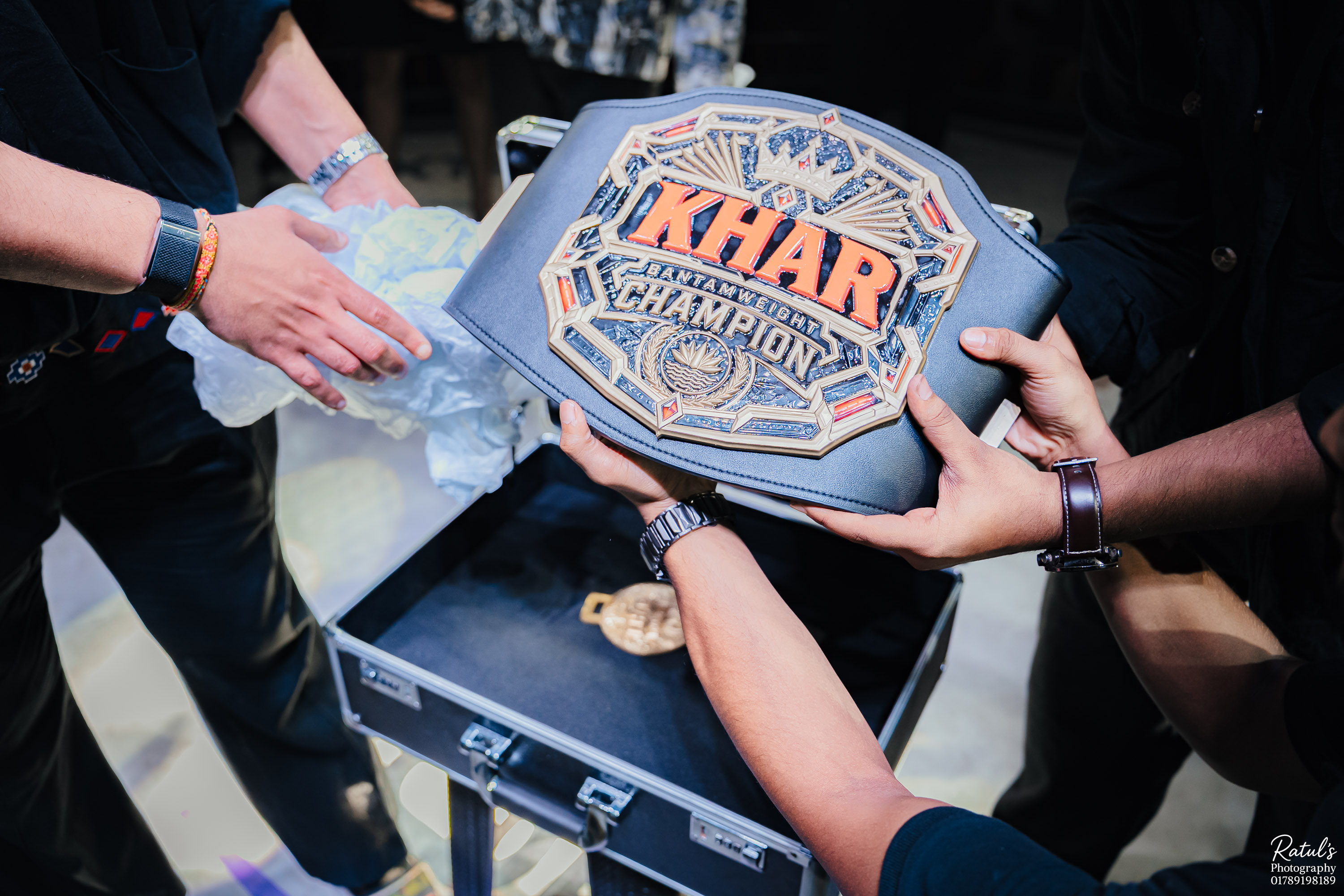
By the end of the evening, Md Arafat “The Psycho Killer” Osman became Khar’s inaugural Bantamweight Champion, making up for a loss from three fights earlier and claiming the promotion’s first official title belt. For Arafat, the victory carried a deeper meaning.
Khar Chairman Mohammad Maaz presented it to him inside the cage moments after the judges’ decision; a moment that marked more than a new champion. It was Khar’s tenth event within a year, presented by X Force and backed by Dour, Xtreme, 60+, Amai, Time Fusion, Elaka, and Mambos Diner.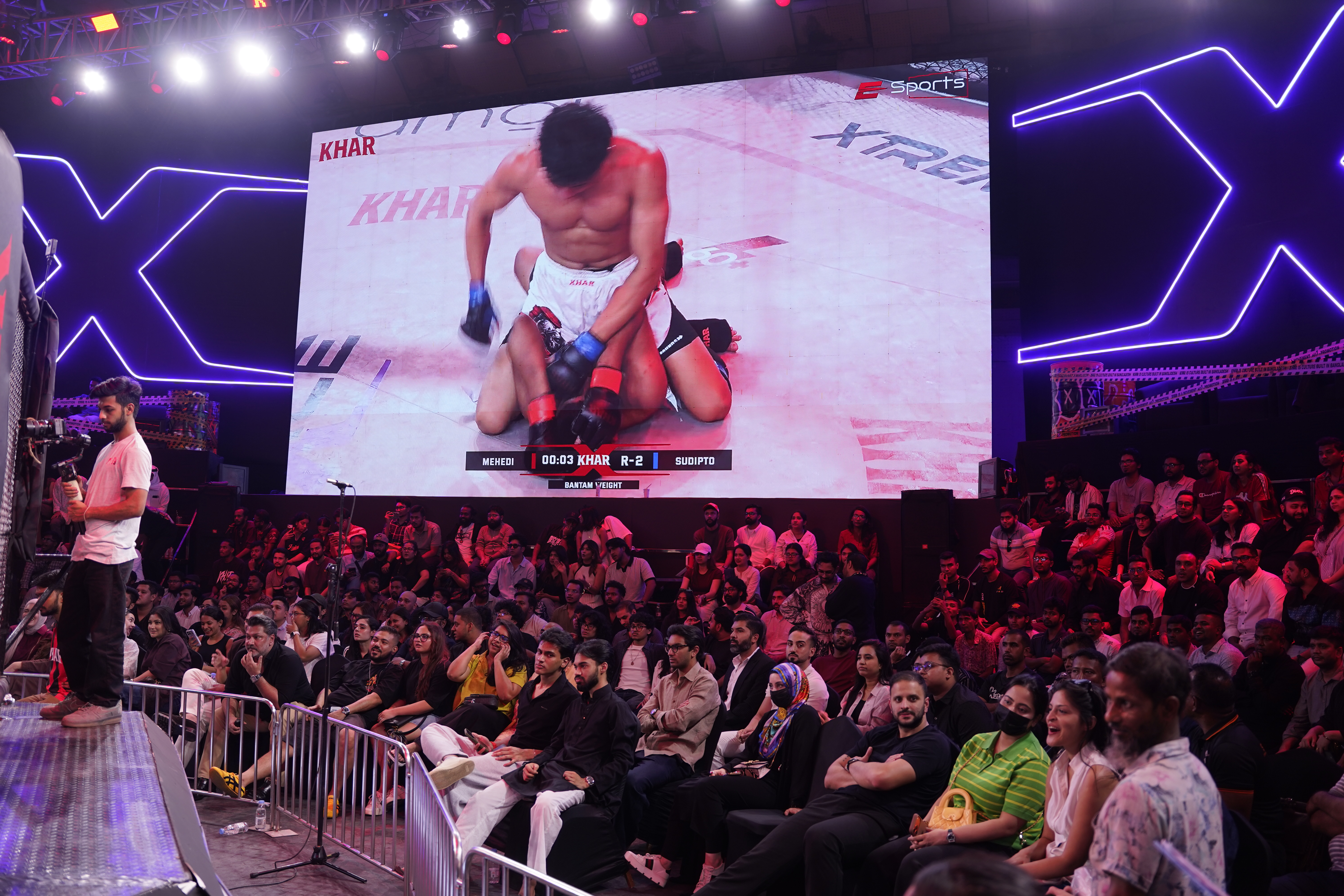

The event’s fight card included nine amateur contests and one professional championship bout. But the more interesting story wasn’t who won. It was how it all came together and what it took to get five hundred people into a room to watch it all happen.
“Audiences all around the world today measure live entertainment against a global standard, whether it’s the UFC, ONE Championship, international concerts, or tours. We saw that Bangladeshi fighters had undeniable talent to match, but what was missing was the experience built around them; how the production, storytelling, and atmosphere simply didn’t reflect its true art and cause,” said Chairperson Mohammad Maaz.
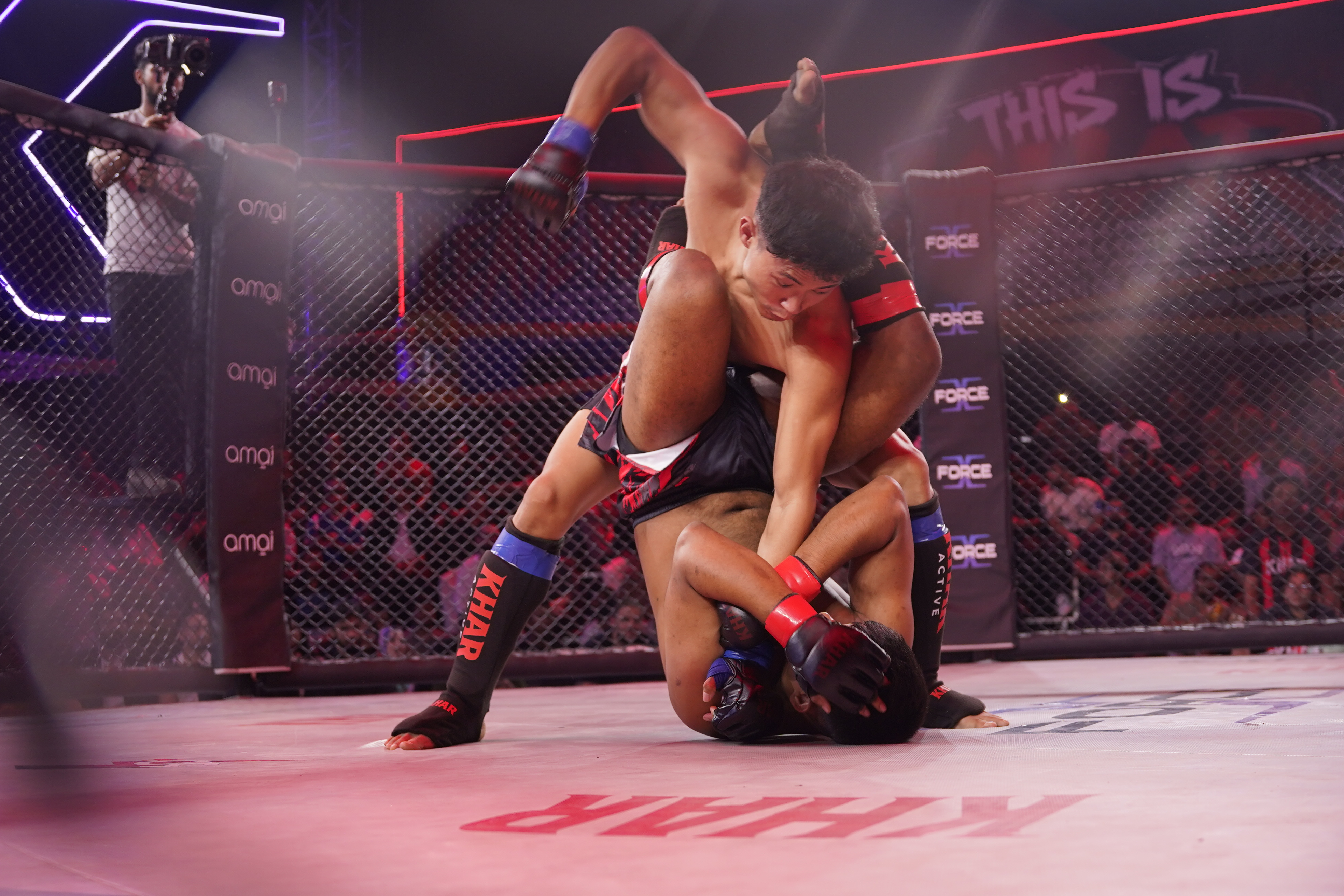
The bigger problem, though, was never entertainment. It was that these talented fighters were spending more time earning a living than training to become better athletes. Khar is working to build an ecosystem where fighters can eventually train full-time, earn sustainably, and compete at the highest level, potentially representing Bangladesh internationally.
“Khar is more of a movement to redefine sports entertainment in Bangladesh while creating meaningful and lasting opportunities for athletes who deserve them, making it a full profession for them, rather than just a passion,” said Maaz.
MMA is still widely misread as unregulated violence. But in reality, it is one of the world’s most disciplined and technically demanding sports, following strict rules, weight classes, medical screening, and safety protocols.
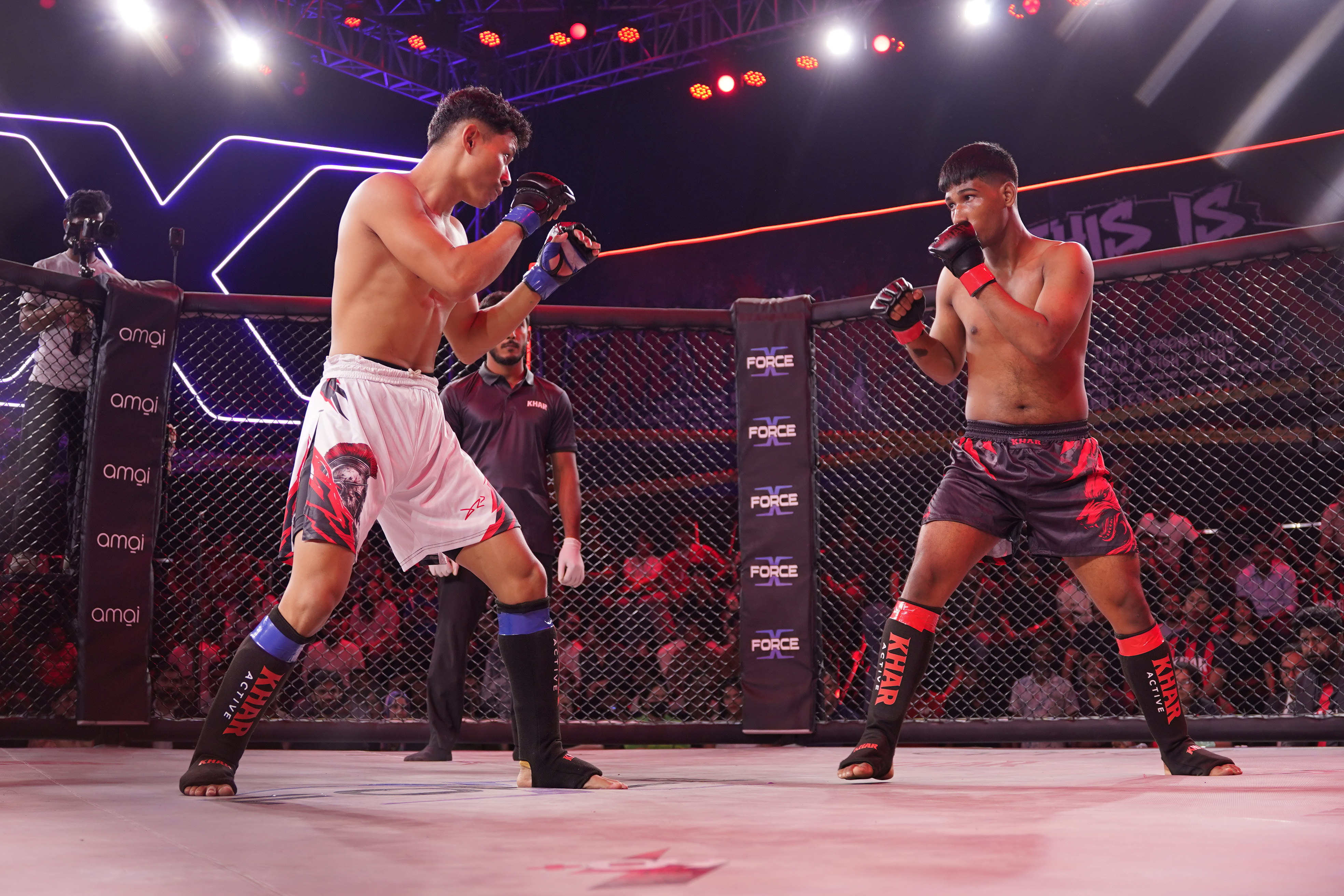
“We’re already comfortable with boxing, karate, taekwondo, and judo. MMA still feels unfamiliar here, so people assume it’s purely about violence. In reality, success in the cage depends as much on strategy and split-second decision-making as on physical power, like punching, striking, wrestling, and grappling, all at once, against someone trying to do the same to you,” said Managing Director Sadat Kabir Rudro.
First-time spectators come expecting chaos but leave talking about the technique, the respect between competitors, and the preparation it takes. Anyone watching for the first time shouldn’t just watch for punches and kicks. "Watch the decisions, the movement, the constant battle for position. Once you understand what's happening in the cage, you realize you're watching one of the most complete sports there is,” explained Rudro.
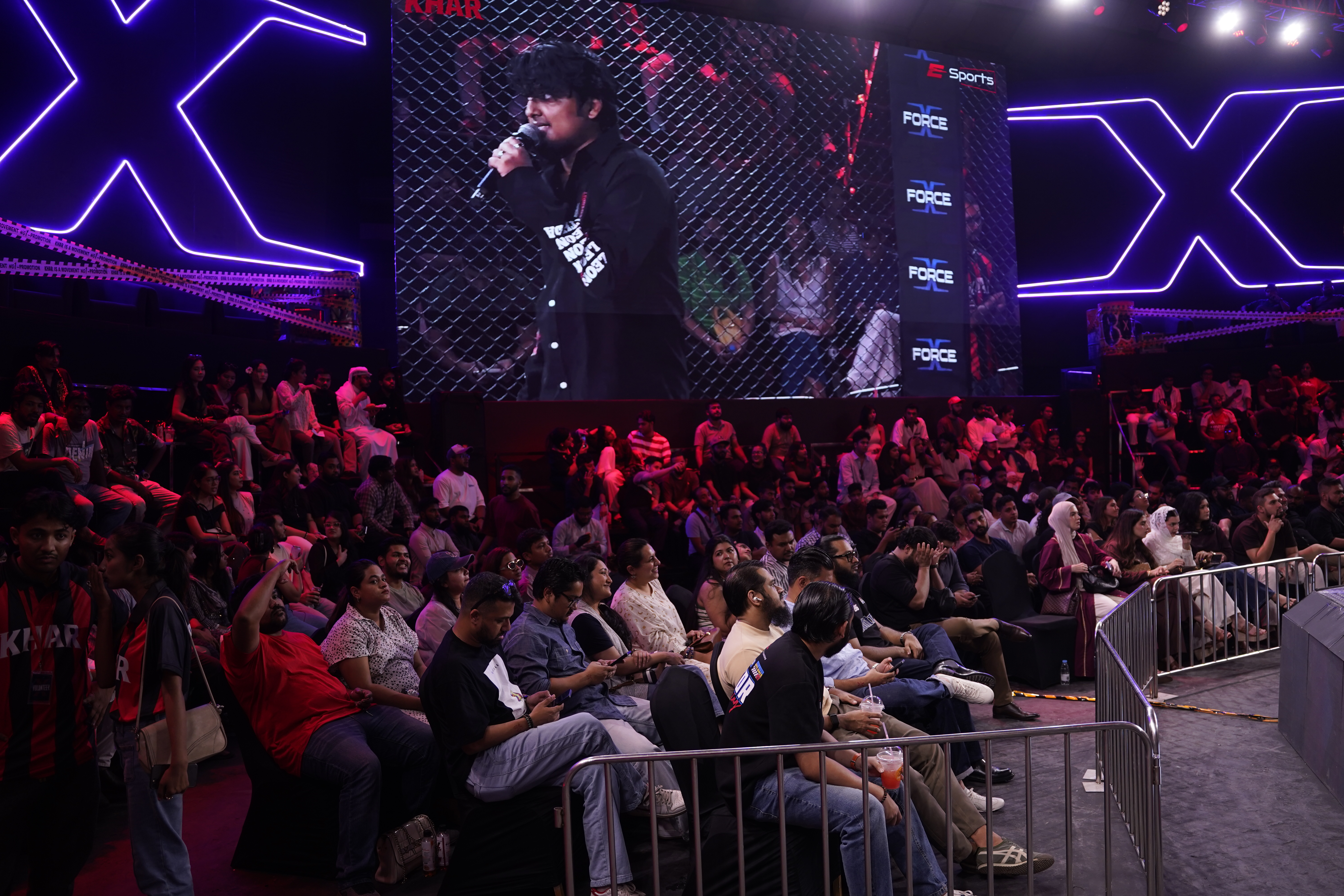
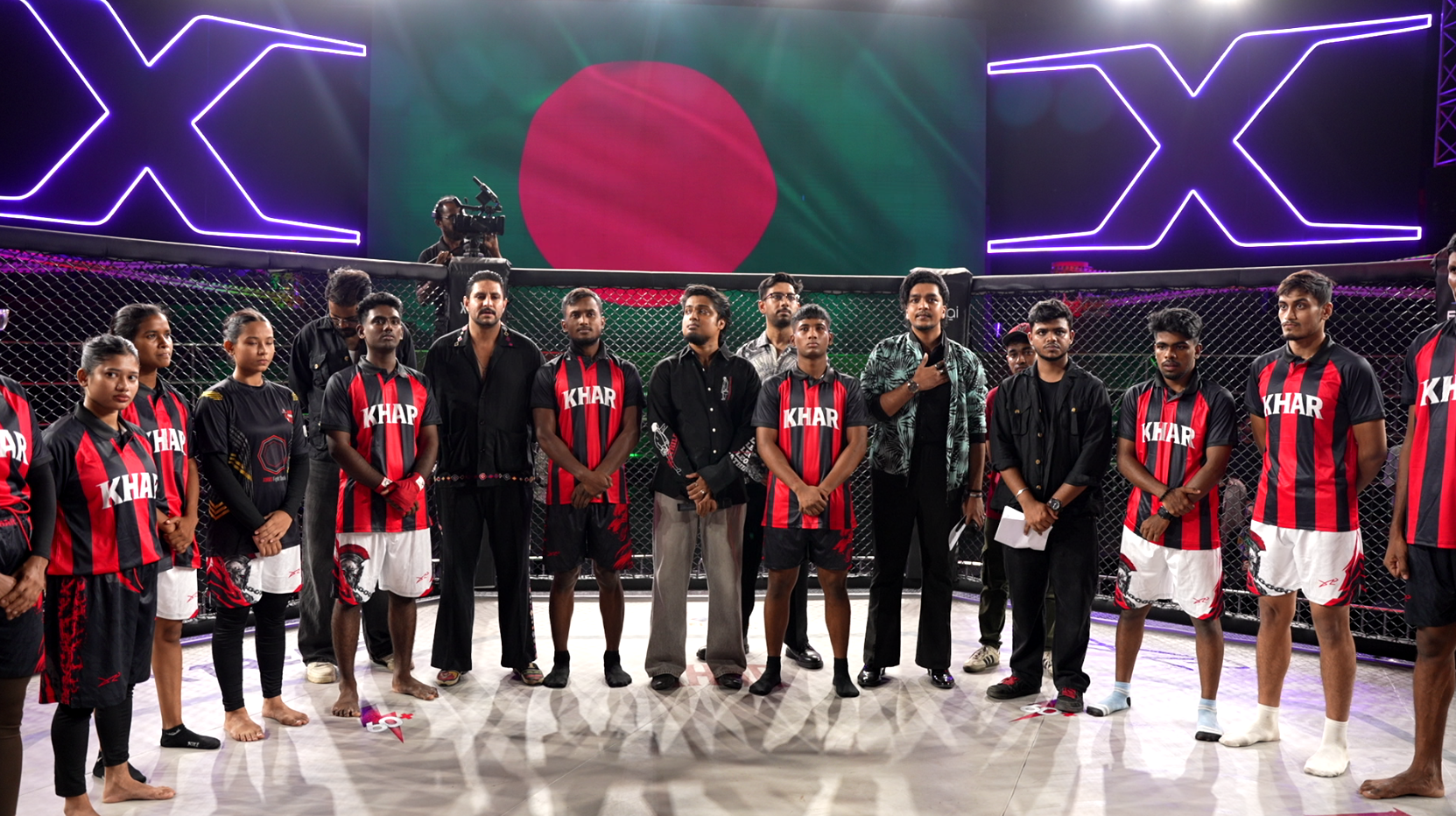
Twenty fighters from fourteen gyms took the cage, representing seven districts, including Dhaka, Cumilla, Manikganj, Kishoreganj, Chattogram, Rangamati, and Narayanganj, reflecting some real weight to Khar’s claim of building a national, not just a Dhaka-based, scene. The fighting cage itself sat inside a second, waist-high barrier: a buffer zone crowded with cutmen, camera operators, and officials, so that even the ringside seats felt one layer removed from the actual violence.
Each entrance came with its own jolt: lights snapping to strobe, a rapper performing live rather than a walkout track playing over the speakers, an MC working the crowd into a call-and-response before the fighters had even reached the cage. Cameras seemed to be everywhere, mounted on the cage’s outer rail, held by staff perched on its frame, phones raised throughout the tiered seating, creating the sense of being filmed as much as watched.
While the night’s main and final bout revolved around a rematch between Arafat and Hussain, the welterweight (72 kg) co-main event saw Abdullah Al Muin “The Grappler” of Habib’s MMA Academy secure a unanimous decision over Bhupen “The Kill” Shil of Z Fighters after a physically demanding contest that showcased sustained grinding, punching, heavy grappling exchanges, and tactical control rather than explosive finishes, and ran the full distance.
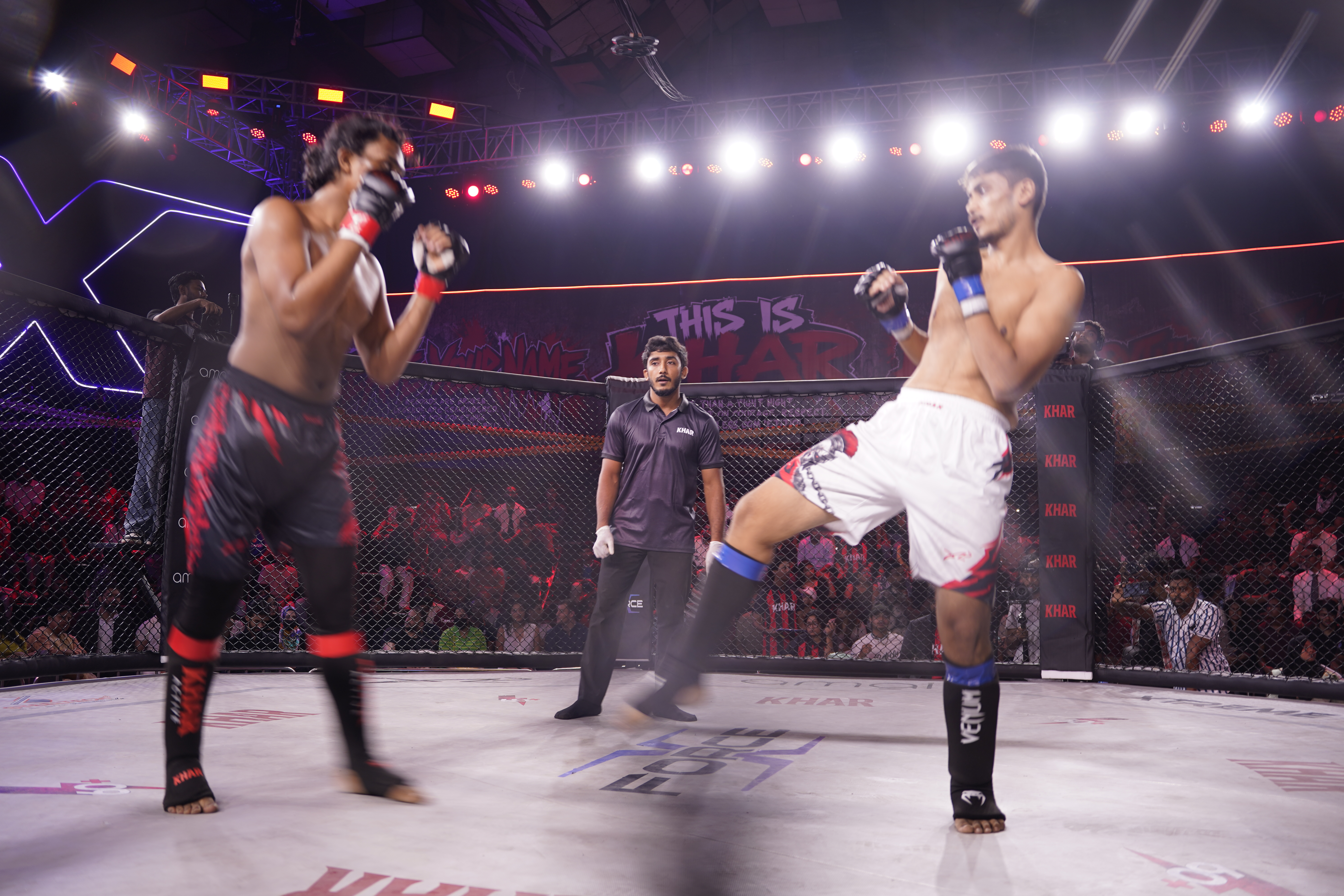
The quickest and most explosive finish of the evening came early in the amateur welterweight (73 kg) division, where Azizul Sarker of MMA & Wushu Fight Club knocked out Dewan Hamza of Muscle Tech Gym just 1 minute and 29 seconds into the first round. The emphatic knockout stood out as the night’s only stoppage victory and one of the most memorable moments on the undercard.
The event also highlighted the steady growth of women’s MMA in Bangladesh, with three female bouts on the card. Making her promotional debut in the flyweight (55 kg) division, Jaya Dutta defeated the more experienced Tuba “The Thunder” of AAF Combat Academy in a statement performance. Later in the evening, Sagorika of Rangamati Combat Gym overcame Shampa of Islam Wushu Club in the bantamweight (58 kg) division.
"We introduced our first female bouts at our AUSIS event, and we've made a conscious effort to feature at least one on every card since," Rudro said. The event before this one featured three.
Furthermore, another notable result on the fight card came in the amateur bantamweight (61 kg) division, where Mehedi Hasan of JKD handed Sudipto “The Starboy” of Rangamati Combat Gym his first defeat in Khar competition, marking an important turning point. Shanto of Tushar Fight Club defeated Asad of Legacy MMA in the featherweight (65 kg) division; Mahmudul Hasan of JKD earned a victory over Abrar Nafis of Z Fighters at featherweight (63 kg), and Jhumur of Kishoreganj MMA overcame Umme Habiba of MMA & Wushu Fight Club in the flyweight (55 kg) division, while Jewel of Narayanganj MMA defeated Raj of Invictus BJJ in the atomweight (48 kg) contest.
Four judges officiated the card at the fight. Three doctors were stationed at the venue, and an ambulance stayed on standby throughout. "Every event runs under a professional rule set, with certified referees, qualified judges, medical doctors on-site, ambulances on standby, and comprehensive pre-fight medical protocols. Fighter safety has never been something we're willing to compromise," said CEO Shouvik Ahmed.
Khar’s early challenge wasn’t convincing people to watch MMA; it was convincing them that an MMA event in Bangladesh was worth their time. Since then, the crowd itself has changed from an audience of fighters, coaches, and gym members to one that now includes students, families, entrepreneurs, and first-time spectators, with a growing share of women among them. On the night, that shift was visible in the seating itself: rounded tiers packed close on all sides, tightly enough that there was nowhere in the room to feel like a bystander. Yellow tape reading “Khar is a movement”, styled like police cordon tape, ringed the restricted areas near the cage.
In the next two to three years, Maaz and his team hope that Khar becomes the undisputed home of combat sports in Bangladesh, setting the benchmark for how the sport should be produced, experienced, and developed. The goal is also a genuine career pathway for fighters, consisting of steadier competition, stronger sponsorships, and eventually, Bangladeshi athletes competing on international stages.
"We hope that when people think about combat sports in Bangladesh, they no longer see it as a niche activity, but as a respected, mainstream form of sports entertainment with a thriving community behind it," said the organisers.
When asked what’s next for Khar, the team explained that they will always aim to make each event bigger, better, and more memorable than the last for both the fighters and the fans.
 For all latest news, follow The Daily Star's Google News channel.
Comments