


The art of political storytelling in Marjane Satrapi’s work


Political stories are often expected to revolve around politicians. They unfold in parliament buildings, government offices, courtrooms, and military headquarters, populated by presidents, generals, and revolutionaries whose decisions alter the course of history. Yet some of the most powerful political narratives ever created contain remarkably few of these figures. Instead, they are told through families gathered around dinner tables, children navigating schoolyards, or grandmothers dispensing wisdom from living rooms. Few artists understood this better than Marjane Satrapi.
Best known for her graphic memoir “Persepolis”, Satrapi chronicled the Iranian Revolution and its aftermath through the eyes of her younger self. Her protagonist was neither a politician nor an activist in the conventional sense. She was a child trying to understand why adults whispered behind closed doors, why friends disappeared, why clothing suddenly became political, and why growing up seemed inseparable from navigating history itself. The result was not merely one of the most acclaimed graphic memoirs of the twenty-first century but also a reminder that ordinary lives often reveal more about political upheaval than official speeches ever can.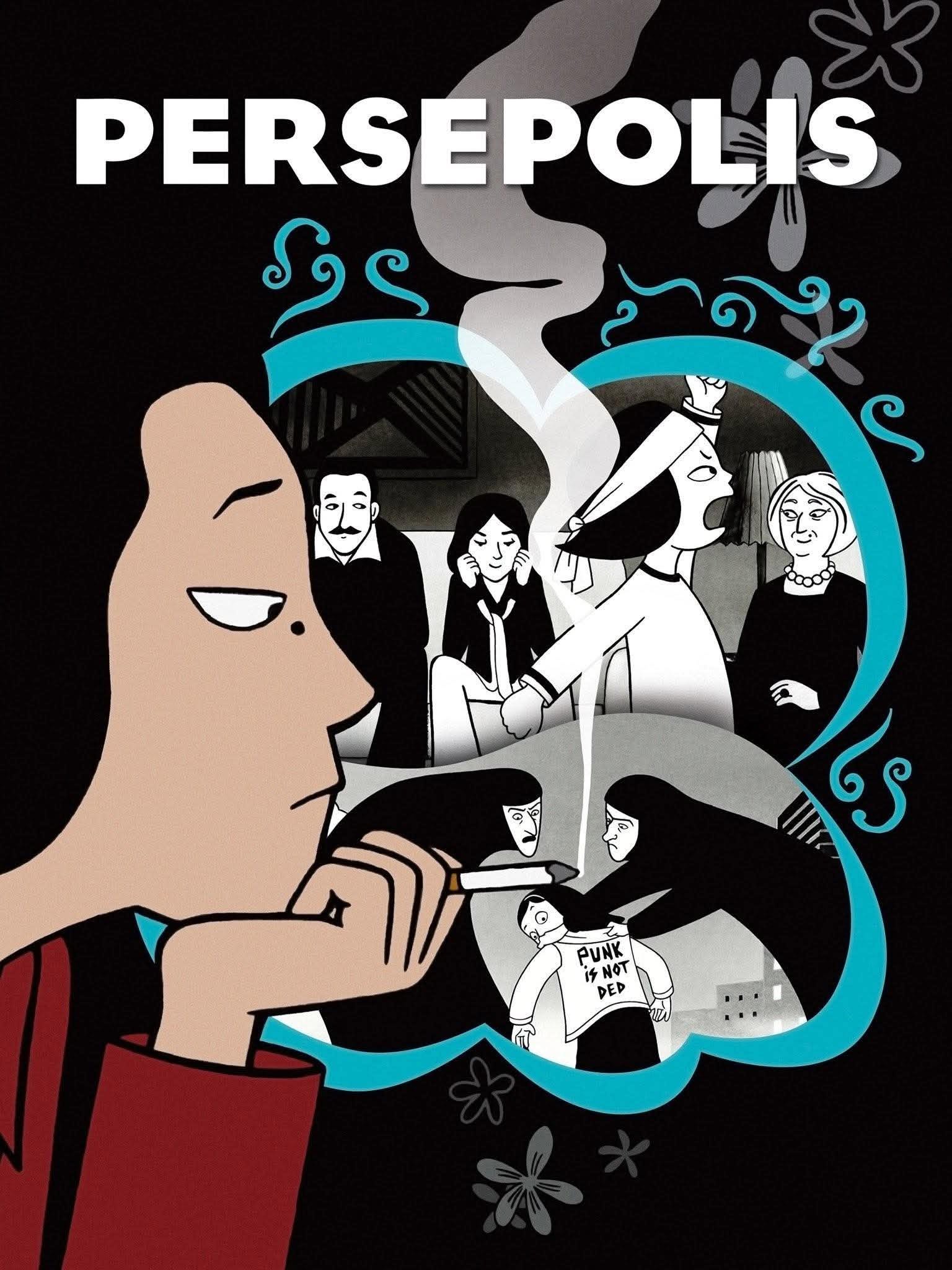
At first glance, “Persepolis” appears deeply personal. It follows Marji’s childhood in Tehran, her adolescence in Europe, and her complicated relationship with home and exile. Yet beneath these intimate moments lies a sweeping portrait of a nation in transition. The revolution, the Iran-Iraq War, censorship, displacement, and ideological conflict are all present, but they are filtered through birthday parties, classroom conversations, family arguments, and teenage rebellion. This perspective distinguishes Satrapi’s work from many conventional political narratives. Rather than explaining historical events through institutions of power, she demonstrates how those events seep into kitchens, schools, friendships, and everyday routines.
Perhaps the most memorable character in “Persepolis” is not a political leader but Marji’s grandmother, whose advice shapes the protagonist’s moral compass throughout the story. Her lessons about dignity, honesty, and self-respect carry as much narrative weight as any historical milestone. The revolution is experienced not through declarations or legislation but through the changing dynamics of an ordinary family. In doing so, Satrapi accomplishes something remarkable. She transforms geopolitics into lived experience.
This approach also explains why “Persepolis” has resonated with readers far beyond Iran. While its historical context is specific, its emotional landscape is universal. Questions of identity, belonging, adolescence, family expectations, and displacement transcend national borders. Readers may know little about Iranian history before opening the book, yet they recognise the awkwardness of growing up, the desire to rebel, and the comfort of home.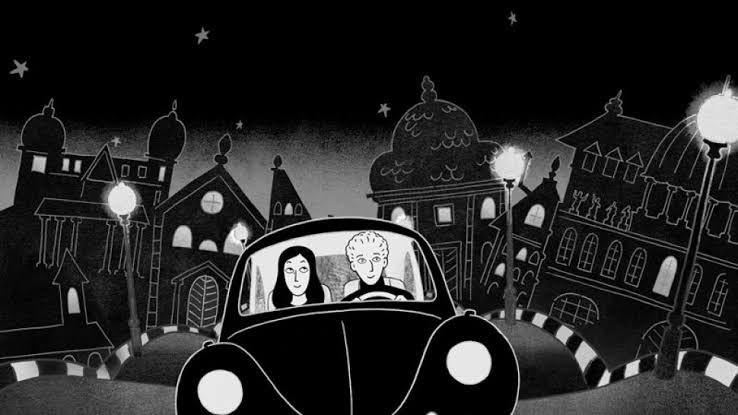
Satrapi was hardly alone in adopting this storytelling philosophy. Her work belongs to a broader tradition within Iranian cinema and literature that frequently privileges the perspectives of children and ordinary citizens over those of political elites. The films of Abbas Kiarostami, for example, often revolve around deceptively simple premises involving young protagonists undertaking seemingly mundane journeys. Beneath these narratives lie profound reflections on ethics, responsibility, and social structures. Jafar Panahi’s films similarly illuminate political realities by focusing on everyday interactions rather than grand ideological debates, while Mohsen Makhmalbaf has repeatedly explored the intersection between personal lives and broader historical forces. Rather than depicting politics as something confined to government institutions, these artists suggest that politics is woven into daily existence. It shapes education, transportation, family relationships, employment, fashion, language, and even childhood games.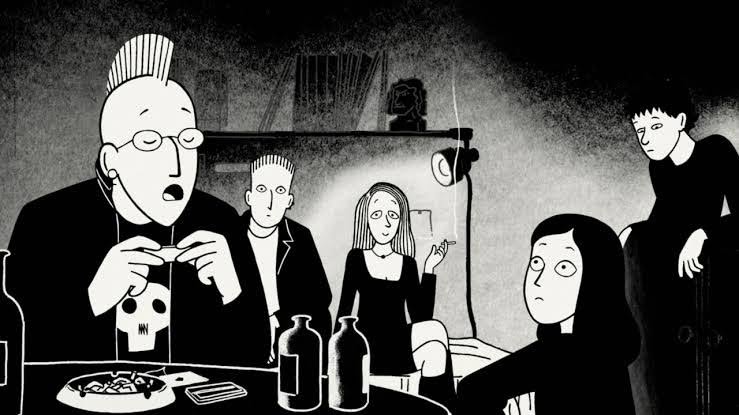
Satrapi’s contribution to this tradition was unique because she chose the graphic memoir as her medium.
The stark black-and-white illustrations of “Persepolis” stripped away unnecessary visual complexity, allowing emotions and ideas to occupy centre stage. The simplicity of the drawings paradoxically made the story more accessible, encouraging readers from diverse backgrounds to project themselves into Marji’s experiences. The medium also challenged assumptions about comics and graphic novels. At a time when illustrated narratives were still frequently associated with superheroes or children’s entertainment, “Persepolis” demonstrated that the format could engage seriously with revolution, war, exile, and identity. It joined works such as “Maus” in expanding public perceptions of what graphic storytelling could achieve.
Yet perhaps Satrapi’s greatest achievement was resisting reduction. For decades, much international coverage of Iran has framed the country primarily through diplomacy, sanctions, nuclear negotiations, and regional conflict. Such reporting is undeniably important, but it can unintentionally flatten an entire society into a collection of political headlines. “Persepolis” offered a correction. It reminded readers that behind every geopolitical crisis are people worrying about exams, arguing with parents, listening to music, falling in love, and trying to imagine their futures. Its Iran was not an abstraction but a place inhabited by individuals with humour, contradictions, aspirations, and flaws.
This human-centred approach also complicates simplistic narratives about identity. Marji is simultaneously rebellious and patriotic, critical and affectionate, deeply connected to Iran yet often frustrated by it. She occupies the messy space that many people experience in relation to their own countries: loving them while questioning them. That complexity may explain the work’s enduring relevance.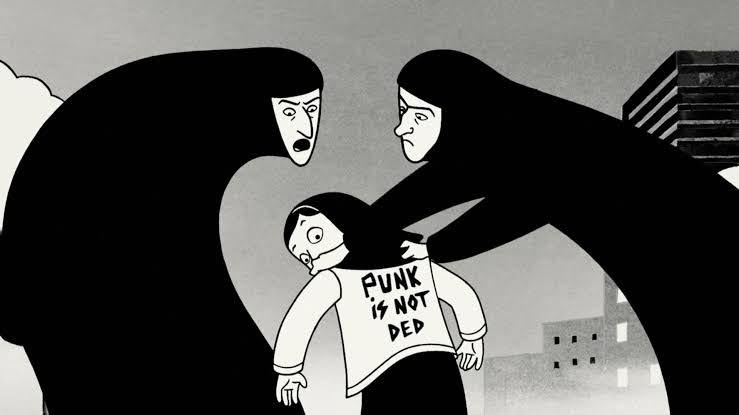
In an age of increasingly polarised public discourse, there is often pressure to divide stories into heroes and villains, certainty and betrayal, patriotism and dissent. Satrapi instead embraced ambiguity. She portrayed flawed people making difficult choices under extraordinary circumstances and acknowledged that history rarely offers uncomplicated answers. Her storytelling philosophy carries lessons beyond literature and cinema. It suggests that understanding a society requires attention not only to elections and revolutions but also to classrooms, households, friendships, and neighbourhoods. The everyday is not separate from politics; it is where politics is most intimately felt.
This insight has particular resonance in a media environment dominated by breaking news and rapid analysis. Headlines often focus on official statements, diplomatic developments, and institutional decisions, while overlooking the quieter stories unfolding beneath them. Satrapi’s work argues that these quieter stories are not peripheral but essential.
The emotional power of “Persepolis” ultimately derives from this conviction. Readers do not finish the memoir with a better understanding of constitutional structures or political factions. They finish with a deeper understanding of what it feels like to grow up amid uncertainty, to carry conflicting identities, and to search for freedom without losing one’s sense of self.
Marjane Satrapi did not avoid politics. On the contrary, her work is profoundly political. She simply understood that history is remembered not only through speeches delivered from podiums but also through conversations held around family tables, moments of childhood confusion, and the private acts of resilience that rarely make headlines. In telling the story of one young girl, she illuminated the experience of millions. And in focusing on ordinary lives rather than extraordinary leaders, she created a body of work that continues to remind readers of a simple but enduring truth: the most revealing political stories are often the ones that never appear to be about politics at all.

 For all latest news, follow The Daily Star's Google News channel.
Comments