


‘Tribondhon’: Three young artists, distinct visual worlds

Alliance Française de Dhaka (AFD) has long been known for hosting visual arts and crafts exhibitions alongside its performing arts and cultural programmes. The institution has also played an important role in supporting emerging artists by providing them with opportunities to establish themselves in the world of visual art and craft.
Continuing that tradition, AFD inaugurated “Tribondhon” on June 12, 2026, following a gentle summer afternoon shower. The exhibition brings together the works of three promising visual artists – Surovi Akter, Md Fariaz Emran, and Niharika Awhona Barsaat.

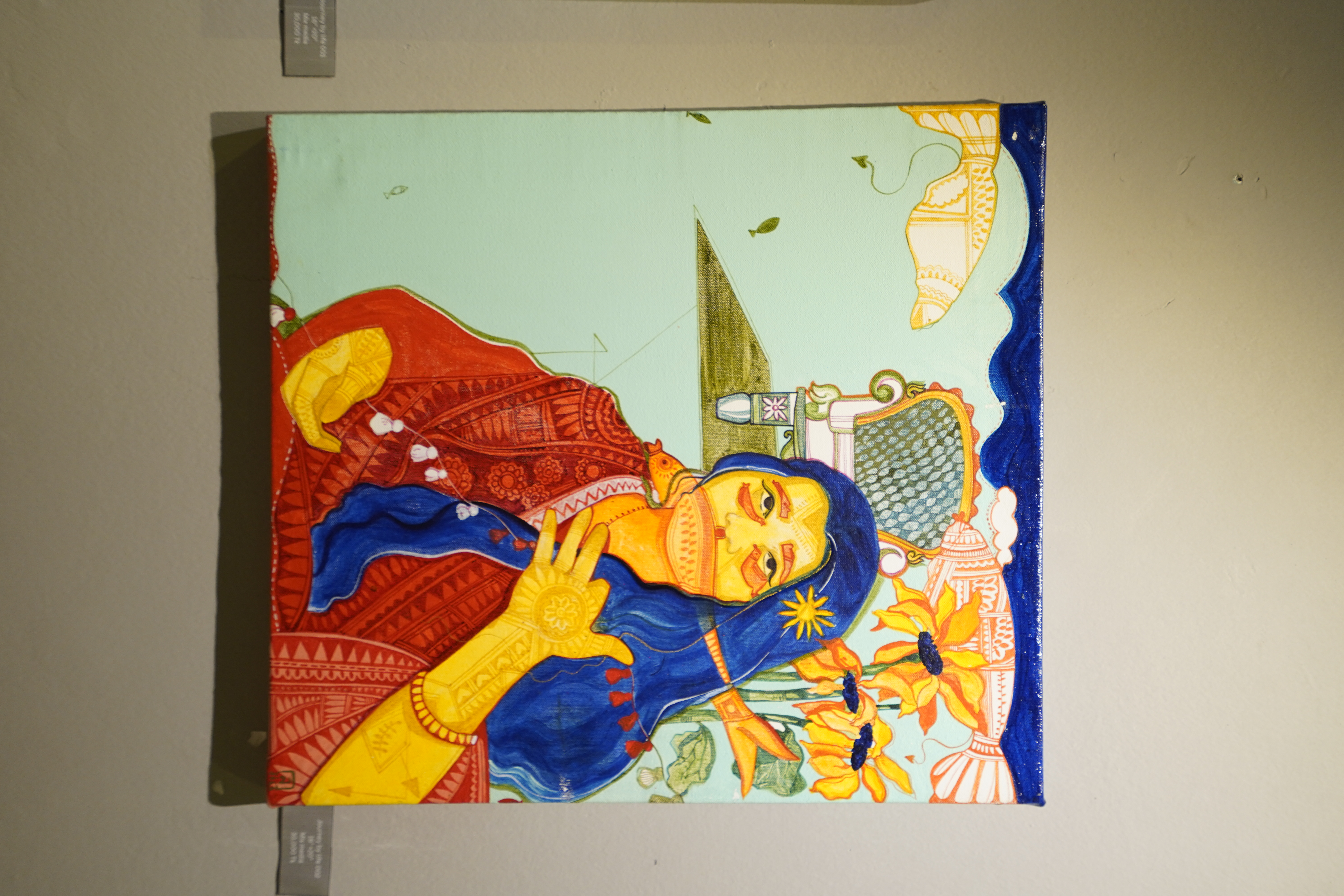
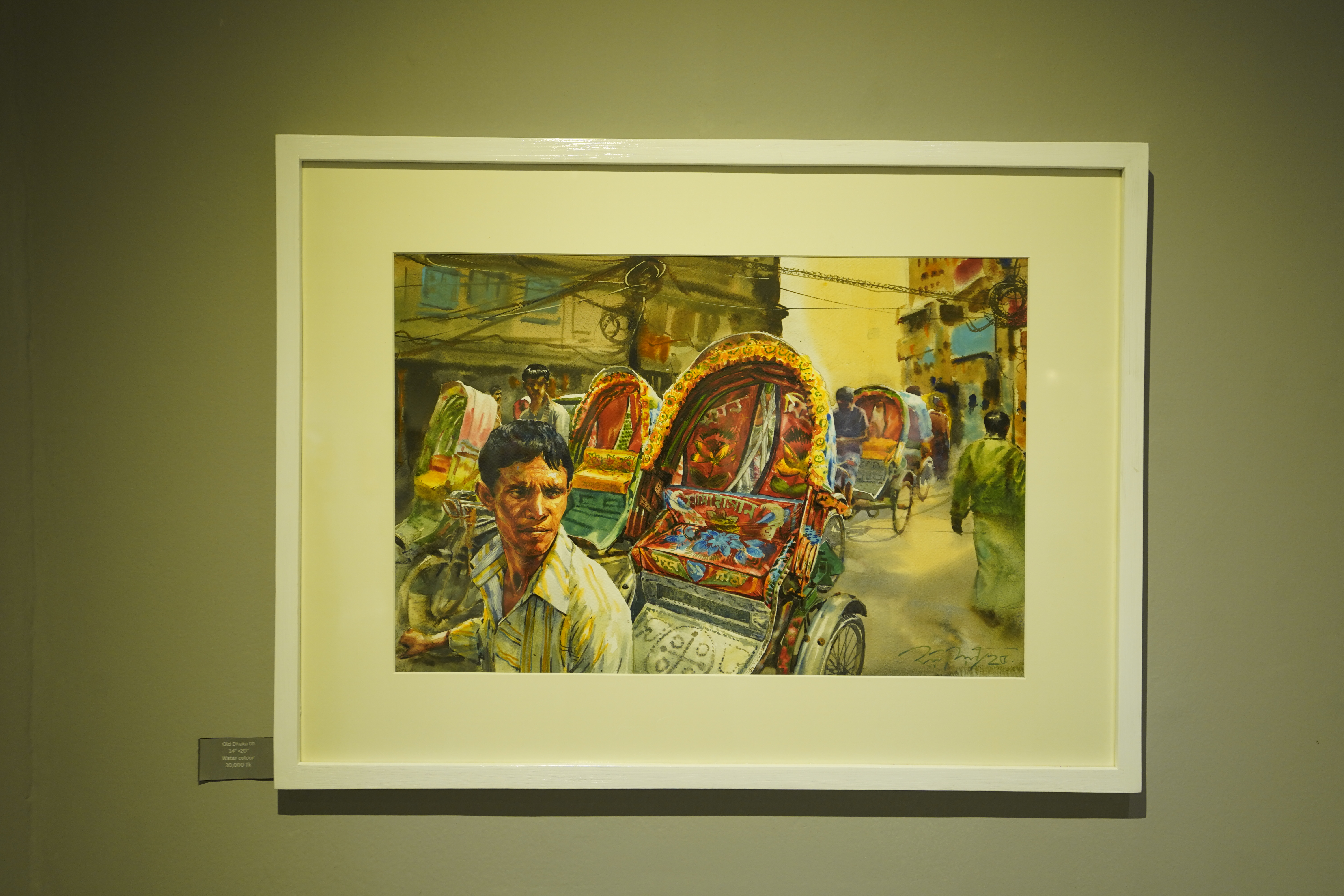
According to curator Fareha Zeba, the title “Tribondhon”, meaning "three connections", refers not only to the bond shared by the three artists but also to the distinct subjects explored in their works – nature through Niharika’s perspective, human faces through Surovi’s portraiture, and the bustle of urban life through Fariaz’s drawings and paintings.
A few months ago, Bangladeshi fine arts students Niharika and Fariaz received the prestigious Indian Council for Cultural Relations (ICCR) scholarship and participated in an exhibition titled “Transition: Dhaka to Banaras”, held at Bharat Kala Bhavan Museum of Banaras Hindu University. The exhibition paid tribute to legendary Bangladeshi artist SM Sultan and reflected the environmental and socio-political realities of contemporary Bangladesh and India.
According to Suresh K Nair, Professor of Art at Banaras Hindu University, both artists have been deeply influenced by the spiritual teachings of Jalal al-Din Rumi, Lalon Fakir, and Rabindranath Tagore. He noted that their works embody themes of love, struggle, resilience, and collective trauma shaped by the pandemic experience.
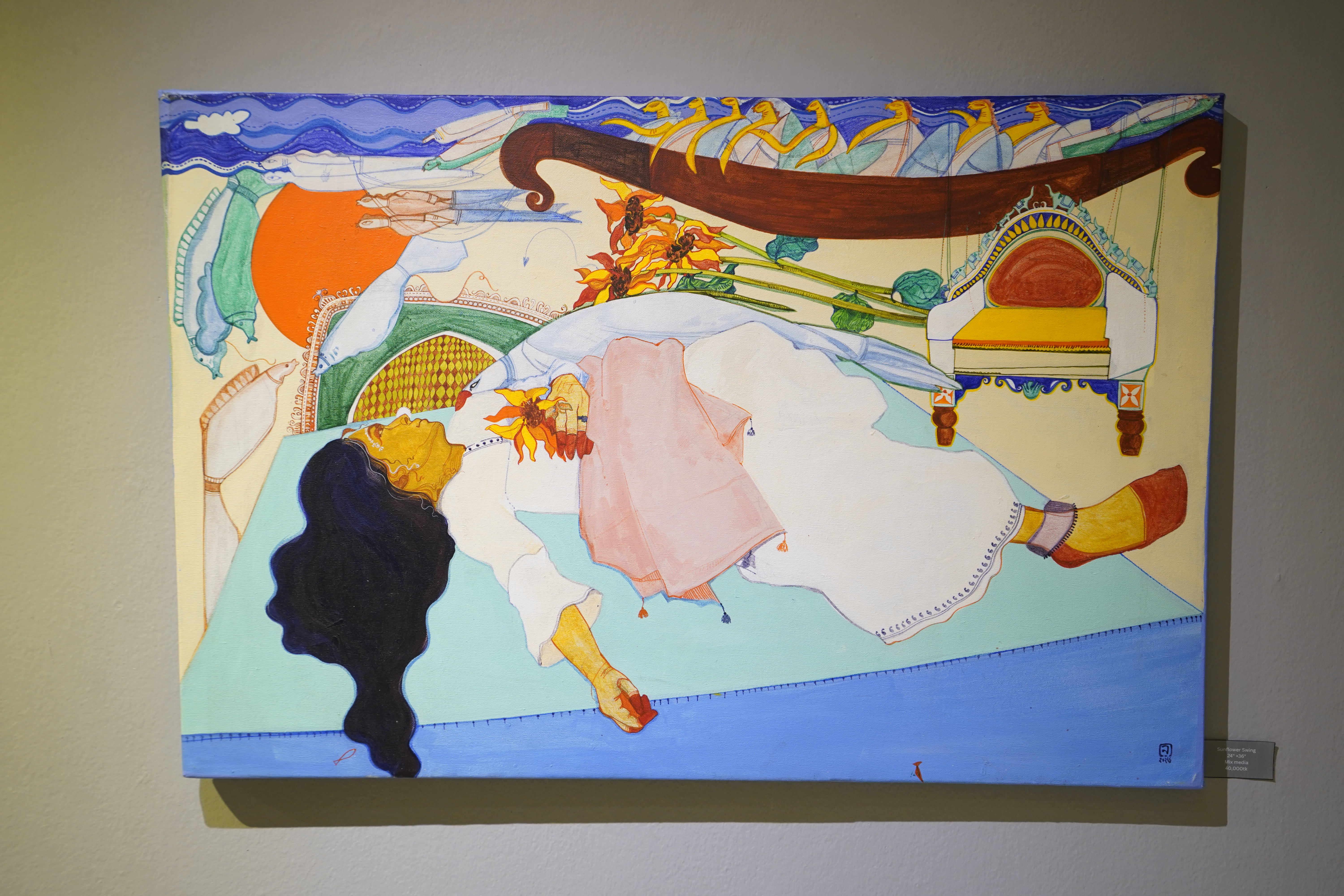
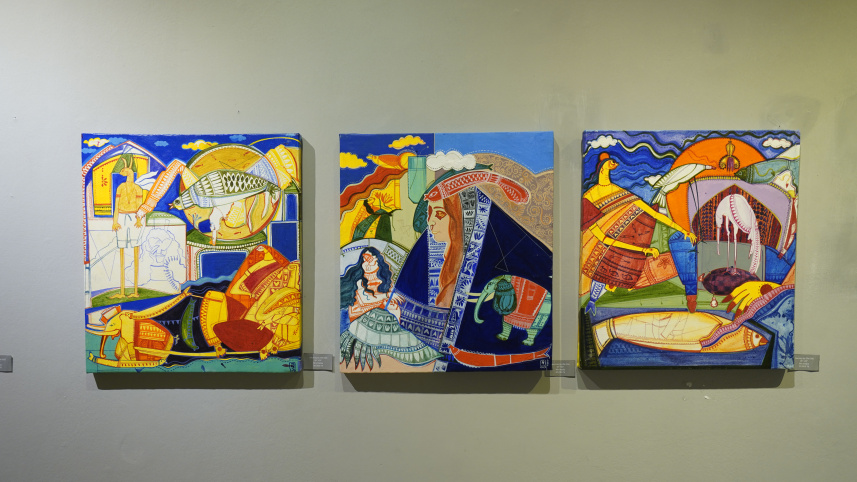
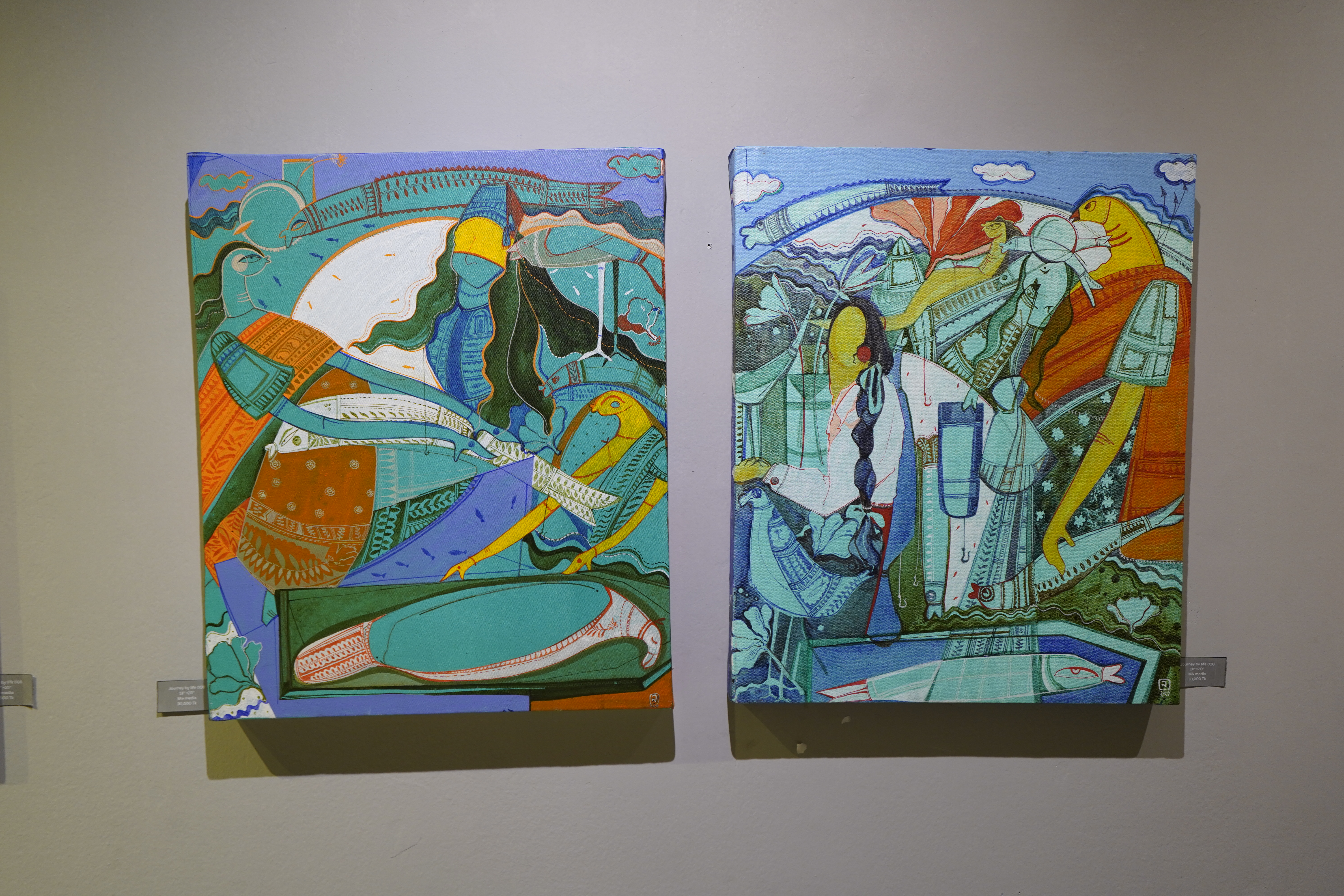
Niharika finds solace in depicting women, birds, and fish. Her work draws heavily from folk colours, motifs, and traditional South Asian art and textiles. Bright, saturated hues dominate her canvases, while her themes often explore femininity within a patriarchal society.
During her time in Banaras, Fariaz sketched people in search of familiarity within an unfamiliar environment. Yet his longing for Dhaka remained evident, leading him to paint the city’s busy streets, people, and vehicles.
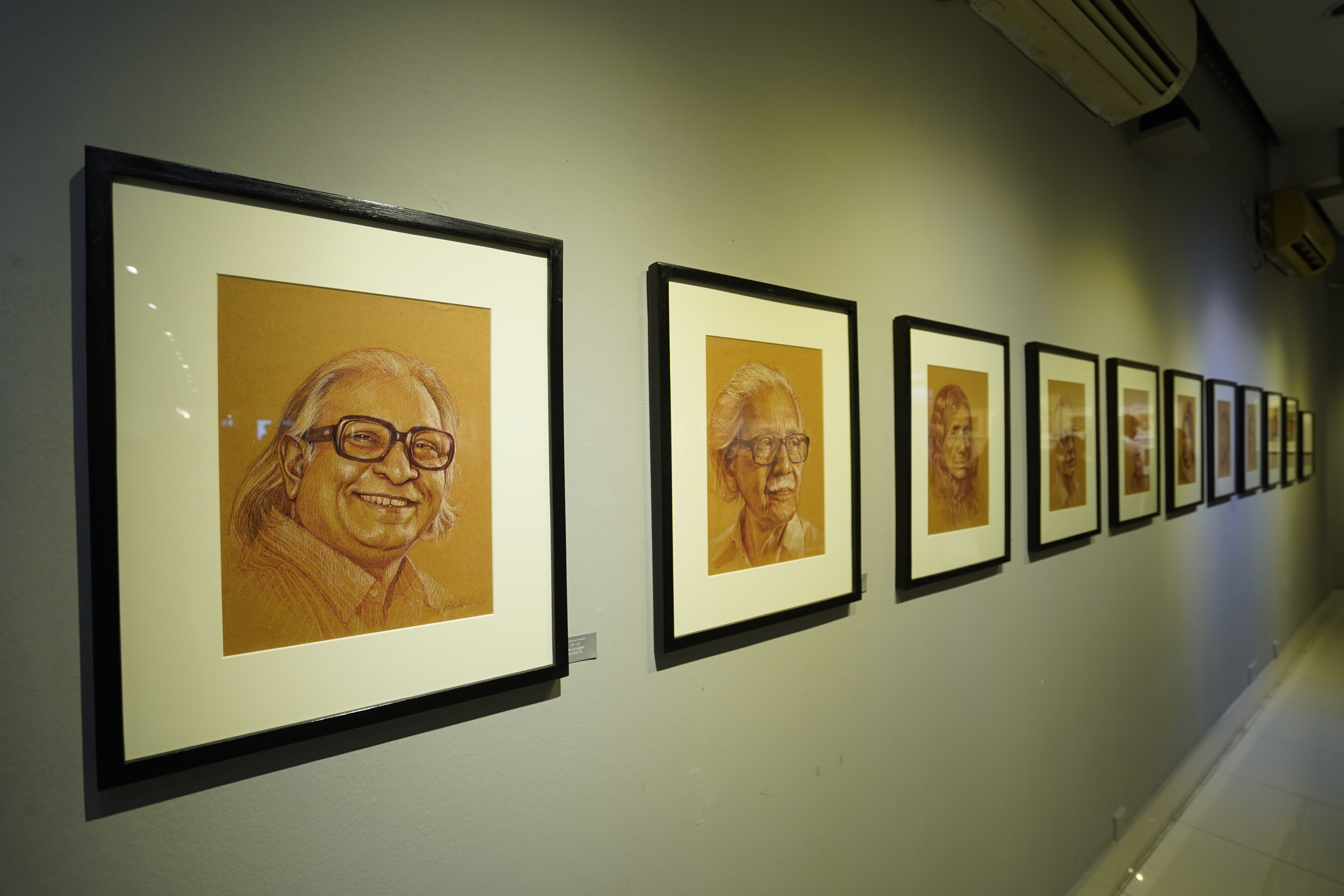
Joining them is Surovi Akter, whose strength lies in portraiture. Working with handmade paper, brown paper, pens, pencils, and charcoal, she creates striking portraits of renowned Bangladeshi artists, including Zainul Abedin, Novera Ahmed, SM Sultan, and Safiuddin Ahmed. For Surovi, portraiture is not merely a visual exercise but a spiritual one, allowing her to connect with the individuals she portrays.
“Tribondhon” offers a platform for three young artists to present their visual vocabulary to a wider audience. It also reflects the diversity and versatility of contemporary artistic practices in Bangladesh.
The exhibition remains open to visitors until today at AFD.
 For all latest news, follow The Daily Star's Google News channel.
Comments