007 First Light: A Bond for the age of becoming

Video games have always occupied a curious space between fantasy and familiarity. They are, at once, entertainment and escapism.
On that note, a video game centred on James Bond is bound to be a pivotal presentment of that phenomenon; after all, very few fictional creations have embodied the male fantasy quite as completely as 007.

For more than six decades, Bond has been the man many imagined themselves to be -- chicly competent, unfailingly witty, impeccably dressed, desired by beautiful women, feared by dangerous men, and forever entrusted with the fate of the world.
Which is why 007 First Light arrives with a fascinating and unexpected verisimilitude.
There is something faintly audacious about introducing a younger James Bond at precisely the moment the world is searching for the next one as release of 007 First Light arrives during an unusually reflective season for Britain's most enduring fictional export.
GoldenEye, the film that reinvented the franchise at the end of the last millennium, has already crossed the threshold of its 30th anniversary. Casino Royale, the movie franchise’s muscular renewal, turns 20 this year. Meanwhile, producers continue their search for the next actor who will inherit cinema's most recognisable licence to kill.
It is, therefore, a moment not merely of transition but of introspection.
And into this interregnum walks a different Bond.
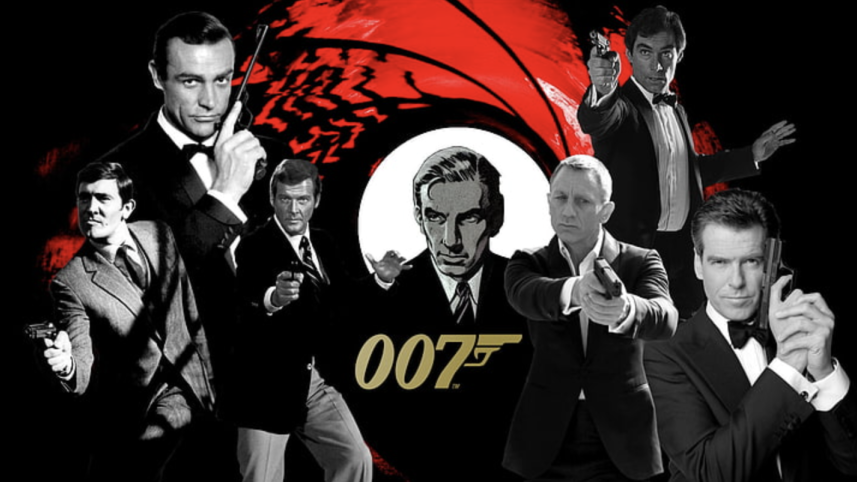
Not the impeccably tailored operative who can silence a room with a raised eyebrow. Not the veteran who glides through casinos and embassies with reptilian confidence. Not the man who already knows exactly who he is.
This Bond is 26.
He is competent but not complete. Talented but not trained. Courageous but not yet composed.
James Bond possessed the wit, the wardrobe, the cars, the exotic destinations, the improbable luck and the seemingly effortless ability to bend the world to his will. He was less an individual than an aspiration; less a character and more a curation.
Most Bond fans are well past 30. Many are approaching middle age. Some have followed the franchise for decades. And with age comes a peculiar insight -- one realises that confidence is often accumulated rather than innate.
And it is a contemporary quandary.
The Bond franchise has always functioned as a cultural weather vane, reflecting the anxieties and aspirations of its era.
When GoldenEye arrived in 1995, history itself had shifted beneath Bond's feet. The Cold War had ended. The Soviet Union had vanished. The certainties that had sustained espionage fiction for decades were suddenly obsolete.
The film confronted this reality directly. Judi Dench's M delivered one of the franchise's most memorable rebukes, dismissing Pierce Brosnan’s James Bond as a "sexist, misogynist dinosaur" and a relic of the Cold War.
The line was not merely directed at Bond. It was directed at the franchise. It was the series acknowledging that it had become a product of another age.
 For all latest news, follow The Daily Star's Google News channel.
 A decade later, Casino Royale performed a similar feat for a different century.
The world after 9/11 was more anxious, less certain and more cynical. The glossy invincibility of the previous eras no longer felt entirely credible. Audiences wanted vulnerability. They wanted consequences. They wanted bruises.
Daniel Craig's Bond delivered all three as Casino Royale stripped away accumulated mythology and presented Bond not as a finished icon but as a man in formation. He bled. He failed. He loved. He lost.
The film's brilliance lay in understanding that audiences no longer wished merely to observe invulnerability. They wanted to witness its construction.
Twenty years later, 007 First Light seems to be pushing that logic even further.
Its Bond belongs to a generation shaped by uncertainty rather than certainty. Unlike his predecessors, he enters adulthood amid economic volatility, institutional distrust and shifting ideas about authority, masculinity and power.
Yet the most compelling protagonists today are often not paragons but works in progress. This reflects broader social transformations. Contemporary life has prolonged adolescence and delayed traditional markers of adulthood. Careers are less linear. Home ownership is more elusive. Certainties once taken for granted have become luxuries.
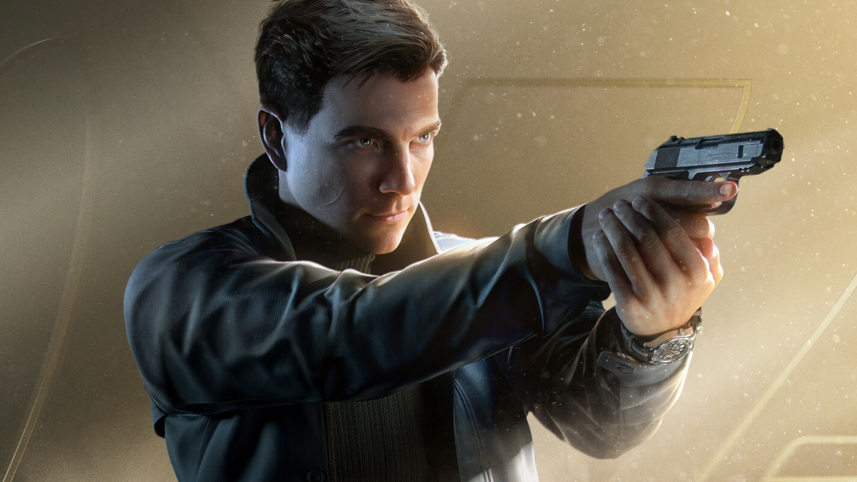
There is also something quietly significant about the women surrounding this younger Bond.
Historically, Bond often occupied the apex of every room he entered. Even when challenged, he remained the gravitational centre around which others revolved.
That dynamic has gradually evolved.
In First Light, being instructed, corrected and occasionally bossed around by female superiors is not presented as emasculation. It is presented as education.
The distinction is important.
Confidence acquired through experience carries greater weight than confidence assumed by entitlement.
The game's Bond is learning that authority is earned. That lesson extends beyond espionage.
It speaks to a broader generational reality in which hierarchies are increasingly questioned and competence matters more than inherited assumptions about status.
Every generation inherits a version of 007 tailored to its anxieties. Now comes a Bond for an age of perpetual becoming. An age less interested in perfection than in evolution.

Away from acting for 14 years, Shabreen Shaka Meem now helps marginalised children

Not receiving a National Award for ‘Ora 11 Jon’ was painful for me: Nuton

Actress-director Mohsina Akhter ties the knot

‘Benuka’ brings Nazrul’s raga-based music to Shilpakala

Artcell evolves

Presenter Samia Afreen reveals second cancer diagnosis

Khairul Basar, Arpita Mitra star in new web-film ‘Tumito Cholei Jabe’

Dola Rahman, Niloy Ahmed team up for new dance number ‘Kismot’

Ajay Devgn returns as Vijay Salgaonkar in ‘Drishyam The Conclusion’