


How Nolan altered Homer’s ‘Odyssey’, and why he had to

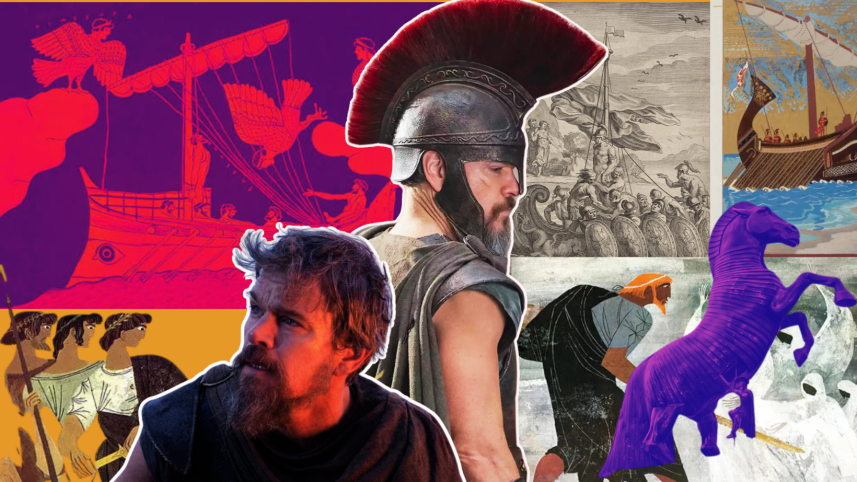
Few works of literature have survived as many reinventions as “The Odyssey”. For nearly three millennia, Homer's epic has travelled almost as widely as its hero, acquiring new meanings with each age.

From Virgil and Dante to James Joyce and Margaret Atwood, writers have repeatedly reinvented the epic because every generation asks different questions of the past.
Christopher Nolan's “The Odyssey” has inspired the same debate.
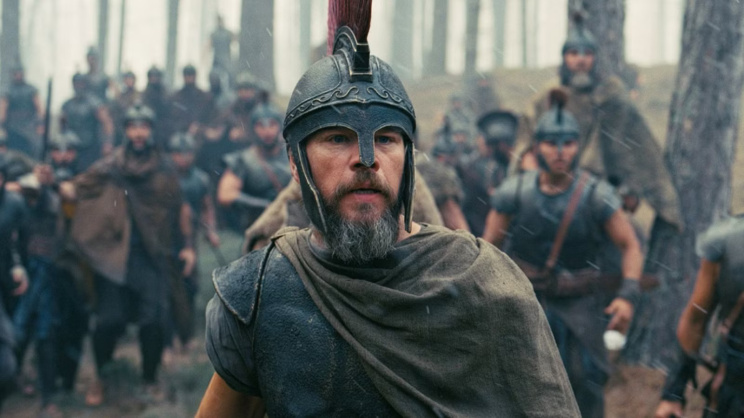
Critics have catalogued its departures from Homer: most of the Olympian gods disappear, Athena becomes an ambiguous presence, Circe and Calypso lose much of their erotic significance, and Odysseus ends not as the restored king of Ithaca but as a man who voluntarily chooses exile.
Viewed simply as an adaptation, these changes can seem like losses. Homer is stripped of much of his humour, sensuality and moral ambiguity, replaced by recognisably modern concerns about trauma, guilt and responsibility.
But judging the film by what it omits risks overlooking what it creates.
The more revealing question should not be whether Nolan remains faithful to Homer, but why these particular departures feel necessary.
The answer lies in “Oppenheimer”.
While promoting “The Odyssey”, Nolan repeatedly said that making his film about J Robert Oppenheimer fundamentally changed how he understood Homer's epic. At first glance, the connection seems improbable. A wandering Bronze Age king and the physicist behind the atomic bomb inhabit entirely different worlds. But Nolan clearly sees them as variations on the same tragedy.
Both are extraordinary minds whose greatest achievement becomes the source of their deepest torment. Both discover that intelligence can reshape history without being able to control what follows.
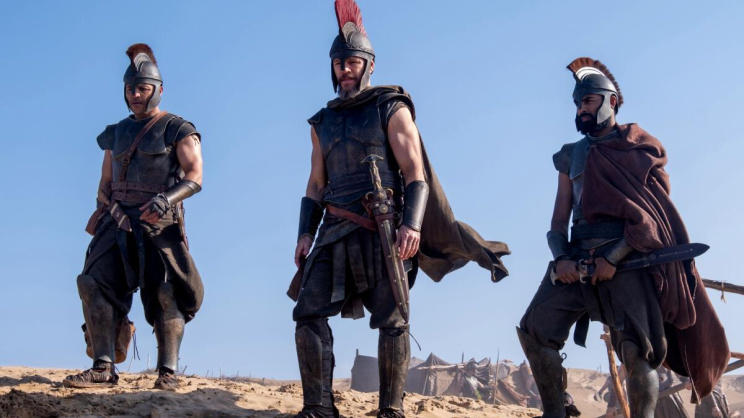
Once that parallel comes into view, the film's departures from Homer stop looking like isolated creative choices. They become expressions of a single philosophical vision.
Nolan is not asking what “The Odyssey” meant to ancient Greece. He is asking what it means after Hiroshima, after climate change and after artificial intelligence — after an age in which human ingenuity repeatedly transforms the world beyond its creators' control.
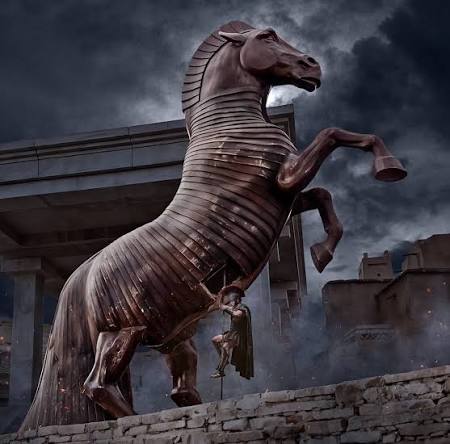
That shift begins with the Trojan Horse.
For Homer, the Horse is the ultimate triumph of intelligence over force. Odysseus is celebrated because he wins through cunning rather than strength. His brilliance is an unquestioned virtue.
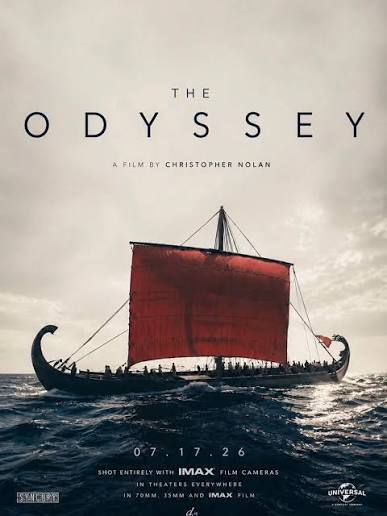
Nolan quietly reverses its meaning. The Horse remains a masterpiece of invention, but it also becomes the original catastrophe from which every later tragedy flow.
Like the atomic bomb in “Oppenheimer”, it is no longer merely the device that ends one war. It inaugurates an entirely new relationship between humanity and violence.
Odysseus no longer glories in his cleverness. Instead, he wonders whether his greatest invention has permanently altered civilisation itself.
The film's central question is therefore not how a hero finds his way home after war, but whether there can still be a home to return to once war has crossed an irreversible moral threshold.
 For all latest news, follow The Daily Star's Google News channel.
 From that philosophical shift follows another of the film's most controversial decisions: the disappearance of the gods.
In Homer, human suffering is inseparable from divine intervention. Storms, monsters and misfortune all arise because the gods shape human destiny. Nolan relocates that structure inside the human mind.
Athena becomes less a supernatural being than the embodiment of memory and conscience. The force pursuing Odysseus is no longer Poseidon's anger but the knowledge of what he has done at Troy. Divine punishment becomes psychological guilt.
This is why describing Nolan's film simply as a more realistic “Odyssey” misses the point. He has not exchanged mythology for realism but one system of belief for another. Homer explains suffering through the will of the gods; Nolan explains it through memory, trauma and moral responsibility.
The film's ending reveals the full extent of that transformation.
In Homer, Odysseus kills the suitors, reunites with Penelope and resumes his place as king. Thus, order is restored.
Nolan refuses that reassurance. His “Odysseus” returns to Ithaca only to relinquish the throne and go into exile with Penelope.
The ending initially seems like the film's greatest betrayal of Homer, yet it follows inevitably from everything that precedes it.
If the Trojan Horse has changed civilisation itself, then homecoming has become impossible. History has altered the world too profoundly for restoration to be anything more than an illusion. This concern has quietly run through Nolan's cinema for more than two decades.
“Memento” explored memory as both salvation and prison; "Inception", "The Prestige", "Interstellar" and "Tenet" all revolved around human ingenuity producing consequences their creators could not fully master.
“Oppenheimer” gave that fascination its clearest historical expression. “The Odyssey” simply projects it backwards into myth, turning Odysseus into another Nolan protagonist haunted not by monsters or gods but by the consequences of his own invention.
No adaptation survives by becoming an illustrated edition of its source. Joyce did not preserve Homer by reproducing his plot, nor did Atwood by preserving Penelope's silence.
Nolan belongs to the same tradition.
His film is less interested in reproducing Homer's story than in discovering what the epic can still say to an age haunted by technological power and historical anxiety.
Perhaps that is the deepest irony of Nolan's adaptation. Its most controversial departures from Homer are also what make it recognisably Homeric.
“The Odyssey” has endured for over 2,700 years because every generation has remade it in its own image.
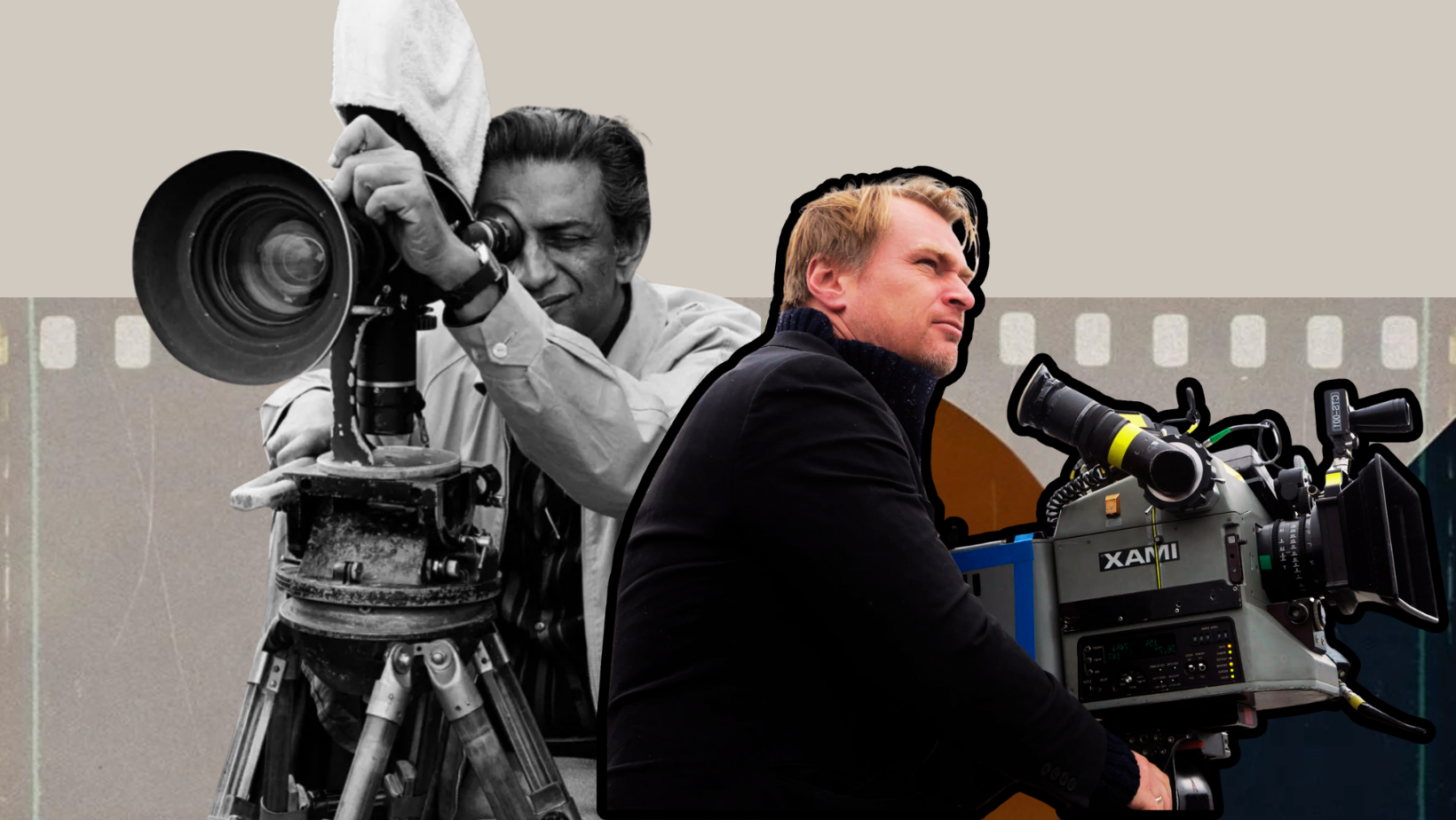
Homer asked what it meant for a warrior to find his way home after war. Nolan asks a darker question: what if humanity's greatest danger is not that we fail to return home, but that our own brilliance has changed home beyond recognition?
Comments