


Threads that refuse to fade

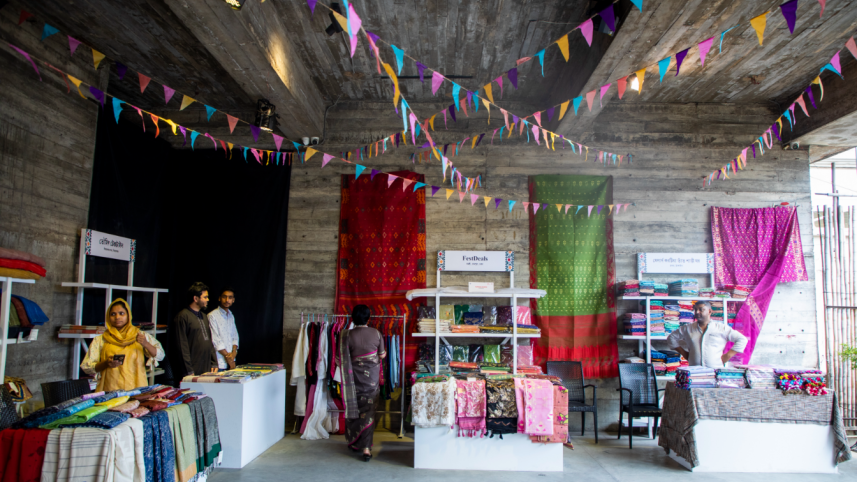
There was a festive air inside Bengal Shilpalay on Sunday, March 8. Three exhibition halls were adorned with the colourful threads of Bengal. Handloomed majestic yet homelike saris hung everywhere, wrapping the space in warmth and quiet pride. The fabrics were not simply displayed but seemed to breathe history, heritage and ancestral pride.
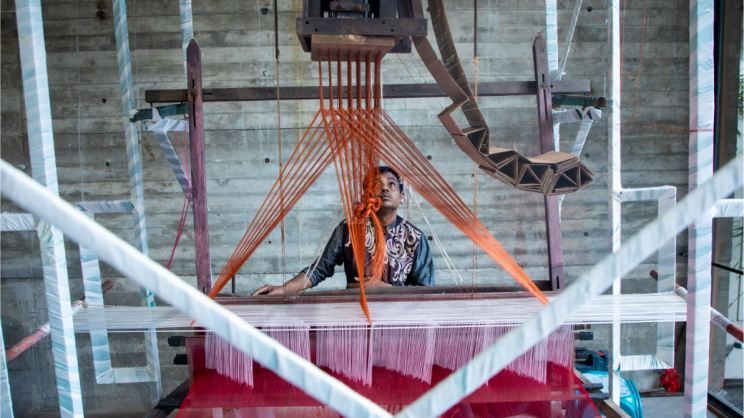
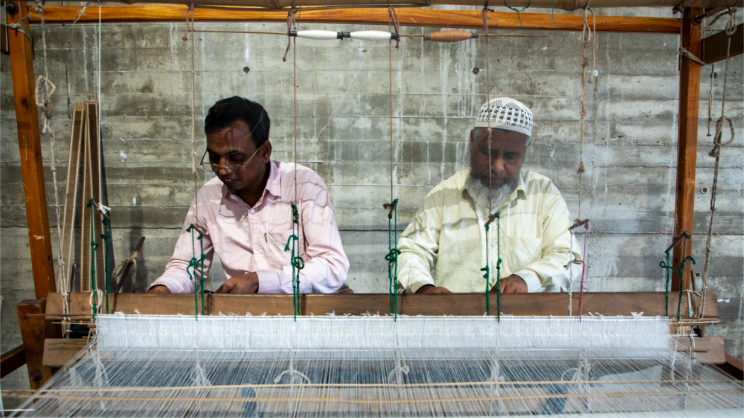
And this was not merely a gallery of finished garments. The craftsmen themselves were present, seated beside ancestral looms and spinning wheels, showing how thread slowly becomes cloth.

One sari, visitors were told, is so fine it can pass through a ring. Another appears so intricate that fingers hesitate before touching it, as if the slightest movement might disturb its fragile geometry.
For generations, stories about Bengal’s Muslin, Jamdani, Baluchari, Tussar, Korial and Tangail fabrics have lived like folklore — tales repeated long after the craft itself seemed to slip into memory.
Inside Bengal Shilpalay this week, those legends feel less distant.
A faint rustle of fabric greets visitors entering the halls. On one table lies a delicate stretch of Muslin, almost weightless, its threads dissolving in light. Nearby, a spinning wheel turns slowly as cotton fibres are twisted into yarn with a quiet reminder of the technique that once made Bengal’s textiles famous across the world.
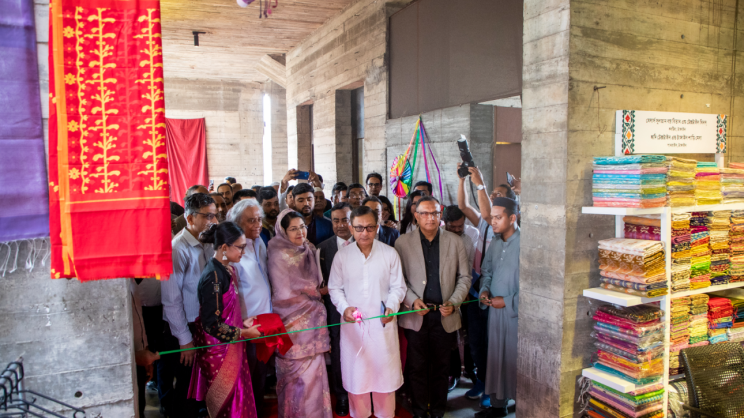
The exhibition, titled "The Handloom Tradition of Bangladesh", opened on March 8 at Bengal Shilpalay in Dhanmondi. Organised by the Bangladesh Handloom Board with support from the Bengal Foundation, the nine-day programme combines a curated exhibition with a small fair celebrating the country’s weaving heritage.
Textile and Jute Minister Khandaker Abdul Muktadir inaugurated the exhibition, noting that handloom remains one of the largest sources of rural employment. “We are aware of the challenges our craftsmen face, but handloom has a history, quality, and appeal that power looms cannot replace,” he said, emphasising the government’s commitment to preserving the sector.
For curator Shawon Akand, the goal is straightforward.
“Many people in the capital have heard about our textile traditions,” he said. “But very few have actually seen how these fabrics come to life.”
Handloom weaving, he noted, has long been embedded in everyday life across the country. Yet rapid industrialisation and the rise of power looms have gradually pushed the craft to the margins.
“That is the reality,” Akand said. “But we also have to preserve this heritage and honour the craftsmen, so that the tradition remains part of our cultural memory.”
Walking through the galleries feels less like visiting a museum, a wholesome fair, than stepping into fragments of a long conversation between craft, heritage and history.
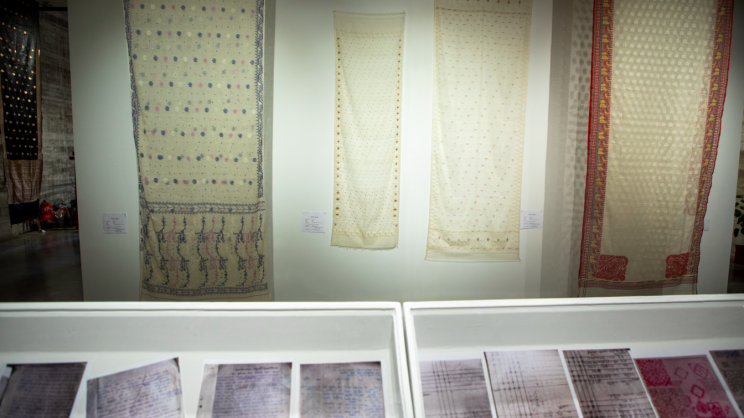
Visitors pause beside weavers who demonstrate how cotton becomes yarn and how yarn slowly forms patterns on bamboo looms — each thread placed carefully, each design emerging line by line.
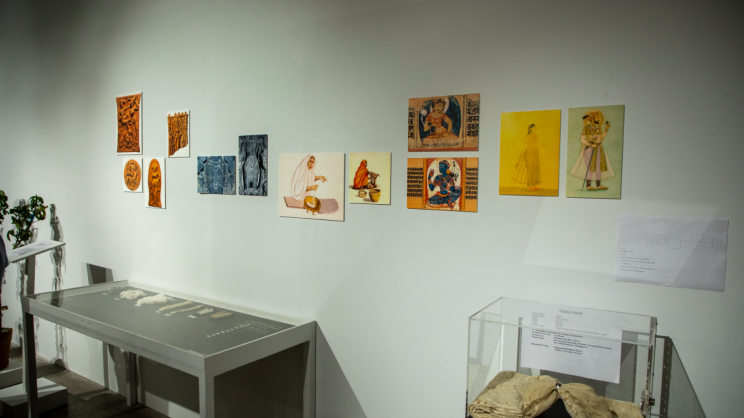
At the Quamrul Hassan Exhibition Gallery, archival photographs, documents and rare textiles trace the long arc of Bangladesh’s weaving tradition. Historians say the region’s textile heritage stretches back at least two and a half millennia, when Bengal was often described as the “loom of the world.”
Fabrics produced here once travelled across Asia and Europe, prized for their delicacy and craftsmanship. Today that legacy survives mostly in scattered workshops and fading collective memory.
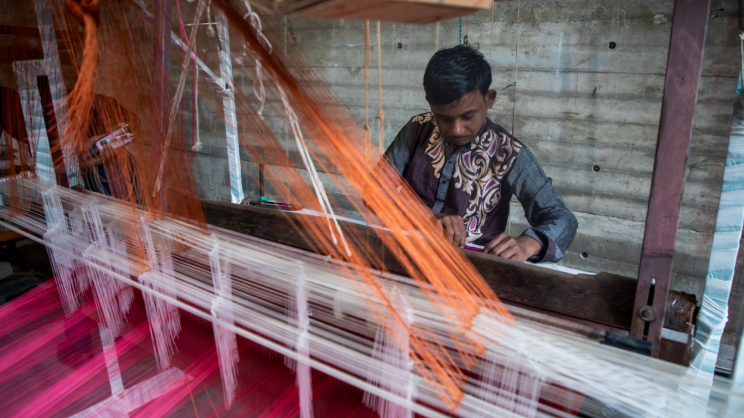
One section of the exhibition focuses on the revival of Dhakai muslin, once considered among the finest cotton textiles ever produced.
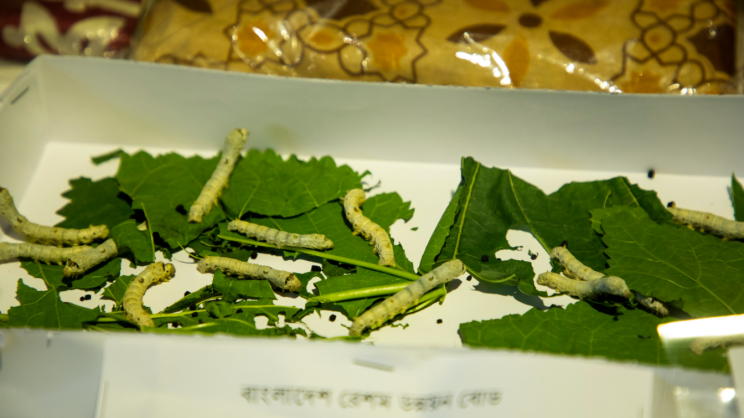
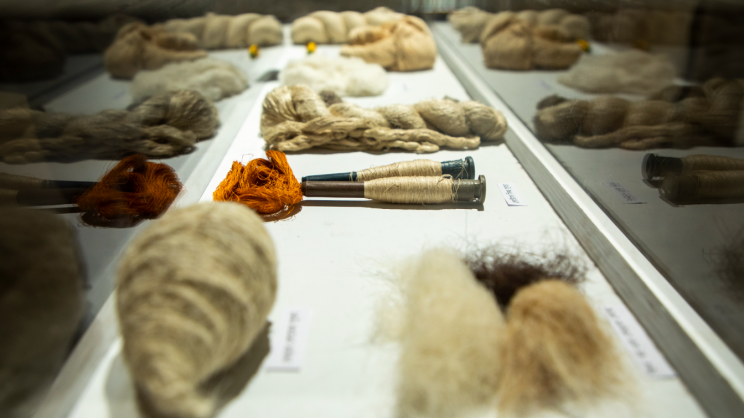
At the centre of this revival is Phuti Karpas, a rare cotton plant historically used to produce the thread for muslin. Visitors can see the plant itself, alongside samples of the raw fibre and the nearly invisible yarn spun from it using hand-operated wheels.
Watching the process unfold is quietly hypnotic. The spinner’s fingers draw out a thread so fine it is almost impossible to see before it disappears into the loom nearby. Where the nicest of craftswomen welcomes you in and explains the intricate techniques of weaving.
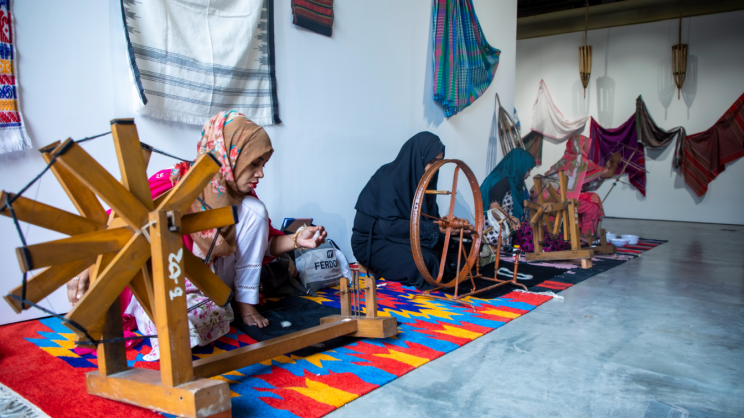
For many visitors, it is the first time witnessing such techniques outside a textbook.
 For all latest news, follow The Daily Star's Google News channel.
 Alongside the muslin displays are historical examples of Jamdani and Tangail saris, some nearly 150 years old. Their geometric lines and floral motifs reveal the aesthetic imagination that generations of weavers brought to their craft.
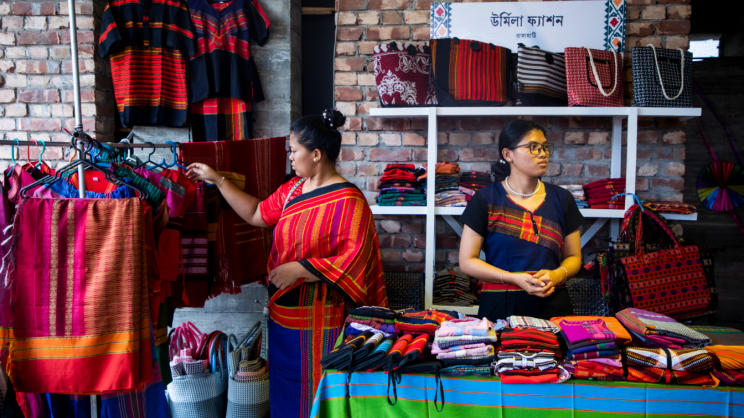
Another section highlights weaving traditions from different regions of Bangladesh. Garments from Garo, Manipuri and Chakma communities appear beside their tables at the exhibition whilst ancient backstrap looms still used in the hills.
Bundles of dyed yarn, wooden reels and spinning wheels lie arranged quietly across the room, reminders of a craft that once shaped everyday life across the region.
The exhibition is accompanied by a small fair on the fourth floor, where visitors can purchase handloom textiles directly from producers. Fifteen stalls display Jamdani, Manipuri and Tangail saris, lungis and gamchas from Sirajganj, khadi from Cumilla, bedsheets from Kumarkhali, Rajshahi silk and garments from the hill districts.
Nearly 1.5 million people in Bangladesh are directly or indirectly involved in the handloom sector, according to the Ministry of Textiles and Jute. After agriculture, it remains one of the country’s largest sources of rural employment.
Yet for many artisans, the craft remains a difficult profession.
Md Monir Hossain, 65, from Rupganj in Narayanganj, has been weaving Jamdani since he was 12. The skill came from his grandfather, though financial necessity first pushed him into the trade.
“I have spent my whole life doing this,” he said quietly. “But I would not want my children to follow this path. It is hard to provide for a family.”
The Jamdani craftsman has been weaving Jamdani as long as he can remember. The craft first came to him through financial necessity, though the knowledge traces back to his paternal grandfather. Over the decades, Monir honed the skill until the Bangladesh Handloom Board recruited him as one of its Jamdani craftsmen.
“I have done this work my whole life and I feel happy doing it,” he said. “But I would not want my children to follow this path. It is very hard to provide for a family.”
Monir earns about Tk 18,800 a month — roughly Tk 750 per day — working from 7am to 3pm with one day off each week. There are no festival bonuses, and any absence due to illness results in salary deductions.
Like many weavers, he and his colleagues often take on extra work after returning home, weaving exclusive Jamdani or Muslin saris privately to supplement their income.
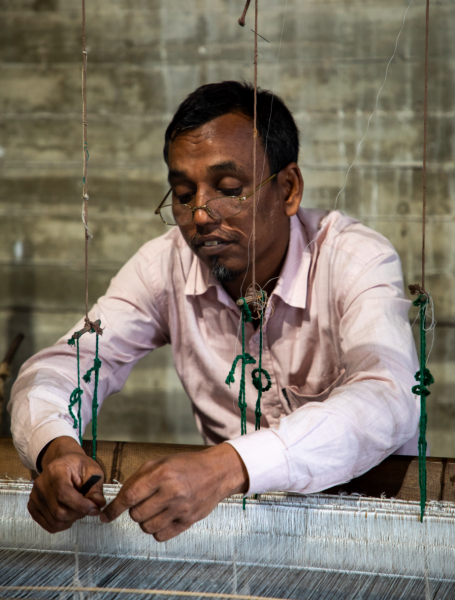
“Many of us work again after going home to make special Jamdani or muslin pieces to earn a little more,” said soft-spoken craftsman Hasmat Ali. “But not everyone can continue like that. With time we develop eye problems and severe body aches. So we only depend on our salaries.”
He believes basic labour protections could make a difference.
“If the government could grant us basic job facilities, we could continue this work longer. Otherwise, we will keep doing it only as long as our bodies and finances allow.”
Around 300 craftsmen work alongside Monir, Hasmat and others within the Handloom Board’s network — artisans whose lives remain closely tied to the fragile threads they weave each day.
It is a reminder that Bangladesh’s weaving tradition lives not only in museums or markets but in villages, riverbanks and small workshops where knowledge passes quietly from one generation to the next.
Inside Bengal Shilpalay, those scattered threads gather again — if only for a moment.
The exhibition and fair will continue until March 16, open daily from 12:00pm to 9:00pm.
Comments