Why the Iran-Israel-US war will not stop with ceasefires

After US President Trump abruptly announced an extension of the ceasefire between Iran and the US, indirect negotiations through Pakistan seemed to be on the table. Trump’s son-in-law Jared Kushner, and Special Envoy Steve Witkoff — both of whom were part of the group of advisors for Trump to take action against Iran — were said to be heading for Pakistan, then Trump canceled the trip. In a post on Truth Social, Trump wrote about the decision to cancel and stated, “we have all the cards, they have none! If they [Iran] want to talk, all they have to do is call!!!” Shortly after, an active shooting took place at the White House Correspondents dinner. Trump has since told reporters, the shooting is not going to deter him from winning the war in Iran. He also added, “I don’t know if that has anything to do with it, I really don’t think so, based on what we know,” after saying, “you never know,” earlier. The domestic political climate in the US is still grappling with shock from the incident, at the time of writing.
Iran has, till now, said that direct talks will not take place. The mediator of indirect talks, Pakistan, does not have formal diplomatic relations with Israel, which is an active party involved in the war. Israel’s larger aims seem to have disappeared from news analyses but it is Israel’s clash with Iran that caused the conflict in the first place. It would be pre-emptive to view the developments, especially the extension of the ceasefire, as a breakthrough for “peace.” The state of the war is bleak.
The US naval blockade continues while Iran maintains its hold on the Strait of Hormuz. Iran has argued that the US naval blockade is a violation of the ceasefire, so the meaning of the word “ceasefire,” is fluid in modern warfare, beyond conventional fighting. Mohammad Bagher Ghalibaf, an Iranian top negotiator, characterised the ceasefire as a “plot to buy time for a surprise strike.” And Israel has quite the track record of indifference to ceasefires and diplomatic arrangements.
In conflicts, ceasefires can only initiate a “process” of peace, if all parties have the incentive to stop. All parties are far from that, at the moment. A resolution in this war from Pakistan’s diplomacy would also be temporary till the decades-long animosity and the ideological tussle that caused it are addressed. Though consequences of the war are felt by the world, the materialisation of “peace,” is confined to the three nations’ willingness to compromise pragmatically. The main compromise lies in the US’ ability to contain Israel, and to learn to function within an interconnected world.
The speculation of US boots on the ground is still not off the table. Republican Senator Roger Marshall agreed in an interview on April 22, with Newsmax, that the US would have to go into Iran to “finish the job” if a “peace agreement” wasn’t reached in the coming weeks. While Trump claims to have achieved “regime change,” the Iranian leadership’s ability to down a US fighter jet, and wage asymmetric warfare to hit where it hurts, is still intact. The possible collapse of a ceasefire has given rise to speculation about Iran potentially disrupting the undersea internet cables that run along the seabed of the Strait of Hormuz — which is also a chokepoint for international data traffic. Reports from Iran International, an exiled media outlet, suggest that cyber units affiliated with the IRGC may already be preparing for such operations. So, there’s a flip side to Ghalibaf’s statement of the US “buying time.” It can also mean more preparation being taken from the Iranian side. Both parties are coming to the table with seemingly uncompromising stances but for a ceasefire to last, someone or the other has to compromise.
Ceasefires often have a perverse effect and the fact that it can act as a prelude to further disruptions has become a “playbook” of sorts, in wars. The Russia-Ukraine war, Israel’s offensive in Gaza, in Lebanon, continue. Wars don’t end with ceasefires. In fact, do wars really even end now? When was the last time a ceasefire led two nations to stop fighting for good? Data analysis by the research initiative, Ceasefire Project, showed that ceasefires typically last 65 to 193 days and that humanitarian ceasefires have historically been “the most likely to be followed quickly by renewed violence.”
Ceasefires — a liberal “international” approach to peace — now encompass buffer time to strategise during a war, rather than an actionable effort to end military conflicts. It should be viewed through that lens today, for every player with stakes in the Iran-Israel-US war. The war has hit oil, water, economies and diplomacy. An end to such a major conflict won’t be achieved from a short-term ceasefire, or an extension of it, when the meaning of “peaceful agreements” has three differing outcomes for the US, Israel and Iran.
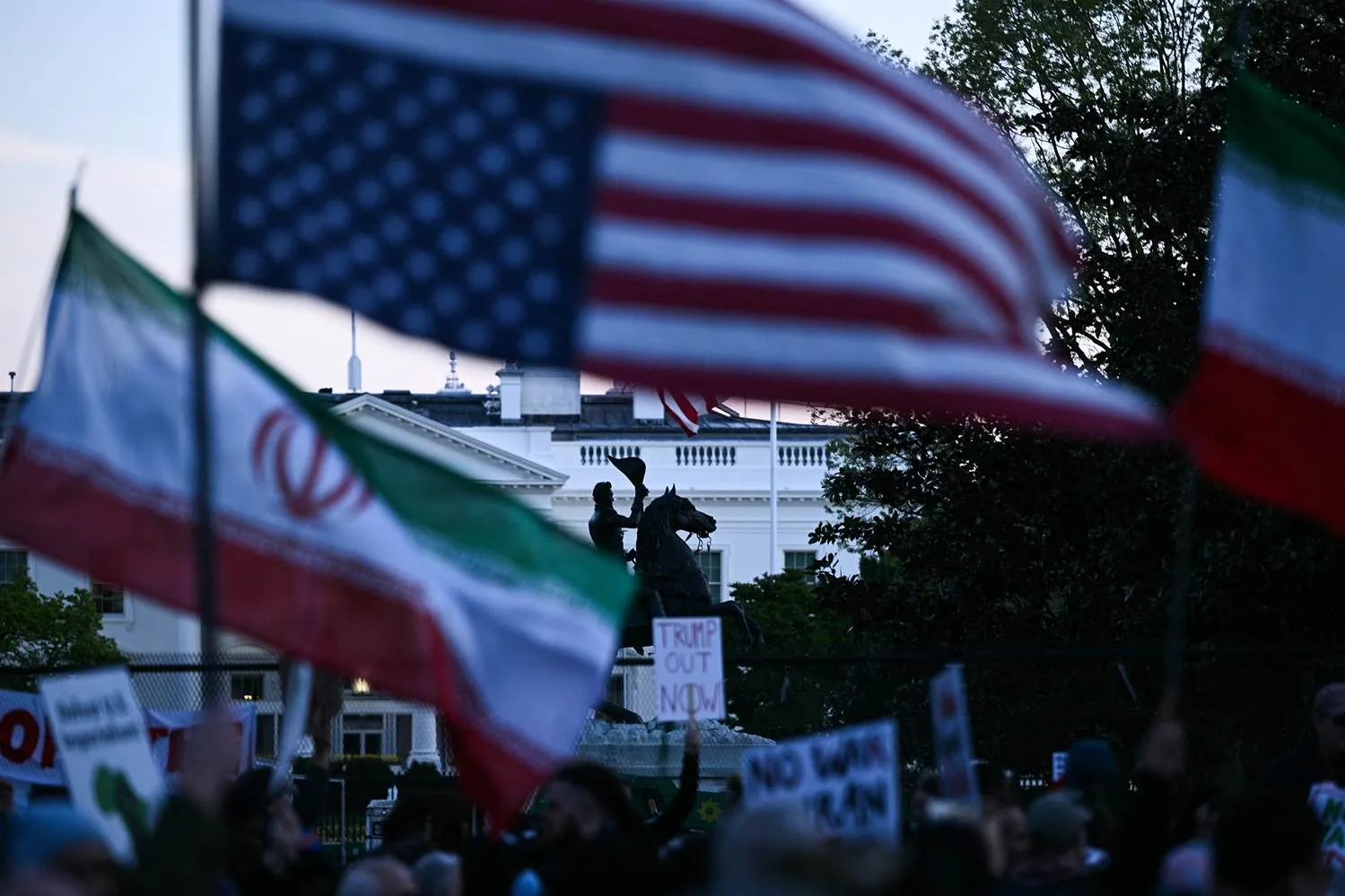
Markets move with the news of ceasefires and news of “talks,” and activists feel reassured with a cessation of outright violence. But the problem is the collective lack of understanding that the concept of a ceasefire to chart a path for peace, is outdated. When chanting “ceasefire now,” peacemakers around the world short-sightedly miss that a temporary, mediated pause in fighting, fails to tackle the root of the conflict itself. In Gaza, ceasefires helped save lives for a period of time, only for lives to be destroyed anyway. Talks were held, and what has been the result? Trump warped the meaning of peace completely, while the Gaza Strip is effectively under Israeli control, further away from Palestinian self-determination.
Ceasefires are conflated in news headlines, with the loaded term, “peace.” Sustainable peace processes have historically happened when political grievances were addressed in conflicts. Has that happened recently though? US wars in Afghanistan and Iraq, show a global decline of interventionism, diplomacy and peace-building predicated on an international legal system, built on Western ideologies in the first place. Arguably, UN-brokered ceasefires or mediated ceasefires have not fairly concluded Western-provoked wars but rather put a stop-gap for more havoc down the road.
What does durable peace look like for Iran and the US, with Israel and Iran functioning as existential threats to each other in the region? Will Iran just stop enriching Uranium forever and accept Israel as a colonising force that has come to its own borders? These are black-and-white questions but relevant to ask, as they contextualise the magnitude of political grievances at play here and the magnitude of what needs to be done to reach a peaceful ending.
Ceasefires — a liberal “international” approach to peace — now encompass buffer time to strategise during a war, rather than an actionable effort to end military conflicts. It should be viewed through that lens today, for every player with stakes in the Iran-Israel-US war. The war has hit oil, water, economies and diplomacy. An end to such a major conflict won’t be achieved from a short-term ceasefire, or an extension of it, when the meaning of “peaceful agreements” has three differing outcomes for the US, Israel and Iran.
Pakistan may have mediated a ceasefire but it has not changed the position of the three nations involved or addressed the root of political grievances at the heart of the conflict. And how can any third-party nation address that? Iran functions as a resistant force against the expansionist superpower of the US. Israel, under its current leadership, functions as an increasingly charged colonising power which the US uses to retain its expansionist efforts in the Middle East. A ceasefire to really bring about peace has to be capacious enough to address the ideological clash of the nations, Israel’s heightening aggressiveness towards its adversaries, and the US’ superiority complex.
Iran may have survived this war of attrition so far, but the question remains: how long can they keep going? They lasted eight years against a Western-backed Saddam Hussein regime. Analysts have rightly pointed out that Iran has insofar had the upper hand in the war and the US does not have an off-ramp. US boots on the ground would be complex, as Iran’s geographical advantages are plentiful. The Strait of Hormuz can now always be used as a deterrent for Iran against further attacks by Israel even in the scenario that a resolution is reached in this current war. But Iran’s domestic factors are yet to emerge. If the US naval blockade on the Strait does cause damage to the people and Iranian economy, it is worth observing whether the newly empowered youth of the IRGC and the rest of the remaining regime will align in the next steps.
In conflicts, ceasefires can only initiate a “process” of peace, if all parties have the incentive to stop. All parties are far from that, at the moment. A resolution in this war from Pakistan’s diplomacy would also be temporary till the decades-long animosity and the ideological tussle that caused it are addressed. Though consequences of the war are felt by the world, the materialisation of “peace,” is confined to the three nations’ willingness to compromise pragmatically. The main compromise lies in the US’ ability to contain Israel, and to learn to function within an interconnected world. The Trump administration will not be the one to do that. There has to be a reckoning within the US: a need for a wholly new US administration that recognises that this specific compromise needs to be made, to avoid a costly, “forever war.” Till then, ceasefires with Iran or any efforts synonymous to peace will mirror commercial breaks from violent episodes of war.
Ramisa Rob is Geopolitical Insights editor at The Daily Star.
Send your articles for Slow Reads to slowreads@thedailystar.net. Check out our submission guidelines for details.

The politics of fear: From Gaza's paper kites to ‘unsafe’ on campuses
Shared rivers, shared responsibilities: The case for water treaties

Shanghai Cooperation Organisation at 25: Can China, India and Russia really speak with one voice?

Bihar wants Delhi to not renew Ganges treaty. What does it mean for Dhaka?
Bangladesh and the United States: Beyond the tariff bargain

From the Carter Doctrine to the Mecca Pact: A changing Gulf security order
More capability, less autonomy? Bangladesh’s emerging security dilemma
An anti-West network is emerging: How should Bangladesh respond?
The Mecca Pact: Deterrence, Israel, and the new Gulf security equation