


When music remembers the worker

“Do engines get rewarded for their steam?”
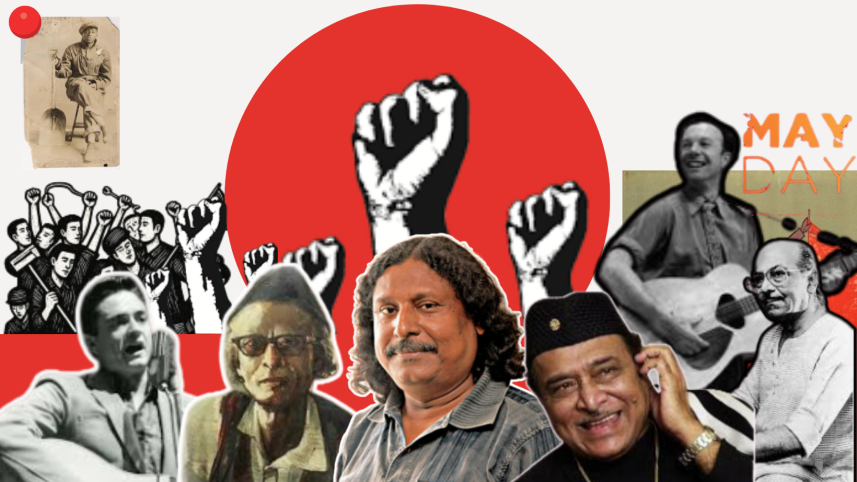
The line travels from 19th-century ballads of the steel-driving man, later crystallised in Johnny Cash’s “The Legend of John Henry’s Hammer” from “Blood, Sweat and Tears”. It is not merely lyric memory, rather it is an unsettled question that keeps returning to labour itself: what is a human body worth when only output is measured, and endurance is taken for granted?

“With a machine, we maintain output through rest, repair, and controlled limits. With people, the demand only expands until they are reduced to the work,” said Tanim Ahmed, a journalist. The logic is not theoretical. It is structural, lived, and repeated.
In Bangladesh, labour history is often narrated as chronology—laws, uprisings, collapses, reforms. From the 1881 Factories Act to Swadeshi in 1905, through 1971 and beyond, the working class appears in political history. But rarely does it appear as a cultural system that sustains its own memory.

“The bulk of the labour force joined the war of liberation, and as a working class had come to realise that the key to their true emancipation was the elimination of all vested interests of 22 families. The success in the struggle of liberation naturally gave them a high sense of expectation in the future,” summarises the ILO-SIDA Mission (Kamruddin Ahmad, p. 98).
Yet, expectations rarely remain intact. What survives instead are fragments of what once carried belief. Among those fragments, songs persist in ways institutions do not.
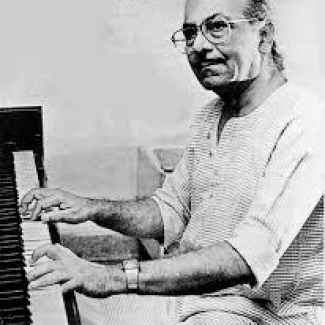
A single line often carries more weight than remembered compositions: ‘Duniyar Majdur Ek Hou’, adapted and popularised by Hemanta Mukhopadhyay & Salil Chowdhury. The slogan circulates widely, but the songs surrounding it do not remain equally present. They exist unevenly, as partial recall rather than shared cultural continuity.
There is a visible gap here—between labour songs as archive and labour songs as lived recognition. The elite imagination often keeps labour at a distance, even when it acknowledges its existence. The worker is seen, but not sustained in sound. The songs that were meant to bridge that distance do not always complete the journey. This absence matters because these songs were never only an expression. They were translation systems—turning labour into something repeatable, socially legible, and emotionally transferable.
“I have a personal distance from many of these older labour songs nowadays. Whereas we used to celebrate May Day in our locality in childhood. I can recall the idea of them more than their presence. The emotional recognition does not fully activate through them in the way it perhaps should,” said journalist Bishwajit Roy. The admission is not about forgetting alone. It is about uneven transmission—how cultural memory weakens when it is no longer collectively rehearsed.
And yet, labour songs continue to exist, but in compressed form.
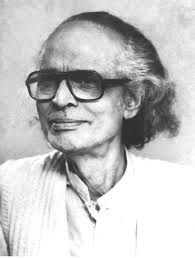
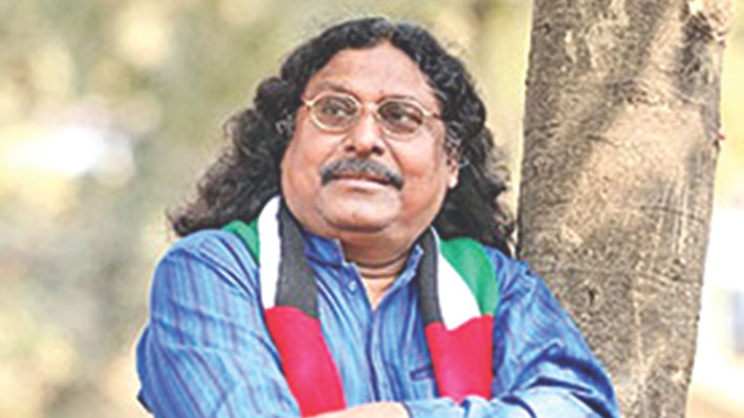
Fakir Alamgir’s work turns labour into embodied rhythm.
Nam tar chilo John Henry, Chilo jeno jibonto engine.
The song does not describe labour; it absorbs it into human-machine tension. Salil Chowdhury’s “Pothe Ebar Namo Sathi” turns movement into a condition rather than a choice. “Bicharpati Tomar Bichar” reframes justice as confrontation rather than appeal. Hemanga Biswas and Bhupen Hazarika extend labour into rhythm and landscape, where work is not isolated from life but embedded within it.
These songs were not designed to remain static texts. They were meant to circulate through unions, gatherings, repetition, and oral transmission. That system has weakened. What remains is compression.
A full composition becomes a line. A line becomes a reference. A reference becomes a vague recognition that may or may not reconnect to the origin. This is not disappearance. It is survival under pressure.
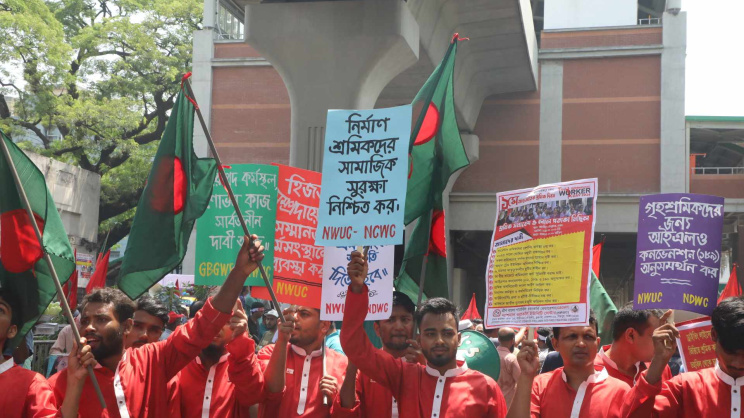
Songs like “Gahi Samyer Gaan” still carry the idea of equality, even when detached from performance. “Aj May Din”, “Happy May Day”, and “Rokto Bheja May Tomay Salam” shift increasingly toward commemoration rather than mobilisation. The tone changes from instruction to memory, from movement to remembrance.
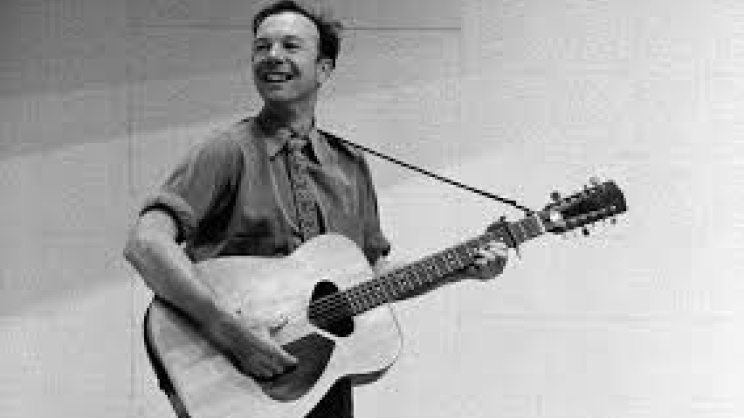
Prominent music composer and lyricist Prince Mahmud situates these songs within a longer political memory. “Written in the context of the Tebhaga Movement (1946–1948), ‘Hey Samalo Dhan Ho’ became a symbol of resistance against exploitation and workers’ rights, and was most often performed on May Day. Songs like Pete Seeger’s ‘Solidarity Forever’ and Billy Bragg’s ‘There Is Power in a Union’ also come to mind. Even today, May Day songs shape public understanding of labour rights while remaining a powerful part of historical memory.”
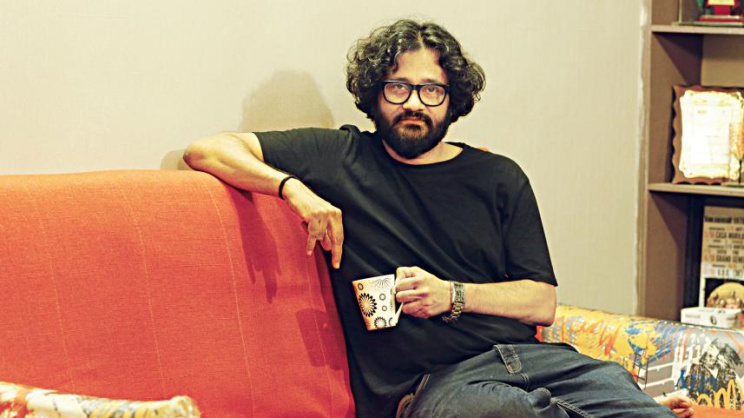
But this recall also exposes the fracture the archive carries. The songs remain recognisable—even revered—but not always lived, not always activated. They persist as memory with authority, without the same collective urgency that once sustained them.
Renowned singer and political activist Farzana Wahid Shayan complicates this inherited archive. She states that even these historically iconic songs no longer fully articulate the present condition of labour. For her, the language feels distanced from the immediacy of workers’ lives.
Her new song, “Shunechi Tader Mojuri Ekhono Daoni”, attempts a more direct register—less metaphor, more address, where wage becomes absence, and consumption becomes contrast.
But the deeper tension is not stylistic. It is structural.
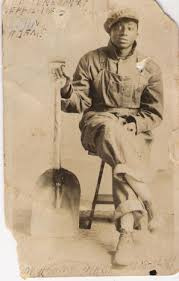
“I couldn’t really connect with existing songs in a personal way. Not because they don’t exist, but because the relationship between labour, struggle, and representation feels divided. Especially in elite perception, workers are observed from a distance rather than understood through lived emotional language,” said Shayan.
“I don’t clearly recall specific songs that made that connection complete for me. Maybe that itself is the point. Movements need new songs in their own time. New poems, new language, new emotional grammar that people can relate to now. So I made my own song to dedicate it to workers of the world. That felt necessary.”

This is not a rejection of the archive, but the pressure on it. A reminder that cultural systems must renew themselves to remain readable in new conditions.
Across this tension, labour songs function less like fixed memory and more like a system under constant strain. They store ideology in compressed form. They survive partial recall. They reappear in fragments during rupture—factory fires, wage disputes, industrial collapse—without requiring full reconstruction.
And this return behaves almost as if the songs themselves understand what they have to do—to stay alive in whatever reduced form is possible. They carry the memory of labour even when the workers themselves are not consciously holding it at that moment. They acknowledge peril, exhaustion, collapse, even when it is no longer fully spoken. They keep playing through fracture, through silence, through forgetting.
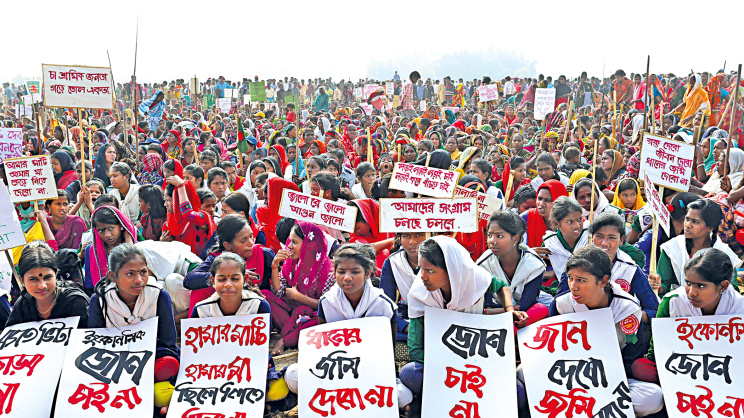
Like John Henry’s hammer, they do not stop at recognition. They continue as if endurance itself is their logic. Self-aware in rhythm, persistent in repetition, they press against the physical world that tries to exhaust them out of existence. They do not merely describe labour—they enact its refusal to disappear.
So, the question is no longer whether labour songs represent workers. It is whether they are still working—carrying memory forward, absorbing loss, and surviving the systems that try to outlast them.
 For all latest news, follow The Daily Star's Google News channel.
Comments