


Public-Private Partnership for Hepatitis Elimination in Bangladesh
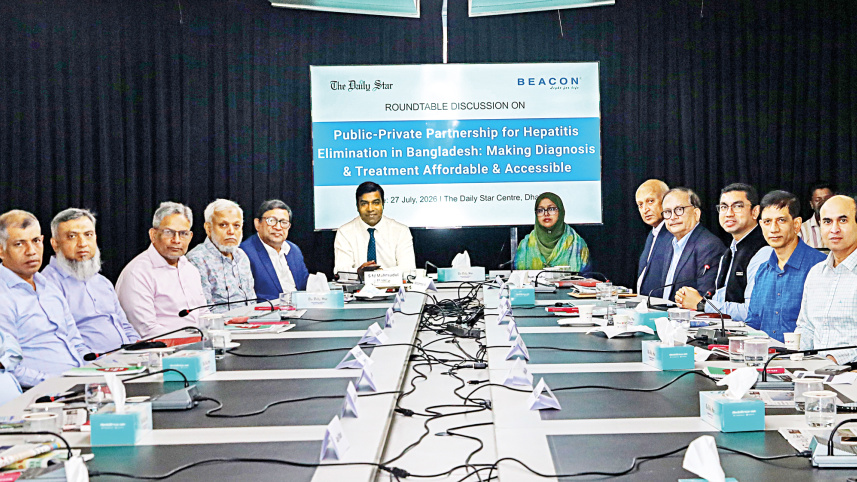
Beacon Pharmaceuticals PLC and The Daily Star jointly organised a roundtable on July 27, 2026, ahead of World Hepatitis Day 2026. The discussion brought together hepatologists, gastroenterologists, liver specialists, policymakers, and industry representatives to explore how stronger public-private partnerships can accelerate hepatitis elimination in Bangladesh. Participants discussed expanding screening, ensuring affordable diagnosis and treatment, strengthening referral systems, improving awareness and policy coordination, and identified practical recommendations to support Bangladesh’s goal of eliminating hepatitis by 2030.

Prof. Dr Salimur Rahman
Professor of Hepatology
Lab Aid Specialized Hospital

Viral hepatitis, particularly hepatitis B and C, present a severe public health challenge in Bangladesh, affecting nearly 10 million individuals due to risks of liver cirrhosis and liver cancer. Despite progress in immunisation, improved diagnostic facilities and affordable locally produced medicines, important gaps remain in screening, early diagnosis and treatment. Achieving the WHO target of eliminating hepatitis by 2030 will require stronger public-private partnerships, wider screening programmes, affordable testing and treatment, and greater public awareness. Universal introduction of the hepatitis B birth-dose vaccine and stronger data reporting systems are also essential. At the same time, hepatitis A and E cannot be ignored; notably, hepatitis E causes a critical 20% to 30% mortality rate among pregnant women. Preventing hepatitis B through vaccination and eliminating hepatitis C through timely treatment remain key priorities for reducing the country’s hepatitis burden.

Prof. Dr Mohammad Ali
Professor, Hepatobiliary, Pancreatic and Liver Transplantation Surgery
Founder & Secretary General, National Liver Foundation of Bangladesh
Implementing a robust Public-Private Partnership (PPP) is essential for controlling viral hepatitis, as collective stakeholder collaboration remains the ultimate key to success. Consequently, formulating a comprehensive National Hepatitis Elimination Strategy is urgent to structurally address prevention, treatment, and patient rehabilitation. While raising public awareness is vital, maximising universal testing and establishing a centralised digital patient registry are paramount for maintaining transparent medical data. Furthermore, conducting rigorous nationwide studies will help determine the exact disease prevalence. To ensure healthcare equity, subsidised or free treatments must effectively reach the rural population alongside urban areas. Moreover, routine maternal screening and immediate newborn vaccination are critical to halting vertical transmission. Reducing stigma and preventing discrimination will encourage more people to seek timely testing and treatment. With only four years remaining to achieve the WHO 2030 goals, accelerating these coordinated efforts is highly imperative.

Prof. Dr A H M Rowshon
Professor of Gastroenterology,
Dept. of GHPD, BIRDEM
Achieving a hepatitis-free status requires strategic screening of vulnerable groups, such as past blood transfusion recipients and individuals who underwent medical or dental interventions. Since hepatitis B affects around 4% of the population while hepatitis C remains below 1%, screening should focus first on high-risk groups rather than the entire population. Adopting a centralised registry system ensures seamless patient surveillance and effective follow-up care. Furthermore, public awareness must be amplified to encourage proactive testing. While Hepatitis C is now entirely curable within three months through highly affordable local medications, Hepatitis B can be effectively contained. Reducing the cost of vaccines and medicines and expanding access through community-based distribution can improve treatment coverage. Taking inspiration from global success stories where timely vaccination slashed infection rates to less than 1%, integrating an immediate birth dose for newborns alongside mandatory maternal screening will confidently safeguard the next generation.

Prof. Dr Md. Mohsen Chowdhury
Professor, Hepatobiliary, Pancreatic and Liver Transplantation Surgery
Bangladesh Medical University
Viral hepatitis is not merely a medical crisis but a profound social challenge driven by low public awareness and deep-rooted stigma that causes delays in testing and treatment. Many still wrongly believe hepatitis B and C spread through casual contact, making nationwide awareness campaigns as vital as providing advanced treatments. Achieving the WHO 2030 elimination goals demands a coordinated social movement integrating hospitals, educational institutions, media, and pharmaceutical corporations. Health education should be integrated into schools and community programmes, while healthcare professionals should provide counselling alongside treatment. In addition, private hospitals and diagnostic centres can support regular screening and awareness initiatives. Furthermore, drawing inspiration from successful national health programs can revolutionise grassroots delivery. Utilising the vast network of community health workers to expand access to testing, free or subsidised vaccination and treatment can systematically curb these silent killers.

Prof. Dr Touhidul Karim Majumder
Senior Consultant, Department of Gastroenterology
United Healthcare Services Limited
With only a few years remaining to achieve the WHO 2030 hepatitis elimination target, stronger action is needed to expand screening, early diagnosis and timely treatment. Since an estimated 10 million people in Bangladesh are living with hepatitis B or C, community awareness should encourage people to know their hepatitis status just as they know their blood group. Priority screening should focus on high-risk groups, including pregnant women, healthcare workers, people receiving dialysis and those with other recognised risk factors. At the same time, affordable testing should be available at the community level, supported by awareness campaigns during national health events. A digital patient tracking and referral system can help ensure that diagnosed patients receive follow-up and specialist care. Continuous training for healthcare professionals, stronger public-private partnerships and efforts to reduce stigma will further accelerate progress towards hepatitis elimination.

Prof. Dr Md. Masudur Rahman
Senior Consultant, Gastrointestinal, Hepatobiliary and Pancreatic Disorders (GHPD)
Bangladesh Specialized Hospital
Addressing viral hepatitis effectively requires improving cost-effectiveness and accessibility across both diagnosis and treatment. Since liver disease often remains silent until severe damage has occurred, early screening should be prioritised, especially for high-risk groups such as pregnant women, healthcare workers, dialysis patients and people with thalassaemia. Fortunately, initial screening via strip tests is highly affordable and can be implemented nationwide from union sub-centres to tertiary hospitals. However, confirmatory DNA and RNA testing remains expensive and largely urban-centric. To bridge this gap, leveraging the successful infrastructure utilised during the pandemic can decentralise advanced diagnostics. Furthermore, building healthcare capacity by training upazila-level physicians will expand treatment access significantly. Hepatitis C is curable, while hepatitis B requires long-term management; therefore, affordable medicines, wider government support and sustainable pricing are essential to improve treatment adherence and outcomes.

Prof. Dr Sk Md. Bahar Hussain
Senior Consultant, Gastroenterology
Square Hospital
Achieving SDG 3 on good health and well-being requires stronger action against viral hepatitis, as hepatitis B and C account for around 65% of liver cancer cases globally. Worldwide, nearly 350 million people live with chronic infections, yet many remain unaware of their condition. In Bangladesh, around 1.8 million women of reproductive age carry these viruses, raising mother-to-child transmission risks. Although childhood immunisation programs have successfully lowered infection rates among children, urban-rural healthcare disparities and critical data gaps persist. Furthermore, widespread misconceptions regarding transmission fuel social discrimination and unfair job losses. To overcome these challenges, developing a comprehensive National Hepatitis Prevention Guideline and activating the country’s 14,500 community health clinics are imperative. Fostering cross-sector collaborations will ensure equitable distribution of vaccines and affordable treatments, effectively breaking down the disease nationwide.

Prof. Dr Mir Jakib Hossain
Senior Consultant, Gastroenterology
Continental Hospital
Eliminating Hepatitis B and C requires a multi-tiered healthcare framework. A coordinated referral system is essential to connect community clinics, district hospitals, and specialised centres through clear national protocols. Implementing a structured digital referral system is vital to systematically guide patient navigation, allowing clear criteria for stepping up or stepping down patient care based on institutional capacity. Furthermore, establishing an adaptable National Clinical Guideline is crucial to regulate treatment practices and prevent unauthorised drug dispensing. Public-private partnerships, involving government facilities, private hospitals, pharmaceutical companies, and professional societies, can strengthen service delivery and expand access. To mitigate patient dropouts and ensure medication adherence, a robust community-led monitoring and follow-up mechanism must be introduced. Ultimately, fostering cross-sector collaborations and targeted public awareness will drive the nation closer to achieving global elimination goals.

S M Mahmudul Haque
Director, Oncology & Biotech
Beacon Pharmaceuticals PLC
Tackling communicable diseases effectively requires a robust Public-Private Partnership, as collective action yields significantly better healthcare outcomes. The pharmaceutical industry has already helped make hepatitis C treatment far more affordable, reducing costs significantly and improving patient access, contributing to the country’s progress against the disease. However, hepatitis B remains a major public health challenge because lifelong treatment often affects patient adherence. Therefore, making oral antiviral medicines more affordable is essential. Extending VAT exemptions to hepatitis B medicines, similar to existing exemptions for hepatitis C treatment, could reduce medicine costs by around 16% and encourage more patients to continue treatment. At the same time, collaboration among government, healthcare providers, pharmaceutical companies, and diagnostic centres can further improve access to quality diagnosis, affordable treatment, and better long-term care for hepatitis patients.

Dr Ashrafun Nahar
Deputy Director, Disease Control
Directorate General of Health Services
 For all latest news, follow The Daily Star's Google News channel.
 Eliminating viral hepatitis by 2030 requires sustained cross-sectoral collaboration, stronger awareness, and long-term financing. A national five-year costed plan has already outlined key priorities, including prevention, diagnosis, treatment, surveillance, research, and sustainable financing. Childhood hepatitis B vaccination, healthcare worker immunisation, clinical training, and affordable hepatitis C treatment have demonstrated encouraging progress. However, expanding birth-dose vaccination, strengthening community screening, and ensuring uninterrupted medicine supply remain essential. Greater investment is also needed to improve surveillance, monitor vaccine effectiveness, and make free or subsidised treatment accessible beyond major cities. Furthermore, integrating hepatitis services with existing programmes for tuberculosis and HIV, while engaging development partners, NGOs, corporate hospitals, and community organisations, can improve service delivery. Through coordinated action, affordable care, and stronger public awareness, Bangladesh can accelerate progress toward eliminating viral hepatitis as a public health threat.

Dabasish Saha
Assistant Vice President, Sales
Beacon Pharmaceuticals PLC
Preventing hepatitis means protecting future generations, as hepatitis B is often transmitted from mother to child. Although Bangladesh has reduced infections over the years, fear and stigma still discourage many people from getting tested, even in educated communities. Early diagnosis remains essential because timely treatment can prevent serious liver disease. Notably, while Hepatitis C is already fully curable, advanced global clinical trials for new drugs like Bepirovirsen indicate that Hepatitis B will also soon become completely curable. Therefore, collaborative initiatives between media, medical experts, and the government are essential to drive public awareness. Ultimately, the pharmaceutical sector remains deeply committed to introducing these affordable, innovative therapies to secure a healthier, disease-free future.

Tanjim Ferdous
Head of Strategic Partnerships
The Daily Star (Modaretor of the session)
Hepatitis B and C remain a major public health challenge in Bangladesh, with around 10 million people affected, including 8.5 million with hepatitis B and 1.5 million with hepatitis C. However, nearly 90% of infected people remain unaware of their condition, increasing the risk of liver cirrhosis and liver cancer despite the availability of effective prevention, screening, and treatment. Achieving the 2030 hepatitis elimination target requires stronger public-private collaboration, wider access to affordable screening and treatment, effective referral systems, and coordinated awareness and policy efforts. The roundtable aimed to identify practical recommendations to accelerate Bangladesh’s national hepatitis elimination efforts through coordinated action.
Recommendations
- Expand community-based hepatitis B and C screening nationwide, with priority for high-risk populations and underserved areas.
- Develop and implement a national referral and clinical management guideline linking primary, secondary, and specialised healthcare facilities.
- Ensure affordable and uninterrupted access to hepatitis diagnostics, vaccines, and treatment through stronger public-private partnerships and targeted subsidies.
- Strengthen birth-dose hepatitis B vaccination, maternal screening, and prevention of mother-to-child transmission across all health facilities.
- Increase nationwide public awareness to reduce stigma, promote early testing, and improve long-term treatment adherence.
- Integrate hepatitis services with existing tuberculosis, HIV, and primary healthcare programmes while expanding digital patient tracking and follow-up systems.
- Secure sustainable financing, strengthen surveillance and monitoring, and ensure multistakeholder engagement in a coordinated national elimination strategy.
Comments