


When someone just needs a reason to stay alive

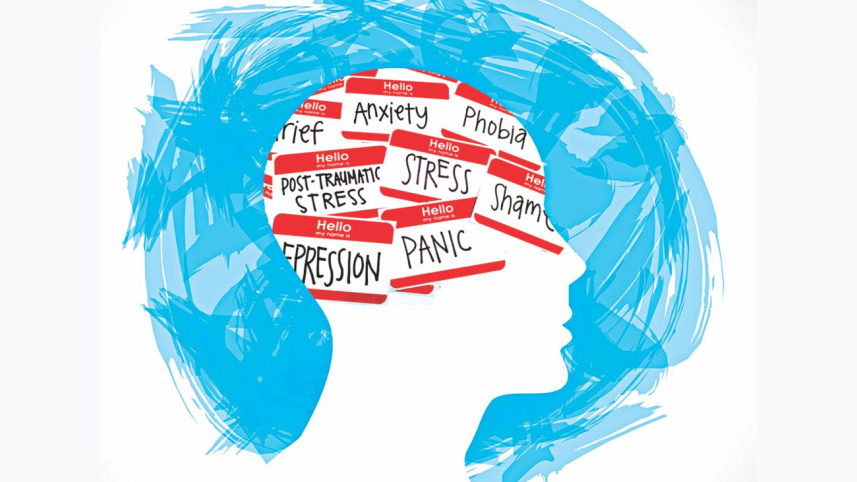
Tahsan was 20 when a breakup, combined with pressure over his studies, family and an uncertain future, pushed him towards suicide.
A senior friend intervened before he could act. He later turned to Talk Hope, a 24/7 mental health initiative, where counsellors helped him through the crisis -- though he sometimes felt they were "too optimistic all the time."

A recent study on suicide in Bangladesh identified relationship conflicts, psychological distress, depression, unemployment, academic pressure and examinations as key risk factors for young people.
The scale of the problem is stark: police records show 76,361 people died by suicide in Bangladesh between 2020 and 2024, averaging more than 15,000 deaths a year -- three times the WHO's assessed figure for 2021.
The data emerged last month at a meeting organised by the National Institute of Mental Health and Hospital, WHO and icddr,b under WHO's "Live Life: Suicide Prevention in Bangladesh" project.
Experts called for better data collection, accessible mental health services and restricted access to lethal means.
But such measures don't always reach someone mid-crisis, when the immediate need is often simpler: someone to talk to.
That's where Talk Hope comes in. Launched by the Dr Muhammad Fakhrul Islam Foundation, it's a non-profit focused on preventing immediate self-harm, listed under Bangladesh on "Find a Helpline."
It now has 40 counsellors on Facebook and 36 at its call centre, alongside trained volunteers called active listeners, who complete a certification course.
"We receive messages every day from at least 25 to 30 people, on top of calls at our call centre," said Md Saddam Hossain Roni, secretary general of the foundation and a Talk Hope founder.
The organisation's roots lie in loss. "Our journey began because a friend died by suicide. Our sole intention is to provide people with a place to talk. When we launched, there was a gap -- no other organisations were providing services 24 hours a day, and we've worked to fill that void," he said.
For co-founder Kanan Faysal, that loss became a reason to reach young people earlier.
"When the youth began to reach out to us, especially during and after the 2024 July Uprising, we began conducting seminars at educational institutes in divisional cities to make them aware of seeking help unhesitatingly," said Faysal, the chief coordinator.
Those who reached out came with varied stories. Niloy, 25, a final-year Bachelor of Science student and a coordinator and protester in the 2024 uprising, struggled after the movement ended, particularly following August 3.
"I needed help. I found Talk Hope and regularly counselled with them. They would follow up and take care of me. It was apparent they had both trainees and professionals at that time," he said.
For Anika, 20, the crisis was more personal. "My negative emotions were so severe that I feared harming myself. They analysed my emotions to explain the situation from varied lenses and pull me out of the phase," she said.
Sometimes the first person someone reaches is simply willing to listen -- the role active listeners are trained for.
An active listener, Mominul Islam Nabil, 23, recalled convincing a person in severe pain not to die by suicide simply by hearing them out.
"Our policy is never to directly tell them not to harm themselves. We explain the consequences -- when they think they can save loved ones by ending their lives, they'd hurt them far more instead," he said.
For mental health professionals, prevention cannot start only at crisis point.
 For all latest news, follow The Daily Star's Google News channel.
 Rowshan Ara Zaman, mental health consultant, chief psychologist at the Public Service Commission and an executive committee member of the Bangladesh Psychological Association, said childhood emotional trauma can leave people more susceptible to mental health problems later.
"What might begin as mischievous actions of troubled children can morph into stigma affecting their psyche if they're punished or demeaned in return," she said.
"The more people learn to untangle their thoughts and speak or share them from an early age, the more they're likely to evolve spiritually and intellectually."
Rowshan, once invited to speak at a Talk Hope programme, views the organisation's work positively. But she flagged a wider issue: people in crisis need to know which services to trust.
She believes a proper authority -- a group of organisations, experts, or the government -- should recommend credible suicide prevention organisations, strengthening accountability across Bangladesh's growing mental health sector.
Comments