


Arka Boishakh 1433 reimagines Pahela Baishakh for modern Dhaka
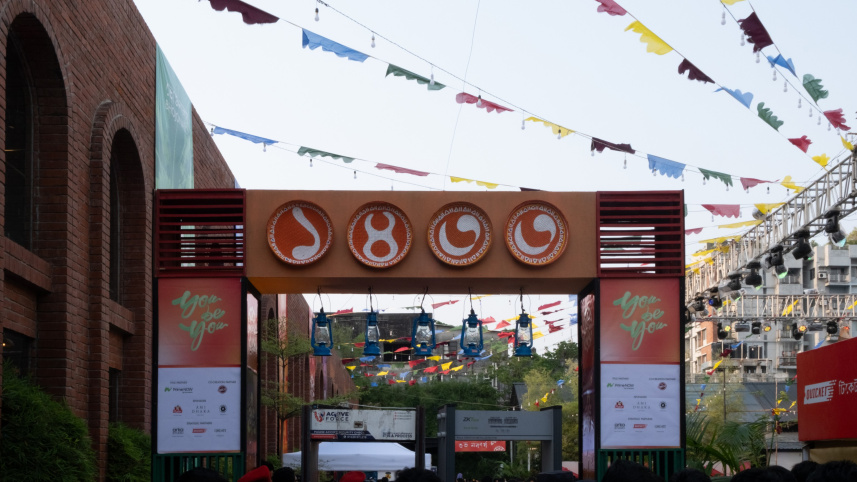
Baishakh in Dhaka has long been associated with crowds, colour, and ritual. Yet, somewhere along the way, the experience became predictable. Arka Boishakh 1433, held between 13 and 14 April at Aloki, attempted to interrupt that pattern. Instead of simply recreating tradition, it asked what Baishakh could feel like today. The answer was not a grand spectacle but a carefully structured environment divided into zones, layered with interaction, and designed to encourage participation rather than mere observation.

For Asad Sattar, Founder of Arka Collective, the intention was clear from the beginning.
“I wanted to create something that truly celebrates the new year,” he said. “Baishakh is a very important day in Bangladesh, but I feel it’s not celebrated the way it should be anymore. The younger generation has not really experienced it the way previous generations did. What Ramna Park used to be for Baishakh — I would love for spaces like Arka or Aloki to become that new version. Something that respects heritage but also creates something new.”
Breaking the mela into experiences
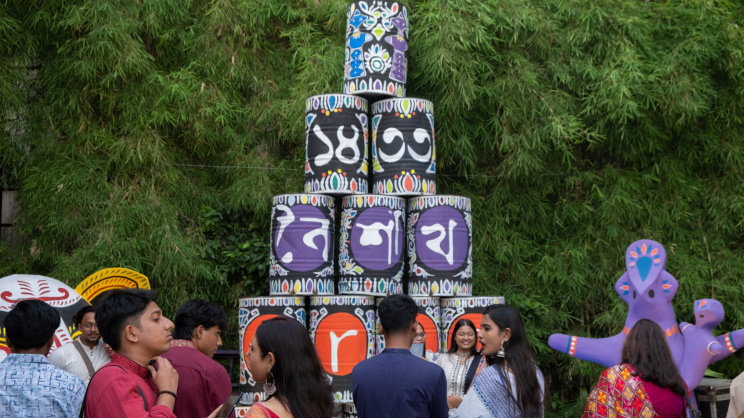
Instead of a single, overwhelming event, Arka Boishakh 1433 was built as a system of zones, each with a distinct function.
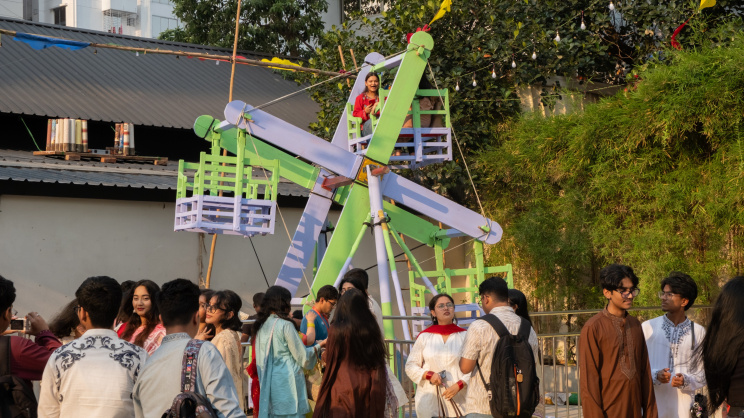
Khelaghor, the games and activity area, focused on interaction. It drew from traditional Bengali fair games but removed the distance between performer and audience. Visitors did not just watch — they played, explored, and engaged. The simplicity of the space worked in its favour. It did not rely on spectacle; it relied on familiarity.
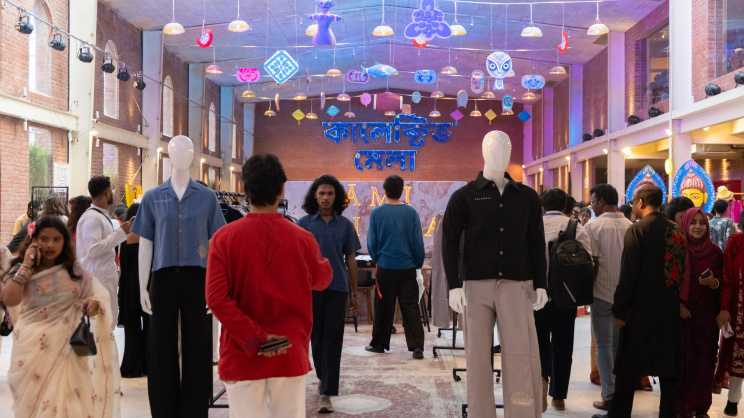
Elsewhere, the Collective Mela served as the marketplace. However, unlike typical Baishakh bazaars, this was not about volume. It was curated, slower, and more intentional. Visitors browsed rather than rushed, discovering brands and crafts without the pressure of constant transaction.
This balance between activity and pause defined the event’s rhythm.
Wearing culture, not just seeing it
Among the curated brands, there was a noticeable shift in how culture was being interpreted.
For Tahmina Shaily, founder of Shoilee, Baishakh was not just a moment to sell, it was an opportunity to communicate identity.
“For Arka Boishakh 1433, I wanted something that roars with Bengali pride,” she explained. “So, I introduced a limited collection featuring tiger motifs etched into jewellery. The tiger represents strength, just like the spirit of Pohela Baishakh. When you wear this piece, you are not just accessorising, you are carrying a symbol of Bengal’s wild, untamed beauty,” she added.
Her work reflects a broader shift among emerging designers and creators: culture is no longer being presented passively. It is being worn, carried, and reinterpreted.
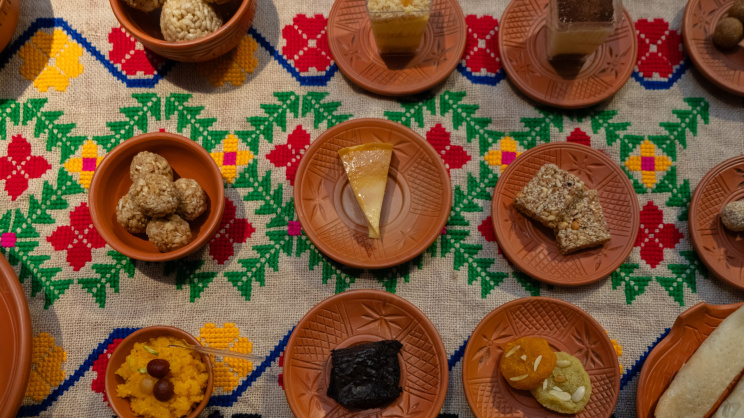
At Bhojonaloy, the food zone, the approach was similarly grounded. Instead of reinventing Baishakhi cuisine, it leaned into familiarity. At one stall, Baishakhi from Bengal Bites offered a mix of traditional snacks and playful reinterpretations.
“We have mini chicken spring rolls, shingara, and peyaju. We are serving them both normally and as chaat,” she explains. “And I have made handmade roshomalai.”
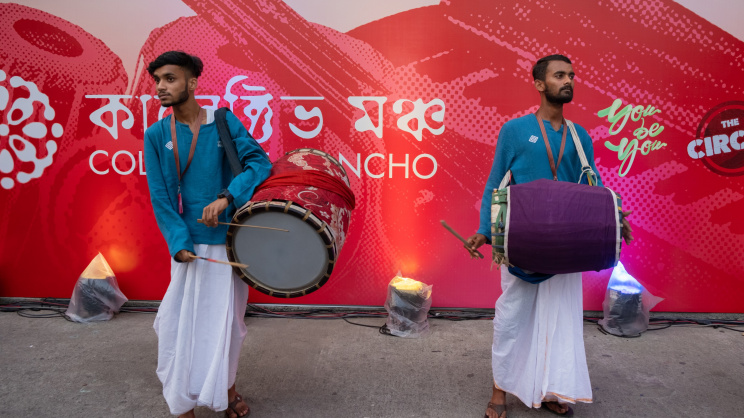
Moreover, at the Collective Moncho, performances unfolded throughout the day — music, dance, and cultural programmes. However, the stage did not demand attention in the way traditional event stages often do.
New forms of participation
Beyond the main zones, smaller interactive corners added another layer to the event.
 For all latest news, follow The Daily Star's Google News channel.
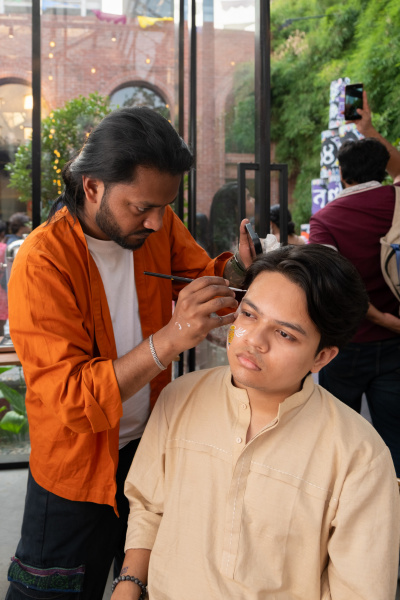
 Tattoo booths, henna artists, caricature stations, and bioscope experiences created informal entry points into the mela. These were not headline attractions, but they carried a different kind of value and made the event personal.
For Avijit Saha, senior tattoo artist at Ink Park, the event offered more than just business.
“This is our second time at Arka, but first for Baishakh,” he says. “It’s been a very good experience. We are getting a good crowd. Many people are curious about tattoos.”
That curiosity matters.
“People do not always understand tattoos fully,” he adds. “Here, we get to talk to them, explain things. Many are getting clearer about it.”
All in all, Arka Boishakh 1433 presented an alternative format for celebrating the Bengali New Year. Whether this approach can resonate beyond a niche, urban audience remains uncertain. However, it does reflect a broader shift in how cultural events are being organised in Dhaka. In that sense, Arka Boishakh 1433 was less about redefining Baishakh and more about testing a different way of presenting it.
Photo: Silvia Mahjabin
Comments