


Why Gopal Bhar continues to charm children and adults alike
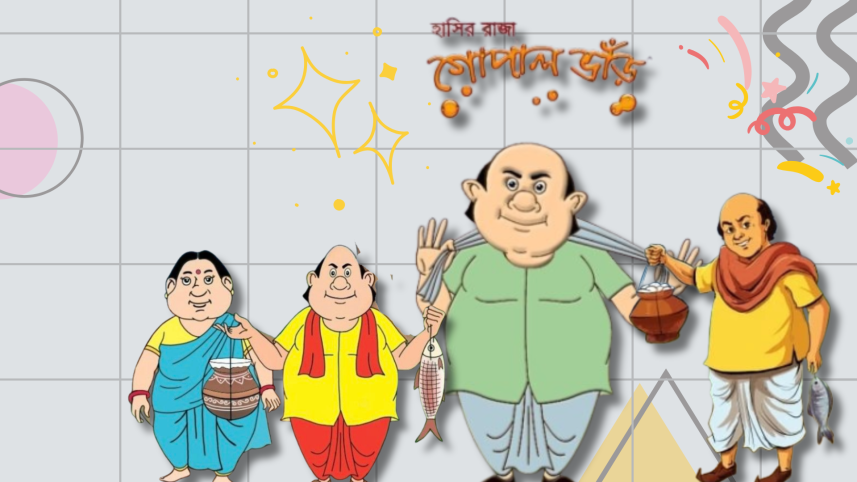
An adorable egg-shaped face, sharp eyes, bald pate, and orange and yellow clothing: that is the image that conjures up Gopal Bhar for generations of Bengalis. The term “Bhar” literally means a court jester or a steward/caretaker of the court, and our favourite jester here was also referred to as Gopal Chandra Nai, as he was believed to have come from a family of barbers or napits.
Despite being considered a major historic figure of the era and one of the nine gems in the King’s court, it is surprising that, according to a number of scholars, including the famed historian Acharya Sukumar Sen, he is not even a real person!

Still, the magic of the folklore is so intense that his stories and his statues have endured the test of time, especially in Krishnanagar and around the palace of King Krishnachandra.
"He was the hero of our evening stories—his cleverness made us laugh and think," reminisces Mehnaz Majid, a teacher. “Gopal was a big part of my childhood, and it would be difficult to recreate the clean, innocent pleasure in a mascot of today.”
Such reverence, even after years of the creation of this cherished character, warrants the question: what was so unique in Gopal Bhar that has compelled so many generations to remain loyal fans?
The answer lies in the way the stories have been written: they are a perfect blend of satire, moral lesson and comic relief. The character was intellectual, without being pompous, open-minded without pretension, used covert tactics to foil unethical conspiracies, and made use of his cunning mind to expose corruption without the use of brute force.
"His stories made moral lessons memorable without feeling preachy," Shaheer Alam, a young father, noted when sharing the tales with his own children.
While the anecdotes themselves entered print to delight young children, a growing readership among adults brought adaptations for theatres, radio and television, ensuring that Gopal’s voice reached every household. It seemed as if Gopal Bhar was here not just to enthral children but also to serve a broader purpose. It became a medium through which adults could offer social criticism and start meaningful conversations on communal values of fairness and common sense.
While it may have seemed that Gopal Bhar was momentarily dethroned with a decline in the popularity of comics and print media, the beloved character with orange-yellow robes, round face, and bright eyes has found continuity and audience in other mediums such as animated series, anthologies, and cultural programmes.
The enduring success of Gopal Bhar is testimony to the fact that a solid character and stellar storytelling can outlive the shortest attention spans and live to tell the tale. Pun very much intended!
 For all latest news, follow The Daily Star's Google News channel.
Comments