


The Devil Wears Prada 2 is a glossy film about a dying industry
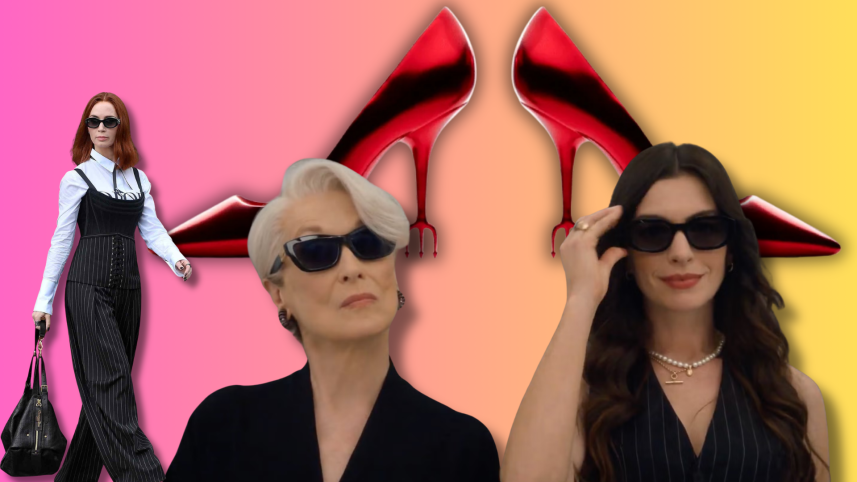
The first The Devil Wears Prada (2006) sold aspiration in high heels. The sequel sells decline in designer neutrals.
And that is what makes The Devil Wears Prada 2 (2026) unexpectedly relatable. Beneath the red carpets, cameos, and Miranda Priestly’s continued ability to ruin a room with one sentence, the film this time shifts the focus to a publication (Runway magazine) struggling with shrinking authority, thinner budgets, advertiser pressure, digital-first compromises, and a broader collapse in the cultural centrality of print magazines.

That is why the film lands beyond New York fashion media. Its anxieties are international, but they are also recognisable in a country like Bangladesh.
Fiction mirroring reality
To understand how these tensions translate locally, we reached out to Sheikh Saifur Rahman of Prothom Alo’s Haal Fashion. His reading of the film was blunt and, frankly, more useful than the film itself.
“The situation in Bangladesh is even worse,” he says. “Lifestyle journalists are underpaid, unappreciated, and in that situation, how can there be money for photoshoots?”
That line lands because it cuts through the performance. In the film, the crisis in fashion journalism is evident in cost-cutting and a shrinking prestige. In Bangladesh, the crisis often begins far earlier, with the basic devaluation of the work itself.
Before one can worry about losing lavish shoots, one has to ask whether the people writing, editing, styling, photographing, and planning these stories are being treated as actual professionals rather than decorative accessories attached to a media house.
Too many stitches spoil the hem
The sequel also circles an awkward truth that most editorial spaces prefer to dress up nicely: magazines may still talk about “vision” and “curation,” but increasingly, they survive on advertiser goodwill, and that goodwill rarely comes without opinions. Well, lots of opinions.
For Iris, a senior journalist at a renowned Bangladeshi news outlet, the deeper issue is trust. “Every reader has the right to know, and they deserve to see the full story,” she says. “When advertisers start influencing magazines, they hamper creativity, and this is when the fall starts.”
Her point is not only ethical. It is practical. Readers notice. Or, as she puts it, “they are wise.” They can tell when a story serves the publication, and when it serves someone else’s comfort.
She also sees the film as a warning about what happens when corporations begin stepping into the role of journalists. At the same time, she acknowledges that the reality is not always entirely bleak. There are still patrons with goodwill, people who understand that the media needs freedom to function. Which means the current moment is not black and white.
It is murkier, and therefore more dangerous. “We are living in this grey zone,” she says, “And the future is indeed uncertain.”
Moreover, if the film reveals the weakening power of magazines, it also mirrors a visual economy that Bangladesh knows intimately: everyone wants “editorial quality,” preferably with global references, cinematic styling, and the sort of lighting that suggests both wealth and emotional repression.
What they do not necessarily want is to pay for any of that.
For Silvia Mahjabin, a photographer, this part felt almost too relatable. “Everyone wants high-quality visuals,” she says, “But very few are willing to pay for what it actually takes to produce them.”
In practice, that means one person is often expected to be a photographer, art director, lighting assistant, set designer, and production manager, all while smiling professionally and pretending this is sustainable.
All that shines is not gold
Perhaps that is why the sequel feels relevant here. It captures a media environment where surfaces remain polished while structures underneath them weaken. That is also true of Bangladeshi fashion and lifestyle supplements. The pages can still look beautiful, and the cover stories can still feel curated.
However, beneath that surface lies a far more fragile reality: underpaid writers, weak budgets, commercial dependency, and a growing pressure to replace complexity with speed.
The real villain, then, is not Miranda Priestly. It is the system that makes journalism perform luxury while operating through erosion.
And that is what The Devil Wears Prada 2 reveals, perhaps more sharply than it intends: fashion media does not collapse all at once. First, it gets thinner. Then it gets faster. Then it gets more obedient.
 For all latest news, follow The Daily Star's Google News channel.
 And eventually, it still looks glossy even after much of its authority has already been drained away.
Comments