


Weavers and the human cost of Tangail tant
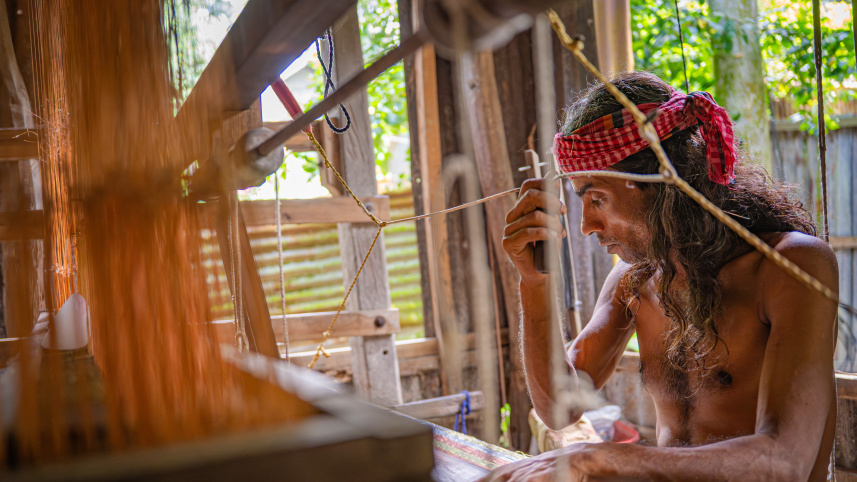
A Tangail saree can pass through many hands before it reaches the buyer who eventually unfolds it across a shop counter. There is yarn to source, a design to choose, a loom to prepare, a trader to finance the production, another to take it to market, and finally a retailer who gives the finished product its price tag. But behind that finished saree is an industry where the hands doing the weaving often earn the least.
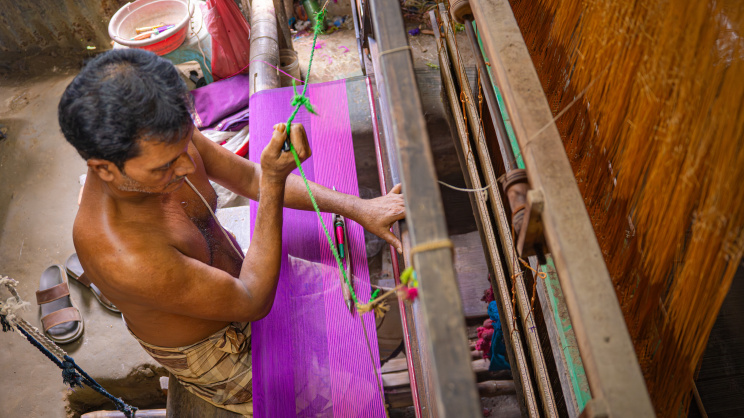

The Mahajan equation
The problem cannot be understood through wages alone.
Zaidur Rahman, a Liaison Officer working with the weaving sector, describes a production system in which many marginal weavers lack sufficient capital to operate independently.
They need money before a saree can even be woven: to buy yarn, prepare the loom, pay for production and support the household while waiting for the finished fabric to be sold.
Government-backed loans are available to some weavers, but the amount may not always cover their needs. As a result, some turn simultaneously to institutional loans and traditional mahajans.
The mahajan is a complicated figure in this economy. He can provide capital, yarn, designs, orders and, crucially, a route to market. But financial dependence can also mean the weaver has little bargaining power over the price of his labour.
Rahman explains that some mahajans finance production on the condition that the finished cloth is supplied back to them at predetermined rates. For a cash-strapped weaver, refusing may not be realistic.
The relevancy of three pools of money
Working capital becomes particularly important because weaving money does not return immediately. Rahman describes the problem as needing capital in three places at once.
One portion is required for yarn. Another is already tied up in the fabric being produced on the loom. A third can remain trapped in finished goods until those goods are actually sold and payment comes back.
If the sale is delayed, the cycle stalls. Without cash in hand, the weaver cannot buy the next batch of yarn or keep another loom working.
Transport and market access can make that delay worse.
Rahman says changes in trading routes and the greater dependence on sea transport for some goods have increased pressure on smaller businesses because capital remains locked away for longer. Small producers do not have the financial cushion of larger companies.
Raw-material costs add another burden. Imported yarn remains important to parts of the sector, while good-quality local yarn is not always sufficiently available to small handloom producers.
Rahman says a system through which weavers' associations once imported yarn via the Handloom Board stopped around 2021 following irregularities. He believes a properly regulated version should return because easier access to yarn could reduce production costs.
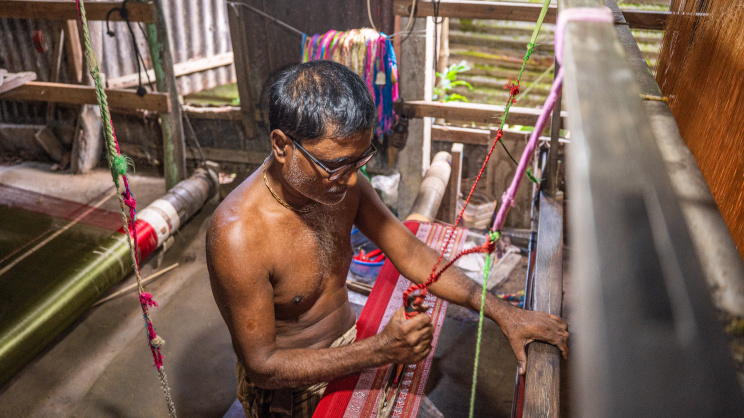
Credit helps, but is it enough?
In Pathrail, Rahman says one weavers' association has 365 members. Of them, 93 have received approximately Tk 1.3 crore in loans collectively since 2019.
Applicants approach the authorities through their association, undergo verification, and their eligibility is reviewed at the upazila level before recommendations are made.
Such financing matters. But credit alone cannot solve an industry in which production costs are rising while some workers remain at the bottom of the value chain.
Loans can keep a loom moving. They cannot guarantee that weaving will become financially attractive enough for someone's son or daughter to choose it as a career.
 For all latest news, follow The Daily Star's Google News channel.
 When the last generation leaves
Asked what he wants from the government, Tomol Chandra Das, handloom craftsman from Pathrail union, does not speak in the language of policy, subsidies or supply chains.
“We want to live well,” he says. “We want to be able to eat properly.”
The debate around Tangail saree often focuses on heritage, GI recognition, authenticity and the threat of power looms. All of these matters, but heritage ultimately depends on people being able to make a living from preserving it. The danger, then, is not simply that cheaper machine-made sarees will compete with handloom ones. It is that one day consumers may still ask for an authentic handwoven Tangail saree, only to discover that too few hands remain willing to weave it.
Comments