


Defying hardship and terrain, hill women support their families
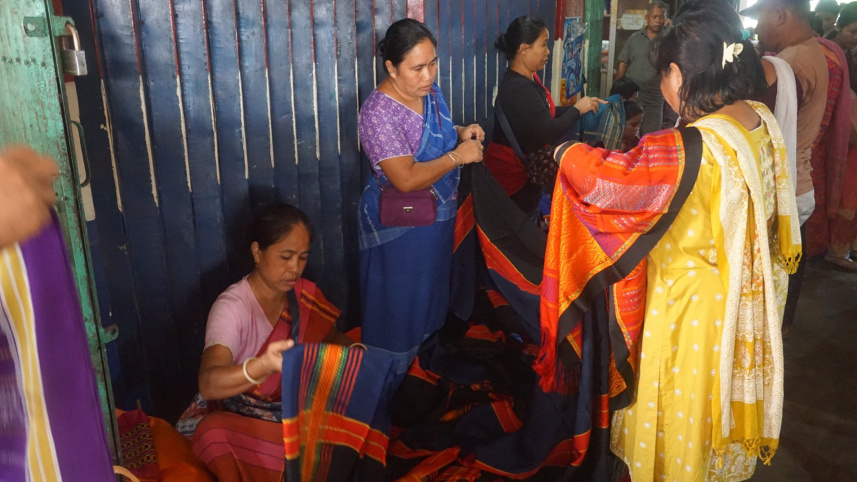
Every Saturday and Wednesday, Alo Rani Chakma makes a long journey from her village in Naniarchar upazila of Rangamati to Banarupa Bazar in the district town.
Carrying fresh produce, she boards an engine-driven boat at dawn and reaches the bustling market between 6:00 and 7:00am.
 For all latest news, follow The Daily Star's Google News channel.
 After spending the morning selling her vegetables, she heads back home around noon. The income she earns from these trips helps sustain her family.
Alo Rani’s story is not unique.
Across the remote hills of Rangamati, many indigenous women like her are quietly carrying the responsibilities of their households.
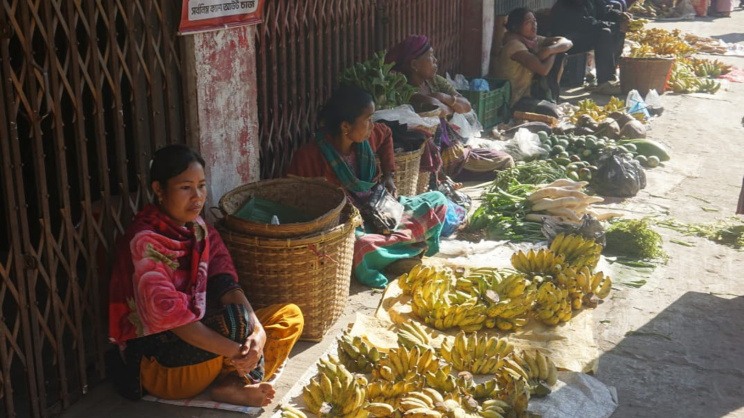
Travelling long distances through hilly terrain and waterways, they bring agricultural produce and handmade goods to local markets, determined to earn a living for their families.
Many of these women are primary breadwinners for their families, a duty they fulfil with resilience and perseverance.
Bhagya Devi Chakma, from the Sapchhari area of Rangamati Sadar upazila, spends most of the year working on a waist loom.
When women earn, they become self-reliant and better able to support their families. It increases their confidence and also raises their value within the family.
Patiently weaving thread by thread, she makes traditional hill women’s clothing known as pinon-hadi.
The garments she produces are both practical and cultural. “I wear them myself and also sell them to customers, using the income to support my household,” she said.
Like her, many other hill women are turning their weaving skills into a source of livelihood while keeping their traditions alive.
Yesterday morning, at Banarupa Market, Shyamoli Chakma was seen arranging plums, sweet pumpkins and potatoes on a small stall.
A resident of Bandukbhanga union in Sadar upazila, she had arrived by boat at around 7:00am.
After selling her produce, she planned to buy some necessities for her family before returning home.
Another seller, Nirala Chakma, who sells pinon-hadi, said the work has given women a sense of independence.
“We are becoming self-sufficient by selling these traditional clothes,” she said.
“At the same time, we are preserving our tradition. It feels good to see that our traditional clothes are now reaching people abroad. Members of our communities in different countries also wear them on various occasions,” she added.
Nuku Chakma, a member of the CHT Women Resource Network, said the role of hill women in society is gradually changing.
“Hill women are no longer sitting at home,” she told The Daily Star.
“They are taking responsibility for their families, running small businesses like men, and learning to stand on their own feet. This is certainly hopeful.”
She believes economic participation is crucial for women’s empowerment.
“When women earn, they become self-reliant and better able to support their families. It increases their confidence and also raises their value within the family,” she said.
Comments