


Greenland and the return of empire politics

The international order built after World War II rests on one hard rule: states may not threaten or use force to take territory. Article 2(4) of the United Nations (UN) Charter was written to make conquest illegitimate, not just unpopular. The UN’s Declaration on Principles of International Law concerning Friendly Relations later reaffirmed that borders are not to be changed by coercion. Thus, when a great power signals that sovereignty is negotiable, smaller states should read it as a systemic warning, not colourful rhetoric.
In early January, President Donald Trump revived and escalated his push for the United States to take Greenland. On January 10, he said the US would act on Greenland “whether they like it or not,” adding that it could be done “the easy way” or “the hard way.” That was not bargaining, but more so a threat to change borders using pressure.

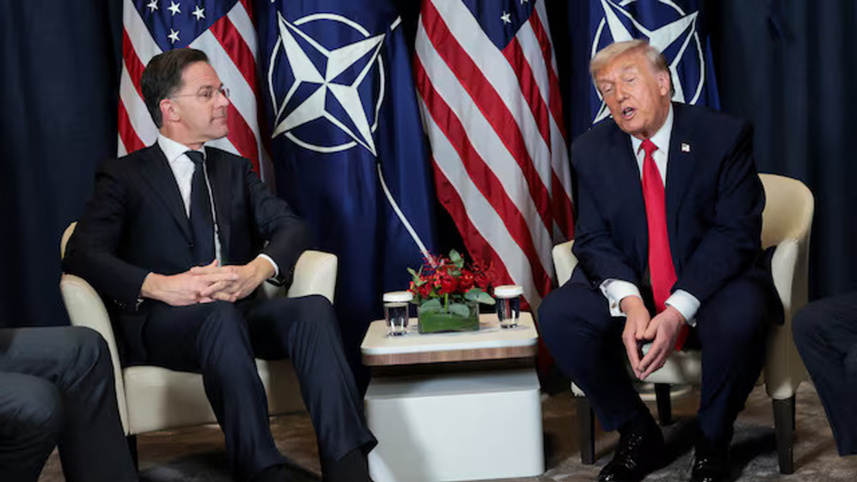
A new development now complicates the picture further. At the World Economic Forum in Davos on January 21, Trump said he would not use force to acquire Greenland and spoke of a “framework” for an Arctic and Greenland arrangement being discussed with Nato Secretary General Mark Rutte. The next day, Denmark’s prime minister reiterated that Arctic security can be discussed, but only “with respect for our territorial integrity,” and Greenlandic parliamentarian Aaja Chemnitz stressed that nothing can be negotiated without Greenland’s participation. Meanwhile, it is reported that the emerging idea is not a sovereignty transfer, but an update to existing defence arrangements, alongside Arctic security and raw materials cooperation.
Developments since Davos underline why wording matters. Trump has since touted the understanding as giving the US “total access” to Greenland, even as Denmark and Greenland maintain that sovereignty is not negotiable and key details remain uncertain. Denmark and Nato are discussing how the whole alliance should step up Arctic security, including talks to revise the 1951 agreement governing US military presence on the island. If the framework is to be off-ramp rather than a precedent, it should be negotiated transparently with Nuuk, Greenland’s capital, at the table, and it should explicitly reaffirm sovereignty while focusing on defined defence tasks, basing rights, and funding.
A renunciation of force is welcome. But it does not erase earlier threats, and it does not satisfy the deeper question: can territorial ambition be pursued through intimidation instead of invasion?
In Davos, Trump framed Greenland as something the US “needs” and hinted that refusal from Greenland would carry consequences. If the goal is still to gain control, the method matters less than the message: borders can be bent to the will of the strong.
Greenland is not an ownerless prize on a map. It is a self-governing country within the Kingdom of Denmark. Under the 2009 Act on Greenland Self-Government, Greenland manages most of its own domestic affairs, while Copenhagen (Denmark’s capital) retains responsibility for foreign affairs, defence, and security policy. The Act recognises Greenlanders as a people with the right to self-determination, including the option of independence. “Acquisition” is therefore an error of category error and any legitimate change in status must happen through Greenlanders’ freely expressed choice and Denmark’s constitutional role.
This is why the most basic flaw in Washington’s posture has been political as much as it is legal. Greenland’s future cannot be negotiated over Greenlanders’ heads. Even a Nato-labelled package will look colonial if Nuuk is treated as a bystander. Chemnitz’s warning is not diplomatic theatre. It is the minimum standard for legitimacy: Greenland must be at the table as a political actor, not treated as a strategic surface. The strategic reasons behind the US’s interest in Greenland are real. Greenland hosts the Pituffik Space Base, central to missile early warning and space surveillance. The island also sits in the Greenland, Iceland, and UK corridor, which is essential for monitoring Russian naval movement in the North Atlantic. Plus, climate change is reshaping risk calculations in the Arctic and will continue to pull major powers northward.
But none of this justifies treating Greenland as an object to be possessed. Strategy is not a legal licence because Washington already has extensive access.
The 1951 Defense of Greenland Agreement underpins US defence activity on the island and has been updated since. If deterrence and access are the goal, ownership is unnecessary. If the US wants wider radar coverage, larger runway capacity, or more logistics hubs, it can negotiate expanded arrangements transparently with Denmark and Greenland, and finance what it asks for.
Completing the big picture, Greenland’s rare earth and uranium prospects are often brought up in supply chain debates, even as local politics, environmental constraints, and infrastructure limits make extraction slow and contested. Offshore hydrocarbons add temptation. Yet, none of these call for annexation, but rather investment, regulation, and contracts under Greenlandic law and consent, with clear local benefits and high standards.
This is where the Nato crisis begins. Nato’s legitimacy rests on collective defence consistent with principles in the UN Charter. If one ally openly pressures another ally over territory, the alliance stops being collective defence and starts looking like coercion inside the club. Denmark’s Prime Minister Mette Frederiksen outlined the stakes when she warned that if the United States attacks a Nato country militarily, “everything stops.” The point was not to dramatise but to draw a line around the basic trust that holds alliances together.
Even without force, coercion can still corrode the system. The Friendly Relations declaration explicitly recalls the duty to refrain from military, political, or economic coercion aimed at another state’s territorial integrity or political independence. Tariff threats over Greenland or hinting that intra-alliance solidarity is conditional present the outward message that sovereignty is a bargaining chip.
The Davos “framework” can become an off-ramp if it replaces territorial theatre with a consent-based security package. That means three things. First, Denmark and Greenland must be free to say no without facing threats. Second, Greenland must be fully represented in any talks that concern its territory, basing, or resources. Third, any upgraded defence footprint should be paired with transparent economic and social investment that Greenlanders themselves prioritise, rather than a narrow extraction agenda.
For Bangladesh, this principle is not remote. Rules against coercive territorial changes act as a shield for every medium and small state. If Greenland can be pressured because it is strategically valuable, others can be pressured because they are “inconvenient.” The discussion on Greenland should therefore be taken as a warning and a test, not a precedent. Bangladesh has its own stake in a world where strategic access is negotiated, not imposed, and where economic pressure is not used to rewrite political realities. When great powers normalise the language of “need” over consent, small states pay the price first.
Barrister Khan Khalid Adnan is advocate at the Supreme Court of Bangladesh, fellow at the Chartered Institute of Arbitrators, and head of the chamber at Khan Saifur Rahman and Associates in Dhaka.
Views expressed in this article are the author's own.
Follow The Daily Star Opinion on Facebook for the latest opinions, commentaries, and analyses by experts and professionals. To contribute your article or letter to The Daily Star Opinion, see our guidelines for submission.
 For all latest news, follow The Daily Star's Google News channel.
Comments