


A youth-quake Jatiya Sangsad must break with the past

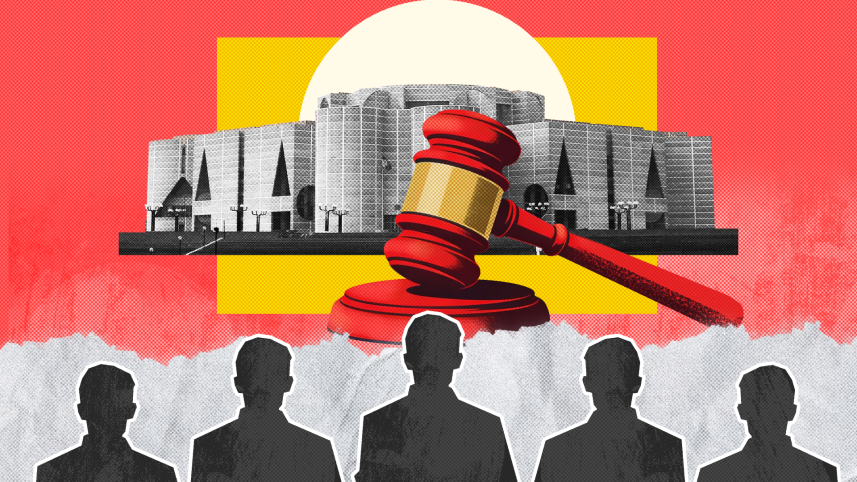
The 13th Jatiya Sangsad, which goes into its maiden session today, is in many ways a first for the country. Installed through a historic transition following an uprising that toppled the longest-running autocracy in Bangladesh, it brings about a generational shift in the political guard. Both the prime minister and the leader of the opposition, each in their sixties, are first-time parliamentarians. Two-thirds of the newly elected MPs, responsible for shaping the nation’s future, are also first-timers. In fact, a majority of MPs from both the ruling party and the opposition are newcomers to parliamentary affairs.
In a sense, this is a credit to the youthquake of 2024, which has infused fresh blood into Bangladesh’s parliamentary democracy. The entry of six parliamentarians from the year-old National Citizen Party (NCP) is also significant, as its leadership is entirely a product of the student-led uprising. There has been debate about the party’s electoral alliance with Jamaat-e-Islami, which some argue greatly benefitted NCP through Jamaat’s well-established membership base, strong financial resources, and highly organised political machinery. Conversely, the fledgling party also suffered setbacks as several prominent figures—women leaders in particular—deserted it over the alliance, citing Jamaat’s historical opposition to Bangladesh’s war of independence. It may still be too early to judge how much popular support NCP has consolidated, but its six MPs will undoubtedly attract considerable public attention.

Fresh blood brings fresh hope. Understandably, people have high expectations of this Jatiya Sangsad. The new MPs may lack familiarity with procedural complexities, parliamentary jargon, and legislative culture. But their vision of fairness in governance and their commitment to accountability, human rights, the rule of law, and the reduction of socio-economic disparities offer hope for a fresh start.
In the absence of veterans—or at least experienced hands in parliamentary business—some may wonder what differences we can realistically expect. One certainty is that enacting the July National Charter will be the most contentious issue in the early days of this parliament. The ruling BNP MPs have yet to take the second oath as members of the proposed Constitution Reform Assembly, while opposition MPs have already done so. The July charter requires MPs to assume the role of members of a constituent assembly, alongside their parliamentary duties, to carry out constitutional reforms pledged by the parties that signed the charter. BNP, however, insists that the constitution requires parliament first to approve the idea of assuming this concurrent role. Only after such approval, they argue, would MPs be required to take the second oath.
The nature of the debate on this procedural issue may offer early clues about what lies ahead for the 13th Jatiya Sangsad. Politics may become interesting again—no longer confined to the corridors of power that ultimately enabled autocracy. The Jamaat chief’s pledge to play “a responsible and constructive role” as the opposition is precisely what the country needs, instead of repeated threats of street agitation without exhausting parliamentary avenues.
Bangladesh’s parliamentary experience is relatively short, and MPs often drift from their legislative role into administrative authority to such an extent that many view their constituencies as “MP-raj,” or personal kingdoms. Some first-time MPs may still harbour misconceptions about their responsibilities. On February 26, for instance, the well-known Islamic speaker-turned-politician Amir Hamza, now an MP, was heard declaring: “There is no higher authority in Kushtia now; I am the authority.” There may well be other similar instances and assertions from across the political aisle that have not come to public notice, but such attitudes to power should not become a feature of our new beginning.
The 2024 uprising was not only against autocracy; it was also a revolt against cronyism and kleptocracy. It rejected a system rigged for the benefit of those in power and riddled with conflicts of interest. Questioning impropriety was discouraged, and accountability became a forgotten word. Ministers and MPs routinely shaped policies and rules that advanced their own business interests without declaring personal stakes. Such practices must never return.
In this connection, one may recall how Mir Ahmad Bin Quasem Arman, a newly elected lawmaker from Jamaat, had expressed interest in bringing fresh investment into the troubled mobile financial services provider Nagad, currently under an administrator appointed by Bangladesh Bank. Reports suggested his interaction with the then central bank governor days before the February 12 election, where he described himself as a coordinator for certain foreign investors.Now that he is an MP, any such association with prospective investors should cease immediately. His constituents elected him not to lobby for specific business deals or advance personal interests, but to represent them in shaping laws and policies.
The 13th Jatiya Sangsad should codify a clear code of conduct for its members based on ethical principles and aligned with global best practices, such as the Westminster Code of Conduct for MPs. In Britain, the push for such standards gained momentum after the 1994 “cash-for-questions” scandal, which led to the resignation of Conservative MPs Neil Hamilton and Tim Smith. Both had accepted cash in brown envelopes from Mohamed Al-Fayed, the then owner of the famous Harrods department store, who was later posthumously disgraced over allegations of sexual abuse.
The Committee on Standards in Public Life, established after that scandal, has revised the code over time, and its latest version further tightens lobbying rules. MPs are now prohibited from initiating or participating in proceedings or approaches to ministers, other MPs, or officials that seek material benefits for clients who have paid or rewarded them within the previous 12 months. The rules also require MPs undertaking outside work to have a written contract explicitly stating that they cannot lobby on behalf of their employer or provide paid parliamentary advice and that the employer cannot request such services.
Among many other restrictions and obligations, one particularly important provision requires ministers to register with the House all benefits received in their ministerial capacity. This ensures that the public can access complete and timely information about a member’s financial interests in one place. Failure to comply with these rules may result in suspension from the House for varying durations, or even expulsion.
Those who play with numbers often describe 13 as “lucky for some.” But many also regard it as ominous. We must ensure that the 13th Jatiya Sangsad proves lucky for Bangladesh, setting the country firmly on a new path of democratic revival.
Kamal Ahmed is consulting editor at The Daily Star. He led the Media Reform Commission under the immediate past interim government. His X handle is @ahmedka1.
Views expressed in this article are the author's own.
Follow The Daily Star Opinion on Facebook for the latest opinions, commentaries, and analyses by experts and professionals. To contribute your article or letter to The Daily Star Opinion, see our guidelines for submission.
 For all latest news, follow The Daily Star's Google News channel.
Comments