


Jayasree Kabir passes away

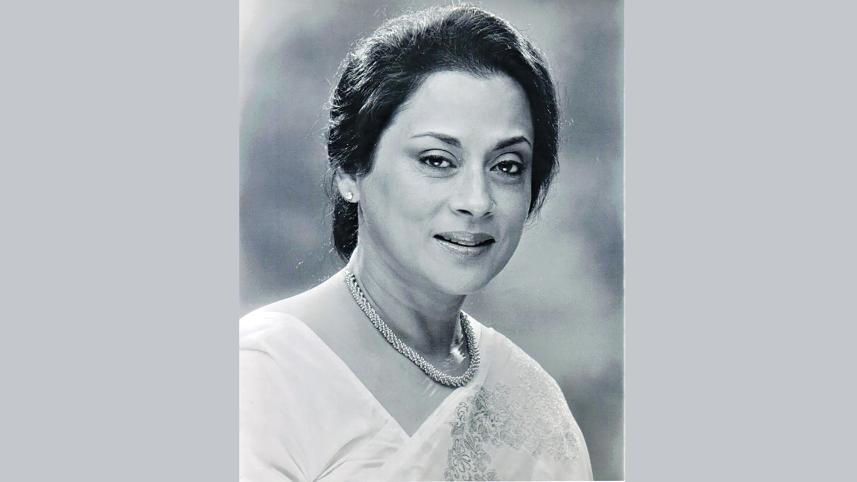
Renowned film actress and former Miss Calcutta Jayasree Kabir passed away at a nursing home in Romford, Essex, in Greater London, on January 12.
She was 73.

The news of her death came to light two days later, when her nephew, Javed Mahmood, posted about it on his Facebook profile.
Jayasree’s son, who lives and works in Singapore, was unreachable at the time and has consistently avoided media attention, in keeping with his mother’s long-standing preference for privacy.
Born on June 22, 1952, Jayasree Kabir rose to prominence after winning the Miss Calcutta title in 1968.
She made her film debut under acclaimed director Satyajit Ray in “Pratidwandi” (1969), a role widely regarded as an early milestone in her career and one that placed her firmly within the parallel cinema movement of the time.
She went on to perform in more than 40 films in Kolkata, including “Picnic”, “Sabyasachi” and “Ashadharan”, working with leading actors of the era such as Uttam Kumar.
Known for her restrained performances and elegant screen presence, she moved with ease between commercial cinema and more artistically driven films, earning sustained critical respect rather than mass stardom.
She later moved to Bangladesh, where she formed a close personal and professional relationship with filmmaker Alamgir Kabir, one of the country’s most prominent post-independence directors. She later married him, though the marriage eventually ended in divorce.
Alamgir Kabir died in 1989.
Jayasree’s filmography in Bangladesh includes “Shurjokonya”, “Shimana Periye”, “Rupali Shoikotey”, “Mohona” and “Puroshkar”.
Her appearance in the song “Bimurto Ei Ratri Amar” from “Shimana Periye” remains one of her most recognisable screen moments.
During this period, she frequently worked opposite actor Bulbul Ahmed, forming a notable on-screen pairing.
After leaving Bangladesh, she returned briefly to Kolkata and subsequently settled in London with her son. There, she largely withdrew from public life.
She made occasional appearances at international film festivals, taught English at a school, undertook voice-over work for the BBC and Channel 4, and participated in cinema workshops. She also represented the films of Satyajit Ray at international events.
Despite her reclusive lifestyle, she remained attentive to developments in cinema in both Dhaka and Kolkata.
With Jayasree Kabir’s passing, Bangla cinema loses an actor from one of its formative eras, remembered for her composure, quiet subtlety, and a highly selective body of work, as well as for her rare position straddling the cinematic traditions of Kolkata and Dhaka.
 For all latest news, follow The Daily Star's Google News channel.
Comments