


‘Polls code violations rampant, yet EC largely silent’
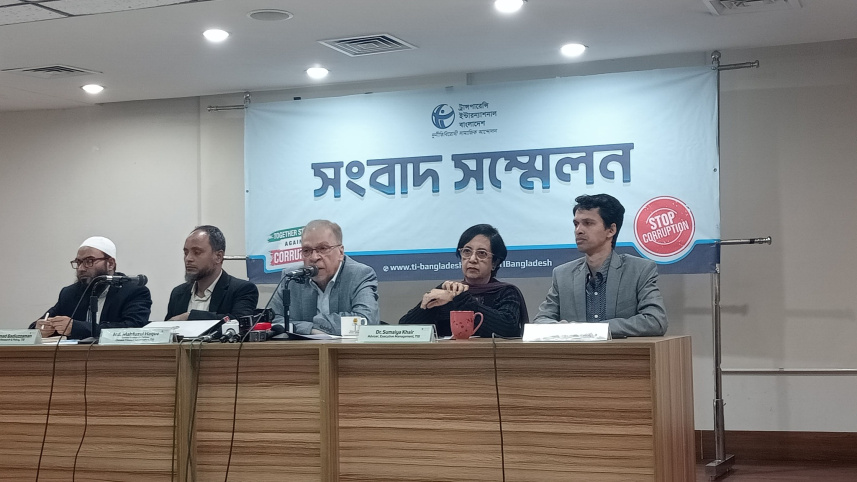
A study by Transparency International Bangladesh (TIB) found widespread violations of the electoral code of conduct and a lack of strong action by the authorities to ensure a level playing field for the February 12 elections.
It said though campaign began with a comparatively positive attitude, eventually the political parties and candidates maintained the old political culture of conflicts and violence within the parties and alliance partners.

“There are risks of instability because of election-related violence and the anti-voting campaign by the fallen authoritarian forces,” TIB Executive Director Iftekharuzzaman said while revealing the study findings at the TIB office in the capital yesterday.
He, along with TIB researcher Mahfuzul Haque, presented the findings of the study titled “Pre-election and Referendum situation: TIB’S Observation”.
VIOLATIONS
The TIB study said political parties and candidates began campaigns well before announcement of the election schedule and violated provisions of the Wall Writing and Posters (Control) Act, 2012, by displaying promotional materials on walls, pillars, vehicles, and other structures.
At least 33.8 percent of candidates exceeded the election expenditure limit, spending an average of Tk 1.19 crore between December 4, 2025, and February 1, 2026, said TIB researcher Mahfuzul.
Despite directives from the Election Commission instructing candidates to remove campaign materials, 81.3 percent failed to comply, he added.
Under the EC framework, a candidate in each constituency is allowed to spend either Tk 25 lakh or Tk 10 per voter, depending on the number of voters, he said.
Candidates spent high amounts on social media and used it to create instability, confuse the voters, and influence them through AI-generated photos and video clips, the TIB report said.
The study found the state-run media to give more coverage on one political party and its leader. It was also true for private media.
For example, between October 1 and December 11 last year, BTV broadcast news for 144 minutes 19 seconds for a party, and 27 minutes and 2 seconds for another party, TIB said.
However, the graft watchdog did not name the parties.
Influential parties continued campaigns after 12:00am, but the EC was indifferent in taking actions. However, in the cases of individual candidates, it took strong actions, including issuing show causes and imposing fines, it added.
Many of the campaigns also targeted women and opposition candidates, and used religious and sexual slurs, but the EC has not taken adequate measures to stop them, the study said.
The parties allegedly nominated candidates without considering their qualifications and popularity, which is why those who contributed more to the parties were deprived of nominations, it added.
Influential political parties allegedly paid cash to voters as well as to presiding officers and assistant presiding officers, and even allegedly threatened them for influencing the polls.
The TIB report said the EC has not properly verified the income and asset declared by the candidates. It also declared the candidates legal though they provided false information on their dual citizenship or kept the information secret.
At least 45 candidates are participating in the polls, taking advantage of legal weakness, though they have been found loan defaulters primarily, the graft watchdog said.
The July charter committed to nominate at least 5 percent female candidates, but only 4.05 percent were given tickets. At least 30 political parties, including Jamaat-e-Islami, have not fielded any female contenders, it added.
 For all latest news, follow The Daily Star's Google News channel.
 Only 3.91 percent of the nominees from political parties and individual candidates came from religious and ethnic communities. At least 29 political parties have not nominated any candidates from religious and ethnic communities.
TIB said despite the raids by the joint forces, the law-and-order situation deteriorated and mob violence continued, and political activists faced attacks, but the law enforcers’ role has been questionable.
REFERENDUM
Iftekharuzzaman said contradictory positions of the major political parties and interim government complicated the referendum, which is crucial to reforming the country’s governance structure.
He said as per the mandate, the interim government was responsible to play role for “Yes” vote for the referendum. Therefore, the EC had no logical or legal base to disagree to the government position.
“The Election Commission’s independent role would not be questionable if there was discussion on the campaign for ‘Yes’ vote with the interim government.”
Iftekharuzzaman said holding the parliamentary election and the referendum on the same day has been identified as a major pressure and challenge for the EC and the relevant institutions.
The EC, government institutions, law enforcement agencies, armed forces, political parties -- everyone must fulfil their responsibilities for a level playing field in the polls, he said.
“Equal competition is not only for parties and candidates -- it is for voters. Voter safety must be ensured, especially for minorities, women, the elderly, persons with disabilities, indigenous people, and gender-diverse communities,” he said.
Iftekharuzzaman said political parties should remember that for 16 years, people were deprived of voting rights. If leaders at all levels accept the people’s verdict, a fair and peaceful election is still possible.
“We believe that only if all parties act in accordance with the law it will be possible to conduct the election and the referendum in a free and fair manner.”
Comments