

Russia helping N Korea to circumvent UN sanctions: report
frozen North Korean assets, providing it with access to global finance system for missiles, ammunition
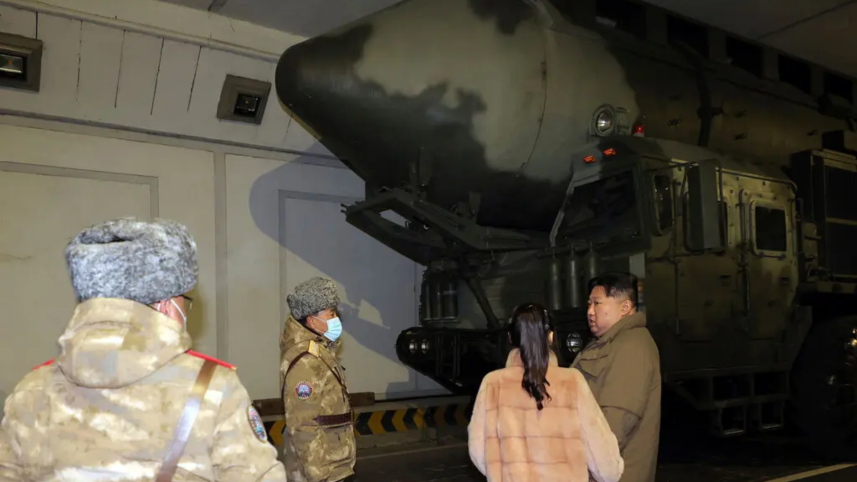
Moscow might be attempting to provide Pyongyang with access to the global financial system in exchange for missiles and ammunition, according to US-allied intelligence officials.
Russia has permitted the release of millions of dollars' worth of frozen North Korean assets and might be providing its embattled ally with access to global banking networks. This support follows the North's transfer of weapons to Moscow for use against Ukraine, according to American-allied intelligence officials,

Last month, the White House announced that it had proof that North Korea had given Russia ballistic missiles and that the North was looking for military hardware in exchange. Additionally, a British security think tank's analysis suggests that Pyongyang may have shipped up to 2.5 million rounds of ammunition, said a New York Times report.
Although it is uncertain if Russia has provided North Korea with the military technology it may desire, the establishment of new banking connections would be another indication of the two nations' ongoing progress in their relations. According to US officials, the North has issued a number of belligerent threats in recent months, suggesting that the growing partnership has given it more confidence.
The intelligence officials claim that Russia has permitted the release of $9 million of the $30 million in frozen North Korean assets that were deposited in a Russian financial institution. They claim that the impoverished North will use this money to purchase crude oil, the reports said.
Furthermore, the intelligence officials claim that a front company from North Korea has opened an account at a different Russian bank, suggesting that Moscow is potentially assisting Pyongyang in evading UN sanctions that forbid most banks from conducting business with North Korea. The North's economy has been severely stifled by these sanctions, and the nation has essentially been cut off from global financial networks.
The officials, who spoke on condition of anonymity to discuss sensitive intelligence matters, said that the new bank account is held in South Ossetia, a self-proclaimed independent state in the Caucasus region with close ties to Russia.
The details of the banking arrangements could not be verified, according to American officials. However, a senior official who spoke about intelligence matters and asked to remain anonymous stated that the arrangements aligned with US expectations of what North Korea would demand from Russia for the transfer of weapons, the reports said.
Experts say that North Korea has a wish list that includes access to financial networks. They claim that advanced military equipment like satellite technology and nuclear-powered submarines are what the North desires most from Russia.
Diplomatic benefits have already resulted from the closer ties. Following their meeting in autumn in eastern Russia, North Korean leader Kim Jong-un and Russian counterpart Vladimir V. Putin met in Moscow in January with Choe Son-hui, North Korea's foreign minister.
According to North Korea's state media, Putin hinted during that meeting that he might soon travel to Pyongyang, his first visit to the country's capital in almost 25 years.
Given that a large portion of North Korea's economy is dependent on imports, the banking arrangements may be important. These connections may make it easier to conduct business both inside and outside of Russia. Moscow's ties to a few nations that continue to trade with Russia despite the country being subject to international sanctions due to the conflict in Ukraine could be used by North Korea. These nations include Turkey and South Africa.
If Moscow is allowing North Korea to use Russian banks or is releasing frozen assets, the government will have "crossed the Rubicon of willingness to deal with North Korea and to be a financial and commercial rogue," said Juan C. Zarate, a former assistant Treasury secretary and expert on financial crimes.
Although the $9 million in frozen assets that Russia has released is not much, Zarate stated that North Korea "welcomes any alternative ways of accessing capital."
North Korea's prohibited nuclear weapons testing has prompted the United Nations and the United States to impose a number of sanctions on the country. According to Zarate, the use of cryptocurrencies and other banking sanctions have "been one of the challenges for the North Koreans" and have forced them to be "honest in how they've established their financial networks."
Russia might find the financial exchanges more agreeable than providing military know-how and other technologies, such as nuclear ones.
Soo Kim, a former CIA analyst on North Korea, said that although the two nations "could be friends with benefits now," their trust is not so high that Russia would "give away its valued secrets."
As a permanent member of the Security Council, Russia was still aware of UN sanctions, so experts predicted that it would proceed cautiously. They stated that Russia might think it can get around the sanctions in a questionable manner.
"They can always say, 'Oh, well, this is a private bank and our investigators will look into it,' and it will never go any further," political science professor James DJ Brown, who specializes in relations between Russia and East Asia and teaches at Temple University's Tokyo campus, said.
Beyond the banking connections, Russia might just trade the North's weapons for goods that it needs.
 For all latest news, follow The Daily Star's Google News channel.
 Hazel Smith, a professor of Korean studies at the School of Oriental and African Studies at the University of London, stated that it makes sense for North Korea to be trading agricultural technology like tractors and grains, both of which are prohibited by sanctions.
"It's very difficult to see why major transactions for either Russia or North Korea would be conducted in rubles given the precariousness of the ruble and the complete lack of value of the North Korean won," she continued.
Above all, North Korea has received international attention and diplomatic advantages from Moscow as a result of its missile and ammunition transfers to that country, the reports added.
North Korea expert Joseph Byrne, a research fellow at the British security think tank Royal United Services Institute, said, "I think they value that quite a lot." "The legitimacy and ceremony of it."
If it appears that North Korea has the full backing of Russia, Mr. Byrne stated, "it just makes them that much stronger."


Comments