


Trans-Asian Railway members agree on regional strategy on digital transformation
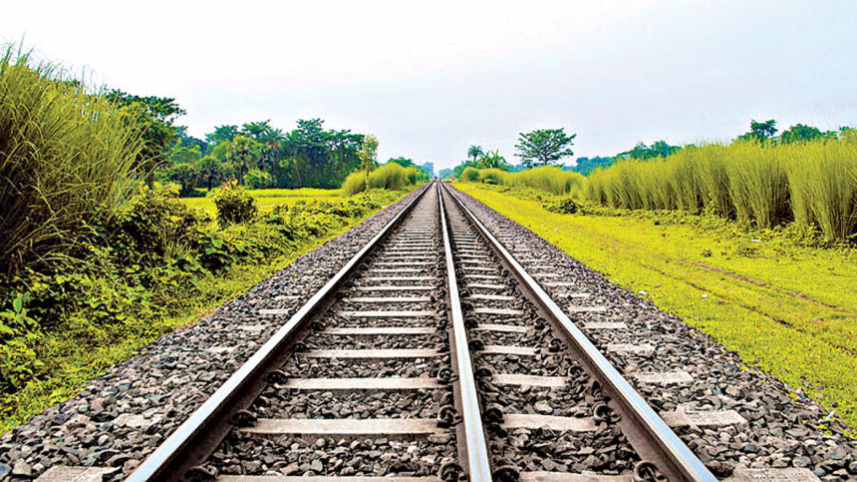
Eighteen countries, including Bangladesh and India, have agreed on a regional strategy on accelerating rail digital transformation in a bid to boost train connectivity among them under the framework of Trans-Asian Rail Network spanning Asia and Europe.
The strategy was adopted at a high-level conference on accelerating rail digital transformation in Asia and Pacific region held in New Delhi on April 5 and 6.

The conference was organised by United Nations Economic and Social Commission for Asia and the Pacific (ESCAP) in collaboration with the Indian Ministry of Railways, reports our New Delhi correspondent.
The 128,000km Trans-Asian railway network, passing through 28 countries, provides a coordinated plan for developing a regional rail network to support intra and inter-regional trade and transport.
The network was formalised through an Inter-governmental agreement on Trans-Asian Railway network that entered into force in 2009.
The conference deliberated on ways and means to accelerate rail digital transformation in Asia and the Pacific to enhance competitiveness of rail transport to attract more freight and passenger to railway transport, said an official statement released in New Delhi on Friday night.
The proposed strategy aims to provide coherence and momentum to current initiatives on rail digitalisation and foster an ecosystem to harnesses full potential of rail digitalization.
It also proposes to set up a regional capacity building programme on rail digital transformation with a pool of experts to enhance digital skills of railway officials.
For financing rail digital projects, the strategy suggests countries to establish a rail digital and innovation fund as multi-donor trust fund to support landlocked and least developing countries to leapfrog to digital technologies.
On strengthening rail cybersecurity, it advocates developing a regional framework for rail cybersecurity for sharing of information, capacity building and learning from experience.
The strategy also aims at enhancing engagement with the private sector by encouraging countries to be supportive legal and regulatory framework that attract private investments and expertise in rail digital applications.
Besides Bangladesh and India, the conference was attended by representatives of the ministries of transport and railways of 18 countries including Armenia, Azerbaijan, Cambodia, Georgia, Iran, Kazakhstan, Kyrgyzstan (online), Lao, Nepal, Russia, Sri Lanka, Tajikistan, Thailand, Uzbekistan (online) and Vietnam.
 For all latest news, follow The Daily Star's Google News channel.
Comments